
The selection of the appropriate API manufacturer in India is a highly significant choice by pharmaceutical purchasers.
Making a poor selection of the supplier will pose a big problem. These may include:
Nonetheless, you can develop your business by choosing the right manufacturer. A supplier that is good assists in sustaining the quality of the products, assists in regulatory work and ensuring the supply remains constant.
The largest provider of generic APIs in the world is India.
Over 500 APIs are prepared in the country. India also boasts the biggest number of approved USFDA plants in countries other than the US. It also possesses over 2 000 WHO GMP approved plants.
India supplies 57% of all WHO-prequalified APIs worldwide.
The country also has:
It is due to this that the key question does not revolve around whether to source APIs or not source APIs in India. The question at hand is how to pick the right manufacturer.
This blog details an easy model that can assist customers in choosing the appropriate API manufacturer in India.
Why India Has Become a Global API Manufacturing Hub
An extensive growth in production of generic medicines, adherence to regulation and foreign works saw India becoming the so-called Pharmacy of the World.
India is now the third world largest pharmaceutical manufacturer in the world in volume. The nation also produces 2 out of 5 generic medicines manufactured globally, which are sold to over 200 nations such as:
India’s API industry is very large.
The country has:
India also supplies more than 80% of the world’s antiretroviral medicines used for HIV/AIDS treatment.
India’s pharmaceutical exports grew from USD 15.07 billion in FY2013–14 to USD 30.47 billion in FY2024–25.
India has a solid position due to three key factors:
Cost Competitiveness
Compared to most of the western countries, India manufactures APIs cheaply.
This can be due to:
This facilitates low-cost prices by Indian manufacturers.
Strong Regulatory Compliance
The Indian manufacturers comply with a variety of regulations of the world including:
This gives the buyers the confidence to provide to different markets in other countries.
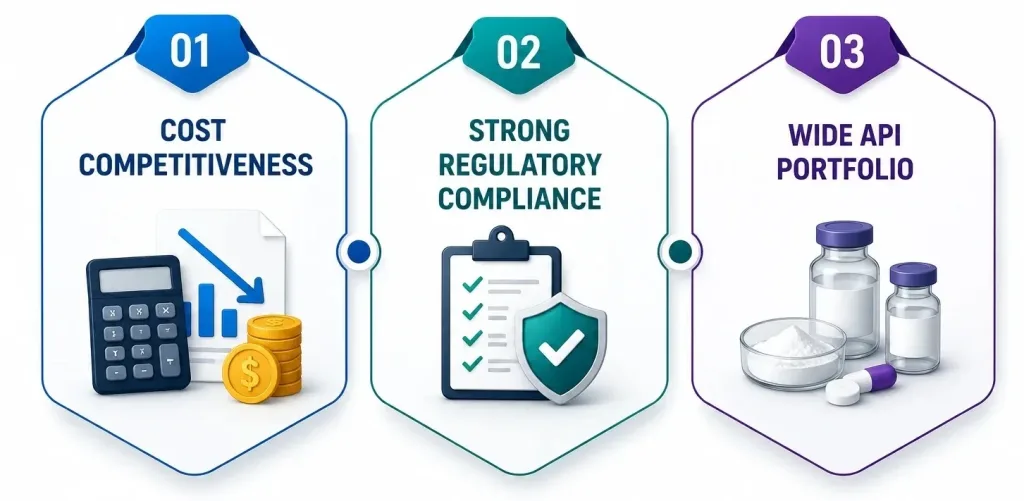
Wide API Portfolio
APIs in India are made in virtually all widely used therapeutic areas, such as:
This enables the customers to receive various products within one nation.
India is already a good sourcing destination. Nevertheless, the suppliers must be selective as the quality, compliance and reliability of supply may vary across suppliers.
After knowing the reasons why India is a very attractive sourcing market, it is time to think of how the buyer should have his/her requirements arranged before choosing a manufacturer.
Define Your Supply Requirements Before Selecting an API Manufacturer
Buyers have to understand their needs before settling on any API manufacturer.
Poor requirements may result in:
There are five key areas to be looked at by buyers.
Regulatory Market Target
The buyers should be aware of which regulatory markets they are interested in supplying, including:
The manufacturer of the API should have the right certifications in the same markets and molecules.
Pharmacopoeial Standard
The buyers are also left to decide on what pharmacopoeial standard is necessary e.g.:
This is what determines the testing requirements of the Certificate of Analysis (CoA).
Volume and Batch Size
Buyers need to specify:
Minimum order quantities are different among different manufacturers. Proper planning is a way to prevent commercial troubles in the future.
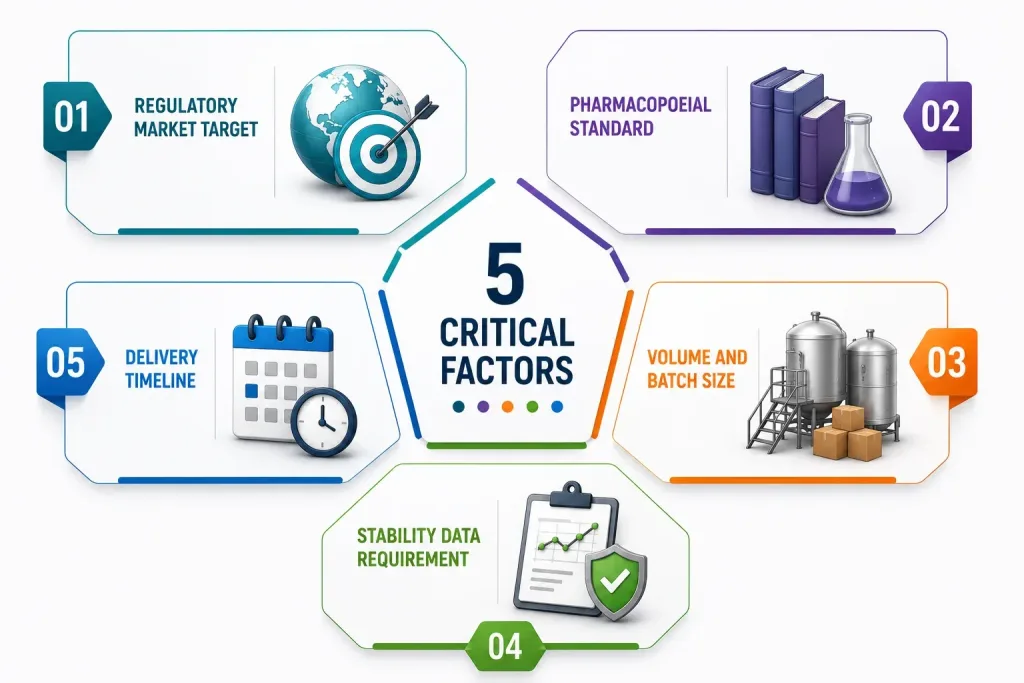
Stability Data Requirement
Different countries have different stability conditions.
For example:
The manufacturer will have to give the accurate stability data.
Delivery Timeline
Customers should also be notified about their delivery times.
The composite API order duration is slightly less than 45-90 days in most Indian manufacturers. There are products which are more specialised and might require more time to plan.
By defining these five areas earlier than contacting suppliers, time is saved, and buyers may locate those manufacturers that best suit their specific needs.
Having identified the supply requirements, we now consider how to assess the compliance with the regulations, one of the most crucial aspects when selecting an API manufacturer.
How to Evaluate API Manufacturer Regulatory Compliance
The initial and most significant measure in determining an API manufacturer is regulatory compliance.
APIs which are below regulatory standards can lead to:
The cost is not at the cost of quality. Obedience ought to take precedence.
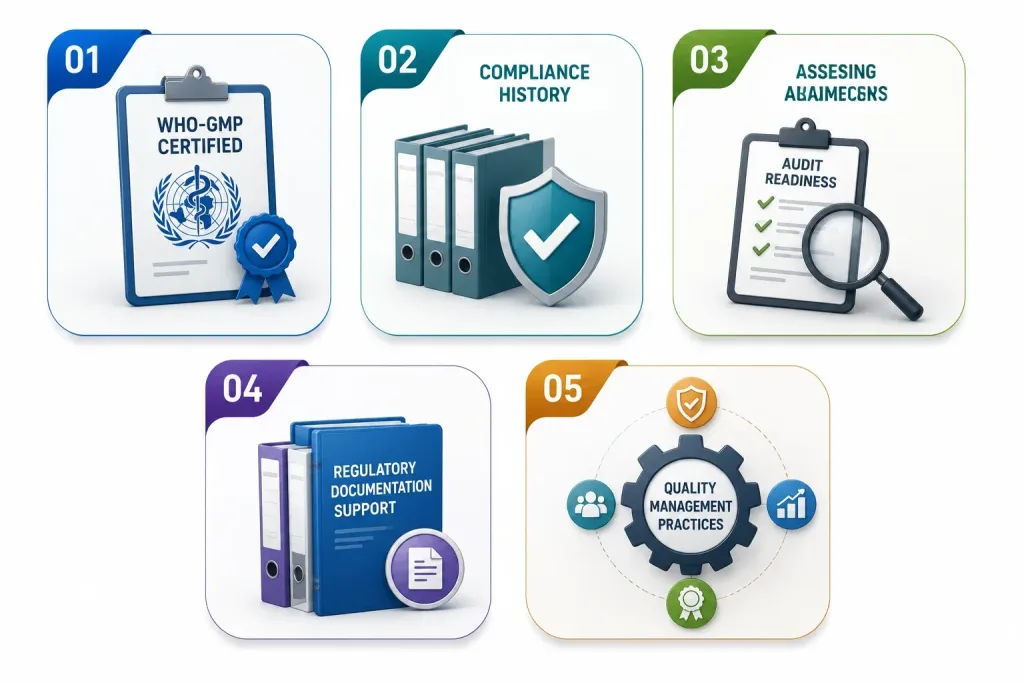
Verifying WHO-GMP Certification
WHO-GMP certification is the least form of quality assurance required by the API manufacturers to enter the regulated markets.
The buyers should however not blindly accept the certificate.
Make sure:
The full inspection report should also be requested by the buyers and not the certificate only.
Reviewing USFDA Registration and Compliance History
In the event the API is intended to be used in products that are marketed in the US, registration of the manufacturing plant by the US FDA should occur.
It is not a secret that all of the USFDA approved plants are in India, yet not all manufacturers have been approved.
Buyers should:
Seek problems in:
Records are preferable; ideally, you should examine the records of the last five years.
Assessing Audit Readiness
The reaction of a manufacturer to audits is a significant indicator of quality systems.
Good manufacturers remain audit-ready throughout the year and not only during the inspections.
Buyers should ask:
A situation where the manufacturer does not manage to come up with audits or documents may imply poor compliance systems.
Regulatory Documentation Support
A good API manufacturer ought to supply total regulatory documents.
These may include:
These are documents that aid buyers to have faster regulatory approvals of finished products.
In a case where a manufacturer fails to provide sufficient documentation, then filing is more difficult to the regulators.
Quality Management Practices and Regulatory Actions
The Quality Management System (QMS) of the manufacturer should also be checked by the buyers.
Important records include:
Buyers need to inquire as well:
The questions are applied to pinpoint manufacturers of good long-run quality systems.
With the understanding of regulatory compliance now in place, we will discuss the aspects of manufacturing and infrastructure affecting the reliability of supplies.
Manufacturing Infrastructure Factors Buyers Must Assess
The fact that it is in compliance with the regulations proves that a manufacturer is able to provide APIs. Production of all infrastructures illustrates how an acceptable manufacturer can produce APIs in large quantities, as needed, and at timely intervals.
There are five major infrastructure areas which the buyers should verify.
Dedicated Vs Multipurpose Manufacturing
Special assembly lines decrease the chances of cross-contamination.
There are multipurpose facilities used by some manufacturers. These also could be efficient as long as good cleaning systems and production schedules are observed and written.
Buyers need to clarify by seeking to know whether the API is manufactured in:
Analytical Laboratory Capacity
Laboratory equipments to be used in testing to achieve the necessary pharmacopoeial limits should be available in the laboratory of the manufacturer.
This may include:
Testing in some companies is done by outside laboratories. This is acceptable if:
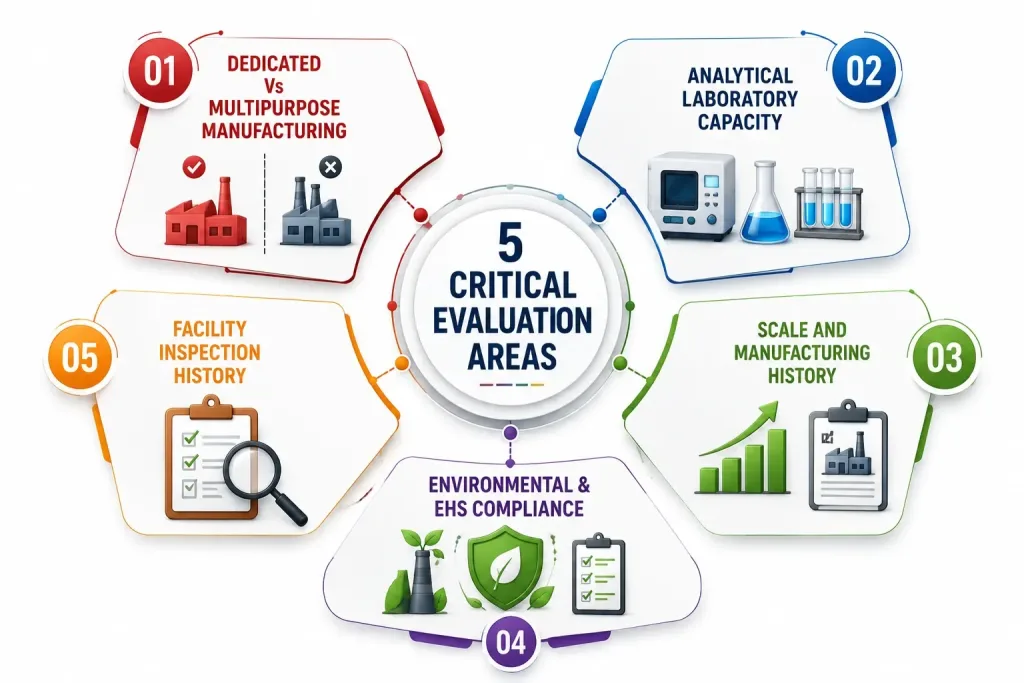
Scale and Manufacturing History
Buyers would want to know whether the manufacturer has already manufactured the API commercially or not.
Request:
A producer with an extensive history in production is most likely to be less risky than one who is manufacturing the API first.
Environmental and EHS Compliance
Global pharma supply chains are developing environmental and safety standards associated with workers and the environment.
The purchasers will be to ask whether the manufacturer has:
This will aid in responsible and ethical sourcing.
Facility Inspection History
The last three inspection reports must be requested of the manufacturing site by the buyers.
Vet whether we have checked the site by:
Strong compliance systems are normally observed in a site where observations are confined to no significant observation.
Having known about manufacturing infrastructure, we shall now examine the quality systems that ensure continuity in batches to batches.
Key Quality Systems Buyers Should Verify Before Procurement
A good equipment could be available in a facility that produces unequal APIs.
Effective quality systems can assist manufacturers to have stable and uniform quality in products.
Batch Consistency
At least 3 recent commercial batches should be asked to provide Certificate of Analysis (CoAs) by buyers.
Review:
Minor fluctuation is expected. Nonetheless big discrepancies across batch can be an indicator of bad process control.
Impurity Profiling
Each API has set impurity thresholds in line with ICH Q3A.
Buyers are to request:
The impurity profile must be in agreement with the needs of the target market.
Impurities should also be fully traceable by the manufacturers.
Without full information on impurity, the manufacturer might be unprepared to be in controlled markets.
Stability Testing
Customers should insist that their market should have ICH-compliant stability information.
Validated chambers under appropriate conditions should be used to conduct stability studies.
For tropical markets such as Africa, Southeast Asia, and the Pacific region, Zone IVb data (40°C/75% RH) is required.
Tropical market approvals may not be supported by manufacturers who supply only one II data (25 °C/60 RH).
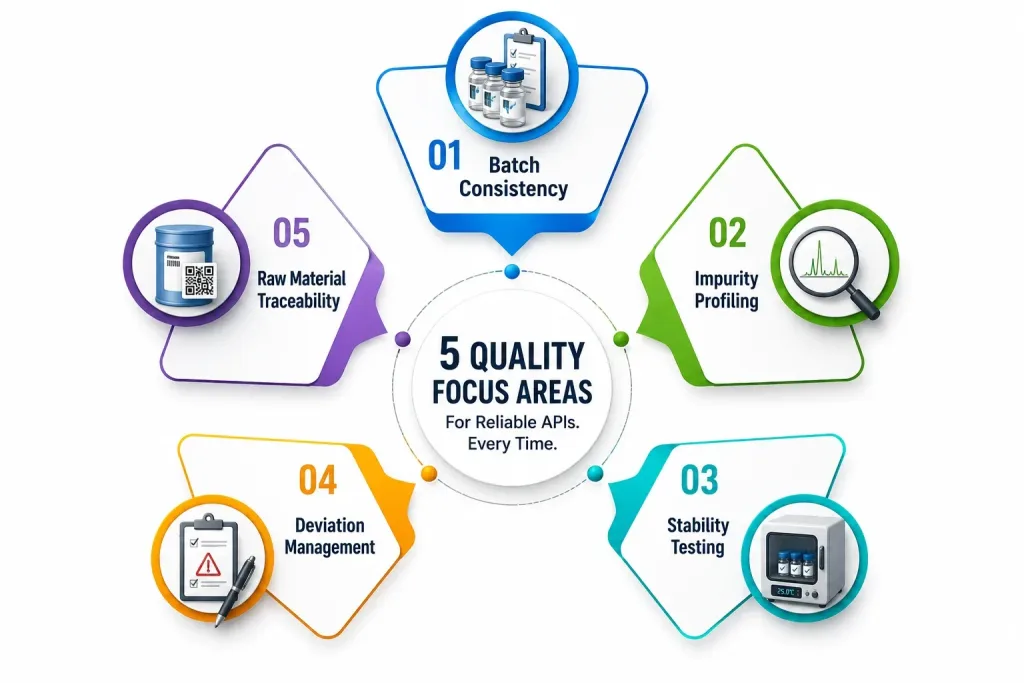
Deviation Management and CAPA
A powerful Quality Management System (QMS) logs an issue and rectifies it most appropriately.
Buyers ought to request:
Poor quality system can be manifested through excessive unresolved problems.
Raw Material Traceability and Quality Assurance
The manufacturers will trace the raw materials used by the supplier to the finished API batch completely.
The purchasers will have to insist on evidence of:
Practically, manufacturers who cannot trace the origin of their raw materials might not be in position to comply with the requirements of the regulations.
Having known the concept of quality systems, we will now look at the supply chain factors that impact on reliability in delivery.
Supply Chain Reliability Is Becoming a Critical Selection Factor
A manufacturer is able to comply with standards, have a good infrastructure, and offer good quality products. Nevertheless, buyers are still vulnerable to considerable risks that supply can pose.
One of the primary criteria in selecting an API manufacturer today is reliability of its supply chain.
According to a recent study of Global Data, supply chain issues can affect the pharmaceutical industry the most in the next year.
Reliable supply is no longer an option in the case of API buyers. It constitutes a significant section of the selection of suppliers.
Raw Material Sourcing Security
The buyers must enquire of the manufacturer the origin of its key starting materials (KSMs) and significant intermediates.
The percentage of KSMs imported by many of Indian API manufacturer remains at 65-70 per cent of KSMs being imported to China.
Buyers should ask where the manufacturer gets its key starting materials (KSMs) and important intermediates.
This creates supply risk.
The best manufacturers reduce this risk by keeping:
When a manufacturer has a single supplier of KSMs, the buyer is at risk of the same supplier.
Lead Time Consistency
Actual lead time performance data over a period of 12 months should be requested by buyers.
Never rely solely on the promised schedules.
Important questions include:
Subpar supply systems may be demonstrated by persistent delays.
These are due to:
Inventory Management
Whether the supplier of the target API or noteworthy intermediates has safety inventory of the products should be researched by customers.
In high demand APIs such as:
Buffer inventory assists producers to be more responsive to orders.
This will be of special importance to buyers in countries with longer transport time, including:
Effective inventory control will help avoid stock imbalances.
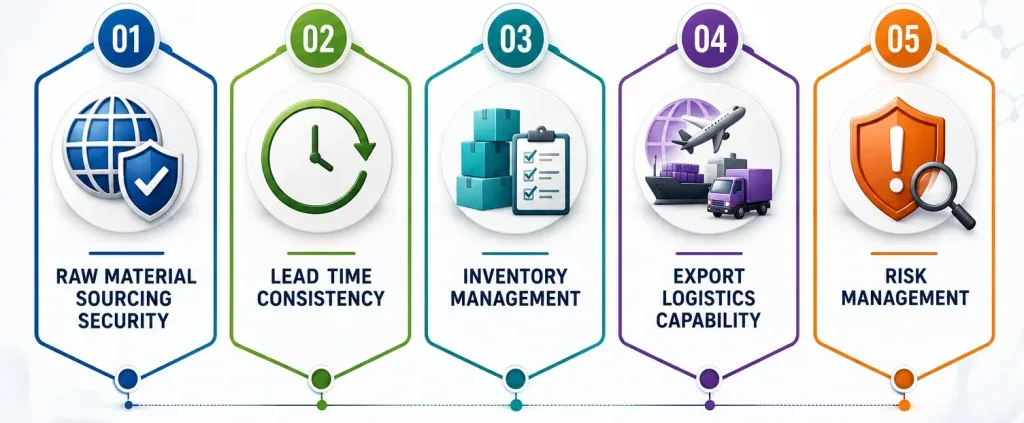
Export Logistics Capability
It is the duty of the customers to make sure that the manufacturer is aware of the importation laws in the new market.
This includes:
In the case of shipment, it is usually simpler with the manufacturers who have dealt with exporting to the target market.
The pioneer orders can drag behind those manufacturers who have never engaged in dealings of products within the market.
Risk Management and Multi-Country Distribution
Strong manufacturers of API have formal risk management systems.
Examples of problems that such systems can be effective in handling are:
The buyers should demand:
More established manufacturers serving numerous countries are likely to have superior, more reliable export arrangements.
Now that we know all about the reliability of the supply chain, we will be pricing and discussing the business analysis that goes into the process of selecting an API manufacturer.
Common Mistakes Pharma Buyers Make While Choosing API Manufacturers
Even seasoned customers commit errors when selecting API manufacturers. Certain errors may lead to significant quality, regulatory, and supply issues.
The following are five things that buyers ought to avoid.
Taking GMP Verification at Face Value
Most customers simply enquire to see whether a WHO-GMP certificate is present.
A certificate however presents the information that the facility was inspected at some point in time. It does not necessarily indicate the up-to-date quality status of the location.
Buyers should also review:
A valid certificate alone is not enough.
Ignoring Scalability
Others just ensure that the manufacturer is able to cope with the existing order quantities.
However, a supplier with high performance at 100kg scale, may not be able to sustain the same quality at 500kg scale.
Buyers should ask for:
Do not rely solely on oral commitments.
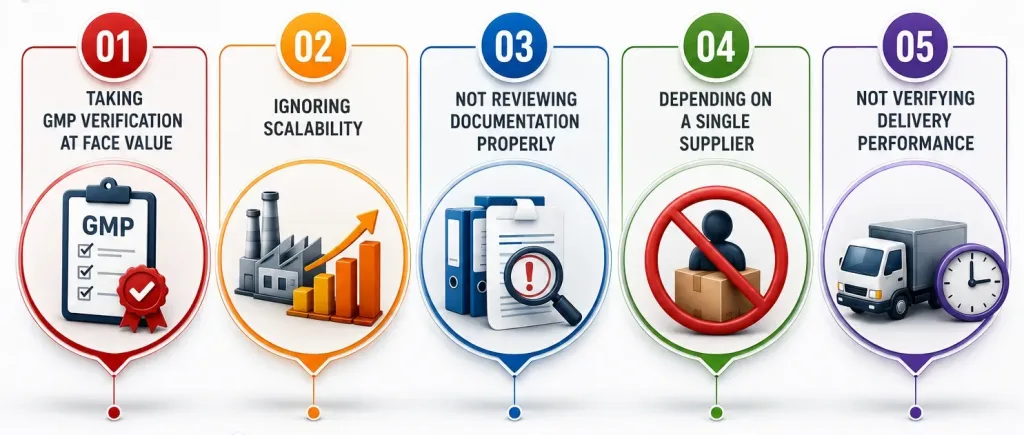
Not Reviewing Documentation Properly
Other buyers merely look at CoA values then ignore other significant documents.
Problems are likely to occur when:
Sloppy documenting can slow product release and licensing.
Documentation review must be detailed and careful.
Depending on a Single Supplier
Having a single supplier poses significant supply risk.
One:
can halt the whole supply chain.
Regulatory authorities, such as EMA, USFDA and WHO, advocate at least two qualified WHO-GMP certified suppliers of important APIs.
The cost of having a backup supplier is typically cheaper than managing a supply failure.
Not Verifying Delivery Performance
Numerous buyers put their faith in claimed lead times without reviewing real performance information.
However, actual delivery schedules might vary with scheduled schedules.
At least 12 months of records of delivery performance should be requested by buyers before they can qualify a supplier.
Having learned the pitfalls that buyers are to avoid, we can now examine the trends that are going to influence the selection of API manufacturer in the future.
Future Trends Reshaping API Manufacturer Selection
The factors used to select API manufacturers are changing quickly.
The future of supplier qualification is being influenced by several new trends.
AI-Driven Supply Chains
AI is becoming more important in API manufacturing.
Manufacturers are using AI for:
Such systems can assist in minimizing deviations and enhance batch consistency.
Customers need to enquire of their suppliers regarding their digital automation strategies.
Specialty and High-Potency APIs
The global API market is projected to grow from USD 144.20 billion in 2025 to USD 198.39 billion by 2030 at a CAGR of 6.6%, The specialty APIs and high-potency API (HPAPIs) are in high demand.
This expansion is largely brought about by:
Buyers may increasingly need manufacturers with:
ESG Requirements
Sustainability is emerging as a significant aspect of procurement, particularly in Europe.
A lot of consumers are favoring manufacturers who:
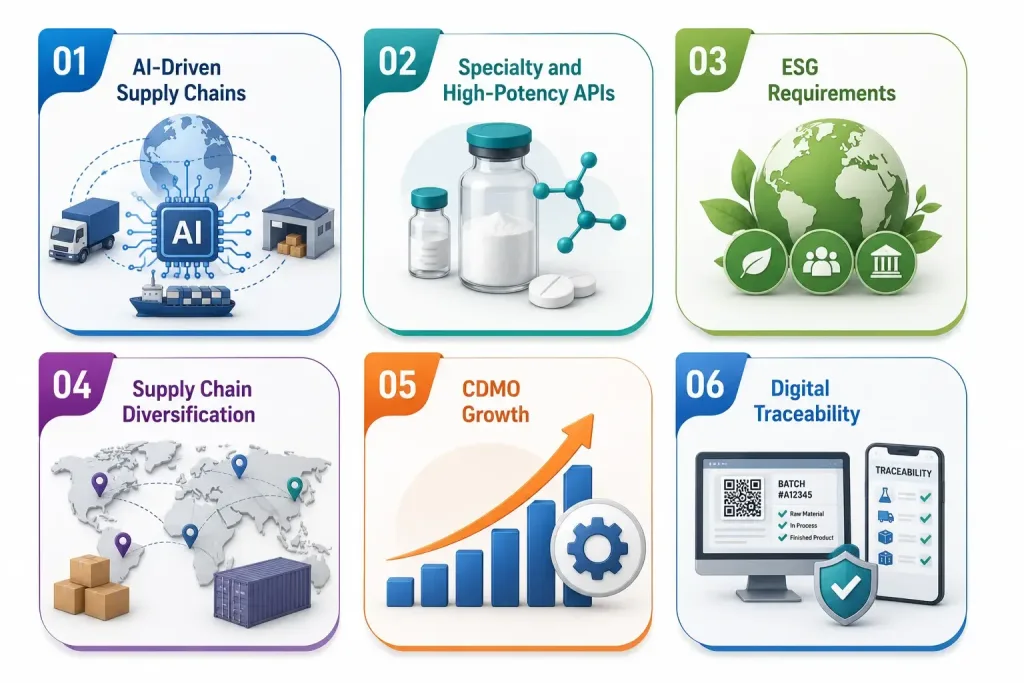
Supply Chain Diversification
Customers are requesting manufacturers to stop relying on single KSM suppliers.
The high reliance on China as a source of raw materials is of concern to many buyers.
Suppliers of many KSMs are gaining popularity among manufacturers.
CDMO Growth
The Indian CDMO market is forecast to grow from USD 22.5 billion in 2024 to USD 44.6 billion by 2029.
There are numerous buyers who would like to deal with a single partner due to:
This helps simplify supply management.
Digital Traceability
Data integrity and digital systems are becoming more of a concern to regulators.
Manufacturers that have good digital QMSs can even be preferred suppliers.
Important systems include:
One of the new future requirements is the digital quality systems.
Since we know what trends will happen in the future, we can now examine a simple guideline on how to choose the appropriate API manufacturer.
Strategic Framework for Choosing the Right API Manufacturer
The selection of an appropriate API manufacturer should be done in parts.
There are six key areas to be reviewed by buyers.
Regulatory Compliance
First, verify:
Any unresolved regulatory action must be considered as a significant risk.
Manufacturing Infrastructure
Request:
In case the facility has multipurpose lines, ensure cleaning validation procedures.
Quality Evaluation
Review CoA data from at least three recent batches.
Check for:
Also request:
Such records give the actual quality culture of the manufacturer.
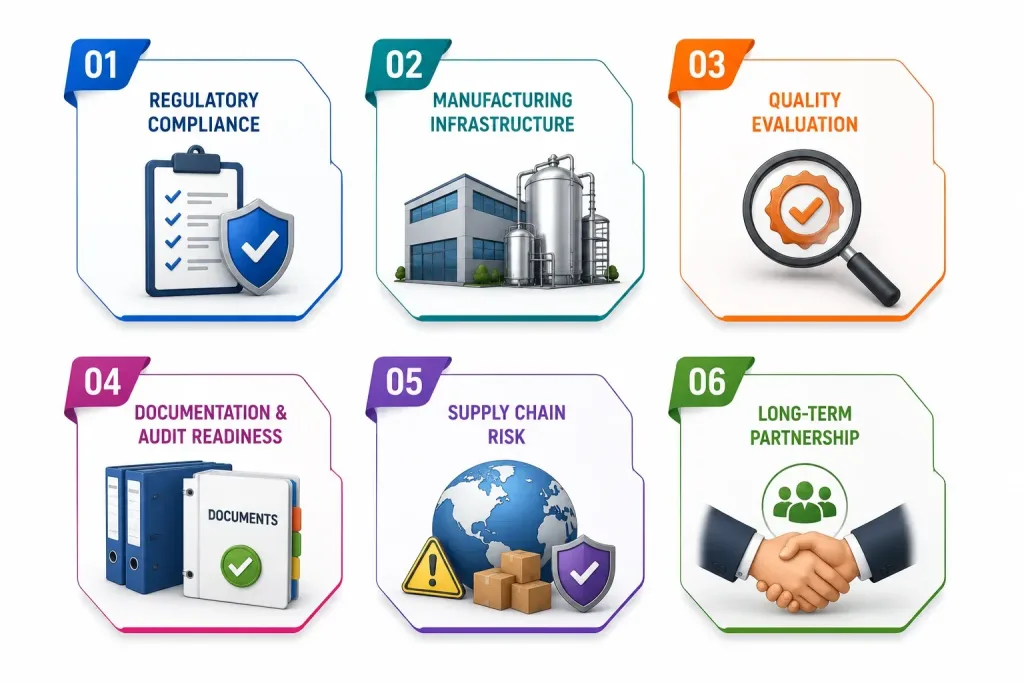
Documentation and Audit Readiness
An effective manufacturer maintains records at every moment.
Buyers should verify:
Those manufacturers who do not undergo audits could have poor compliance systems.
Supply Chain Risk
Request:
Actual supply performance is more important than promises.
Long-Term Partnership
Buyers are also supposed to consider the long-term business support.
Check:
Manufacturers that invest in digital systems and process enhancements can become more robust in the long term partner.
Now that we have discussed the entire evaluation framework, we shall proceed to the conclusion.
Conclusion – The Right Indian API Manufacturer Is a Strategic Asset
The choice of an API manufacturer in India is a buying decision. It is a long term business decision which has the effect of:
This is done simply:
India has a large number of qualified manufacturer API. Customers in the majority of the API groups are able to recognize a high number of vendors that are WHO certified and USFDA certified and with relatively low prices and high levels of regulatory cover.
It is not difficult to find an Indian manufacturer. The question to answer is the selection of the correct one.
Actiza Industry produces WHO-GMP-certified APIs that have a validated digital QMS, complete regulatory documentation package, and conveniently tested export capabilities in regulated and emergent markets.