
India is the hub for pharmaceuticals. It offers affordable medications while ensuring quality.
A key factor in this leadership is a strong position in the Active Pharmaceutical Ingredients (API) segment. APIs make up about 35–40% of India’s pharmaceutical exports.
This happens because of cost-effective manufacturing, a skilled workforce, compliance, and strong quality. In this manner, India continues to be the preferred sourcing destination for APIs.
In this blog, we’ll look at the fastest-growing therapeutic categories in API exports. We’ll also discuss why they are on the rise.
India’s Position in the Global API Market 2025
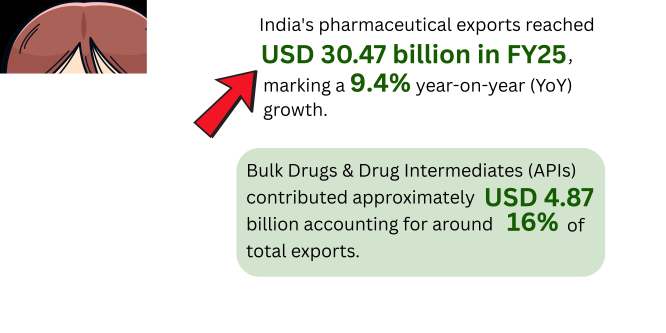
India’s pharma export has reached US$ 30.47 bn in FY25, up 9.4% YoY. The Bulk Drugs & Drug Intermediates (APIs) contributed US$4.87 bn (≈16%).
Continuing with volumes, DGCIS reports bulk-drug exports ranging from 111 to 120 million kg each quarter in FY25.
As per the different countries- NAFTA 37.6%, Europe 18.9%, Africa 12.9%, LAC 6.7%, among these, the US remains the #1 country (≈US$10.5 bn; 34.5% share), followed by the UK, Brazil, France, and South Africa.
India has the most USFDA-registered sites outside the U.S. It also enjoys strong regulatory support, such as:
India still imports ~65–70% of its APIs/intermediates from China. Dependency is easing thanks to PLI for Bulk Drugs and Bulk Drug Parks. The government reports ₹1,362 crore in import savings by March 2025.
The Indian API market is growing quickly. As per the Mordor Intelligence, the size of the market is expected to reach USD 14.77 billion in 2025.
It might increase to USD 22.02 billion by 2030. One report predicts a market value of USD 37.11 billion by 2032, with a CAGR of 12.33%.
The Praxis Global Alliance offers the traditional estimate, and this shows the market will grow from $18 billion in 2024 to $22 billion by 2030.
However, the India manufacturers come over 500 different APIs and hold nearly 57% of the total share of all APIs.

The chart below from Grand View Research shows the growth of the Small Molecule API Market from 2020 to 2030. The market size was valued at USD 214.2 billion in 2024.
But there is a potential for growth to expand steadily at a 5.6% CAGR between 2025 and 2030 since synthetic API dominates the market, while biotech APIs are showing a gradual increase.
Market Forces Driving API Export Growth (2023–2025)
Geopolitical diversification
India holds a strong position, and this accounts for 2% of the global value in vaccine exports by volume but lags in value share. However, to make this geopolitical diversification stronger, India aims to expand its vaccine export share from 1.5% currently to 3% by 2030 and 8% by 2047.This in turn potentially raise the export value $1.1 billion to $24–25 billion.
Indian government incentive schemes
The India government promotes domestic API production through the Production-Linked Incentive (PLI) Scheme and reduces imports and thereby increasing self-reliance. It was found by June, 2024, the investment was nearly ₹29,268 crore ($3.5B), generating 17,763 jobs and commissioning 53 manufacturing sites.
Private sector expansion
India has emerged as the powerhouse of API production and contributing 8% of the global market share and producing over 500 different APIs. It has been found that India supplies an estimated 20% of global generic API volume but captures only 8% of global API value. Further, Indian API sector is expected to expand from USD 14.8 billion in 2025 to USD 22 billion by 2030.
They are doing this by:
Key Factors Driving Growth in API Exports
After COVID-19, many countries looked for cost-effective healthcare solutions.
This shift led to low-cost generics and APIs from India. This is creating a surging demand for generic APIs.
The global rise in diabetes, heart disease, and cancer is boosting the demand for APIs in these fields. The PLI scheme for bulk drugs has boosted domestic production.
It has cut down on import dependence and increased export capacity.
Better alignment with global rules, like PIC/S and ICH, has helped India gain credibility.
Faster approvals from agencies such as the US FDA and EMA also play a big role.
This helps in gaining access to controlled markets and speeding up export growth.
Fastest-Growing Therapeutic Segments (2023–2025)
Anti diabetics
India currently has 77 million individuals with diabetes and is projected to rise to 134 million by 2045.
In case of API demand, there is an extreme growth of new class drugs like GLP-1 receptor.
As per the India GLP-1 receptor agonist, the market is all set to grow at a CAGR of 34.3% from 2025 to 2030.
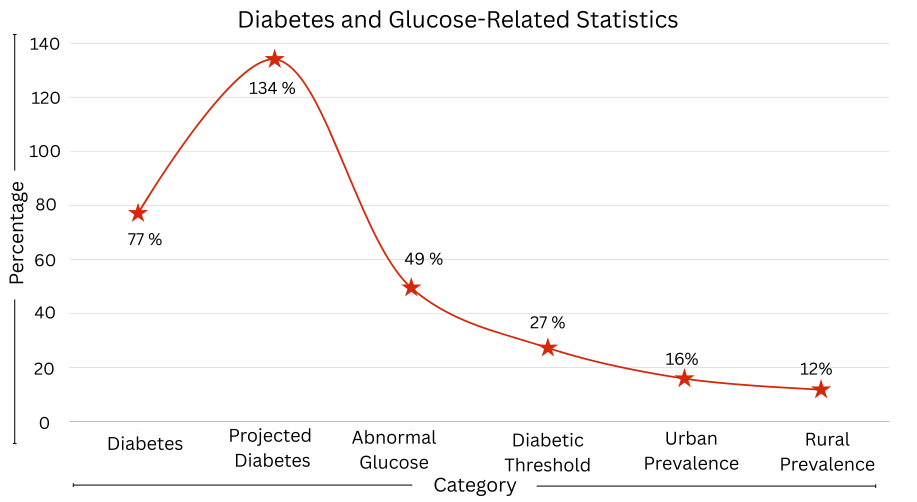
Accordingly, the Indian oral anti-diabetic drug market size is expected to reach USD 2.09 billion by 2030.
There is no doubt that Indian manufacturers are rapidly scaling up production of these high-value APIs.
Cardiovascular Drugs
In 2023, the cardiology segment led the API market, holding a 21.2% share.
This growth occurred due to higher rates of cardiovascular disease. Government programs also promote lipid and cholesterol management.
The oncology segment is set to grow the fastest.
This results in an increase in cases of cancer, and also with the launch of 15 new therapeutics. There are also over 1,000 ongoing clinical trials.
Oncology APIs
The generic API segment market in 2023 has a 56.8% revenue share and is expected to grow at the fastest pace.
The growth is boosted by the upcoming patent cliff in 2030.
Such a trend is creating a wide opportunity for generic API manufacturers.
This is especially true in oncology. Here, over 60 complex, high-revenue drugs are driving demand.
CNS (Central Nervous System) Drugs
As per the report, the global API market, majorly in the CNS, is expected to grow at a CAGR of 4.8% from 2025 to 2034.
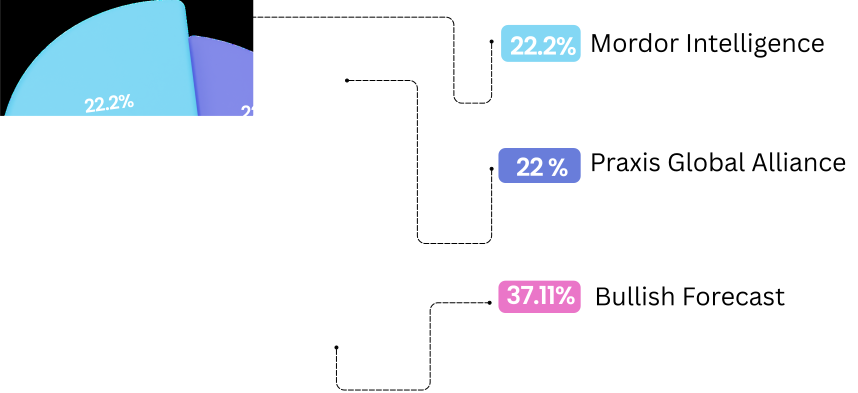
should be “The Indian API market size is further projected to increase to USD 14.77 billion in 2025.
This is expected to increase further and is expected to reach USD 22.02 billion by 2030.
Anti-infectives (Antibiotics + Antivirals)
Among the different segments, anti-infectives (antibiotics and antivirals) hold a strong drive.
This is because drug-resistant infections and viral outbreaks are increasing.
The demand for broad-spectrum antibiotics and key antivirals is rising.
India is the main global supplier. This is supported by government PLI incentives and global health priorities.
Impact of Indian Government Schemes on Therapeutic API Growth
The Indian government has been key in boosting therapeutic API growth.
It does this through focused initiatives. The Indian government is playing an important role in boosting the therapeutic API growth scheme, costing ₹15,000 crore.
It boosts local manufacturing and reduces reliance on imports.
This program identifies 41 key APIs for import substitution. Many are vital for chronic therapies.
The special focus has also been seen on increasing oncology and fermentation-based APIs.
Himachal Pradesh, Andhra Pradesh, and Gujarat are the three Mega Bulk Drug Parks that are under construction.
This will create world-class infrastructure. This supports large-scale, cost-efficient API production. It makes India the leading global supplier.
Regional Export Trends
There is a rise from 2017 to 2024, as the Indian pharma exports grew significantly.
The US is the largest market. Exports rose from USD 50.9 billion in 2017 to USD 91.2 billion in 2024.
At the same time, the EU follows closely the strong demand for cardiovascular and CNS therapies.
Africa here is showing the growing imports, especially in anti-infectives.
Latin America is also emerging with the rising demand for pain and antibiotic APIs.
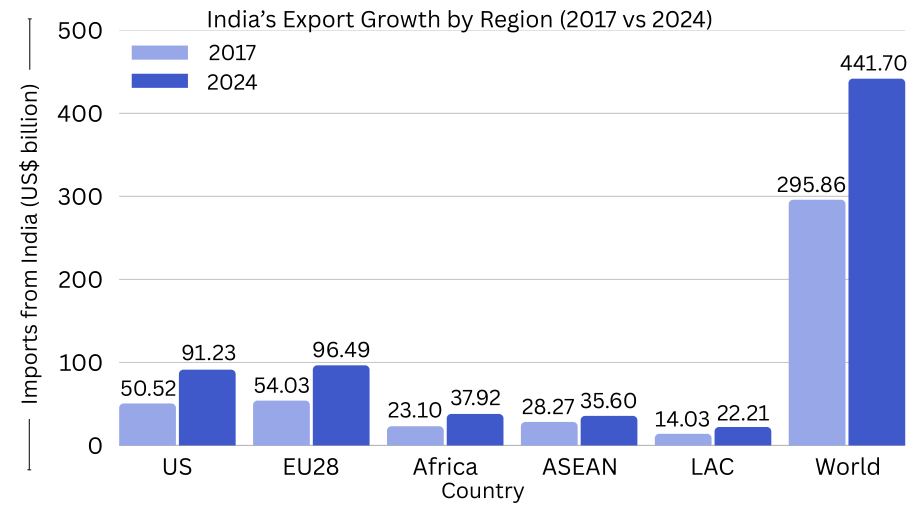
Whereas, region-wise therapy shows a clear pattern-The US focuses on oncology and antidiabetics with the USFDA as the key regulatory body.
The EU, moreover, focuses on CNS and cardiovascular under EMA standards.Africa mainly imports anti-infectives with WHO PQ requirements.
Latin America focuses on pain management and antibiotic APIs. Regulators like ANVISA in Brazil and COFEPRIS in Mexico guide this effort.
Challenges and Opportunities for Sustained Growth
Challenges
The industry faces tough challenges. There are strict regulations and rising costs. Also, the need for imports can slow growth.
Regulatory Scrutiny
Strict rules and slow approvals can delay product launches and increase compliance costs.
Pricing Pressures
Government price controls and the competitive market limit profits for manufacturers.
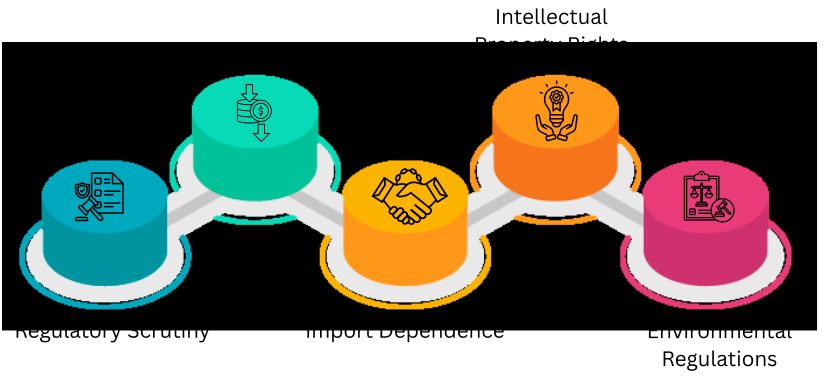
Import Dependence
There is a continued reliance seen on imports and with certain KSMs along with certain intermediates. This means India imports API and bulk drugs, which is nearly ~Rs 377 billion(approx USD 4.5 billion) in 2023–2024, with China accounting for ~70%.
Intellectual Property Rights
Weak IP laws and patent disputes in some markets limit chances for Indian API exporters.
Environmental Regulations
Strict ecological rules in chemical engineering increase costs and require sustainable building practices.
Opportunities
The Indian API sector has great potential. Demand for APIs and niche molecules is rising. This is the case especially with oncology and specialty care.
There is a growing shift toward biologics. Biosimilars also provide a new path for expansion.
The outsourcing global trend boosts opportunities for Contract Development and Manufacturing Organizations (CDMOs).
There is an expansion seen towards the emerging markets like Latin America, Africa, and Asia, which offer new growth opportunities.
Conclusion
The Indian API market is experiencing noteworthy growth.
This is because of the growing demand for:
This is followed by the opportunities in biosimilars and niche APIs. The plan gets support from government initiatives like the PLI scheme. It also seeks to enhance manufacturing capacity. This will help build global trust in India’s regulatory compliance.