
Executive Summary: The 2030 Zero-Waste Feasibility Verdict
Reaching zero waste in API (Active Pharmaceutical Ingredient) manufacturing by 2030 is a bold but achievable goal.
The global pharma industry is moving towards sustainability.
In the API plant, the main goal is zero waste. Every output—solid, liquid, or gas—is either recycled, repurposed, or safely reengineered. Nothing is left as unmanaged waste.
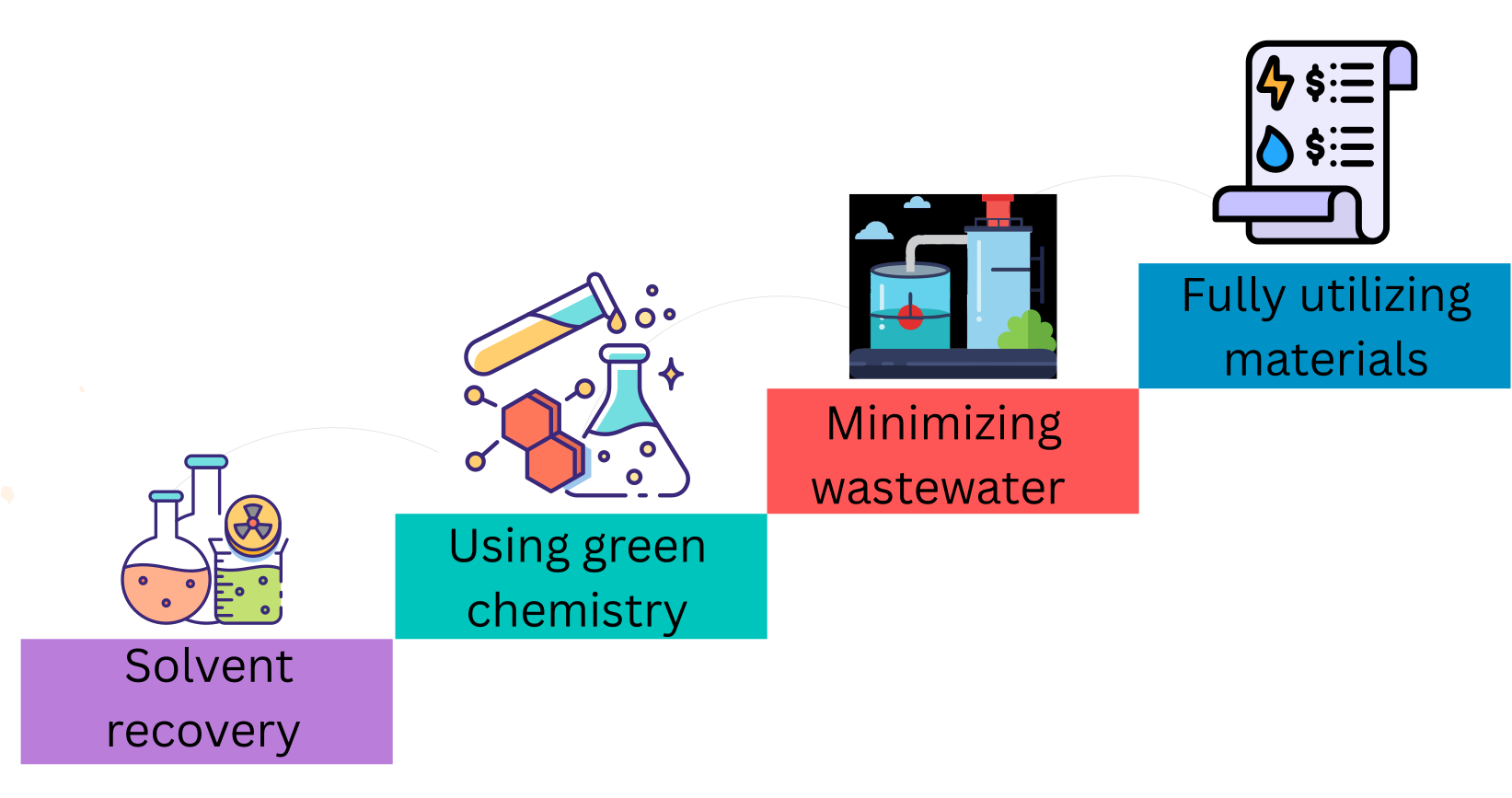
This mainly includes:
However, the industry currently faces significant challenges like-
Upgrading old manufacturing systems is costly. High solvent use, hazardous waste, and strict regulations add to these expenses.
The overall opportunity is growing. They seek better catalytic and biocatalytic methods, along with digitized operations. They aim for minimal environmental impact.
With ongoing policy help and investments in cleaner tech, early adopters might have zero-waste API plants by 2030.
Improved processes will help make this a reality. However, full industry adoption might take longer than ten years.
To reach zero-waste API manufacturing by 2030, we must balance current process issues with new technologies and sustainability goals.
Global frameworks, like UN SDG 12.5, aim to reduce waste. In pharma, TRUE Zero Waste aims to create systems that cut out waste.
They aim to avoid burning or burying materials completely.
In API manufacturing, achieving true zero waste with an E-factor of zero is unrealistic.
Complex drug synthesis involves many steps.
The 2030 goal is now “near-zero impacts” or “maximum resource circulation.”
This approach focuses on lower E-factors and using high-purity solvents. It also focuses on water recycling and zero-impact API levels in waste.
This shifts the industry from just managing waste to creating efficient, resource-friendly processes.
2030 Feasibility Snapshot:
Technological readiness
By 2030, zero-waste tech in API plants will be ready for the industry. Smart recycling loops and cleaner synthesis routes will be practical for real use.
E-factor reductions demonstrated: 75% to 97% for specific APIs.
Economic reality
The initial cost is high, but you save money in the long run. This comes from reduced waste and lower solvent use, and benefits from regulations.
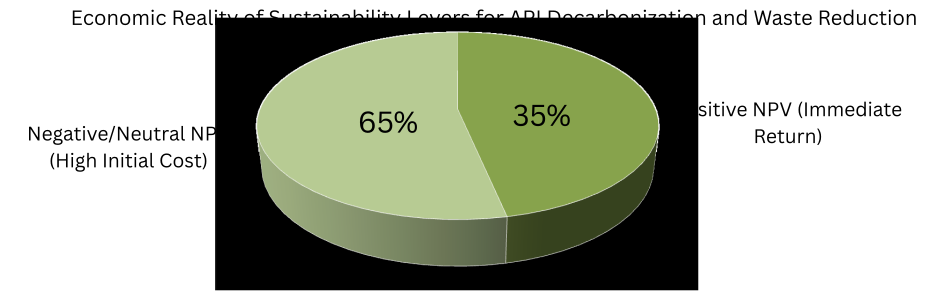
Only 35% of the necessary levers for decarbonization and waste reduction offer a positive NPV.
The remaining 65% require high investment with no immediate return.
Potential to reduce ~90% of total emissions by 2040 (modelling estimate).
Sustainability impact forecast
Widespread use of these upgrades can greatly reduce chemical waste and carbon emissions.
However, real change depends on ongoing use and clear tracking of sustainability.
Universal zero-waste (E-factor ≈ 0) by 2030: Highly improbable.
Selective near-zero waste is possible, with 35% of projects having a positive NPV.
These projects play a big role in reaching this goal.
The Global API Waste Crisis: Establishing Today’s Baseline
The global small-molecule API sector produces a lot of waste.
This happens because of complex multi-step synthesis and the use of many solvents.
The biggest sources of pollution are protection–deprotection steps, solvent-based reactions, and purification cycles. These processes create a lot of waste.
APIs have much higher E-Factor and PMI values than bulk chemicals. They can be tens of times higher.
This shows that pharmaceutical manufacturing produces more waste and uses more materials.
Primary Waste Streams:
Solvent waste dominance
Solvents account for the biggest part of API waste. They often make up over 50–70% of total residues.
This is because of repeated cycles of reaction, extraction, and purification.
Aqueous waste and ecotoxicity
Water often gets contaminated with reagents, catalysts, and byproducts. This creates tough wastewater streams. These effluents can pose ecotoxicity risks if treatment before discharge is inadequate.
Energy and carbon output
Heating, cooling, and long reaction times use a lot of energy.
This increases the carbon footprint of API plants. Inefficient batch operations further increase CO₂ emissions across the production chain.
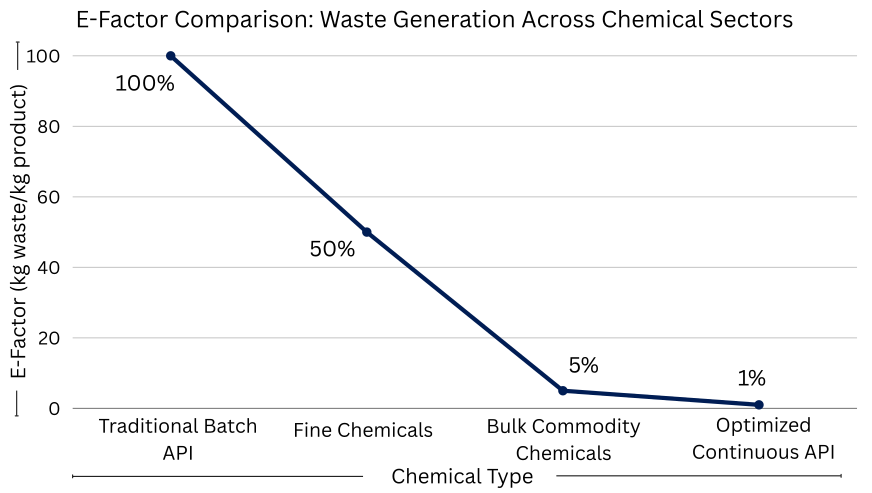
Small-molecule API manufacturing creates a lot of waste. E-factors usually range from 25 to over 100. In contrast, bulk chemicals often stay below 5.
Most of this waste comes from solvents. They make up 80–90% of non-water input mass and create about 75–80% of total process waste.
An API facility can generate several kilograms of hazardous waste for each kilogram of product.
It also generates large amounts of wastewater and contaminated solids.
Water use is significant, estimated at 500 to 1,000 liters for each kg of API.
Also, over 90% of pharma’s GHG emissions come from the value chain.
This is due to high embodied carbon and energy-intensive inputs.
Bulk commodity chemicals produce less than 1–5 kg of waste for each kg of product.
In contrast, fine chemicals generate 5–50 kg of waste per kg.
Pharmaceutical batch API processes generate much more waste.
They produce about 25-100 kg of waste for every kg of API.
Continuous manufacturing with solvent recovery can greatly lower E-factors.
They can drop to about 1, which is often 50–60% less than traditional batch methods.
In traditional batch API manufacturing, most waste happens during late-stage transformations and purification.
This is especially true for processes like crystallization, extraction, and chromatography.
These methods use a lot of solvents.
These steps require a lot of solvent. They also create significant inorganic salt byproducts from the reagents.
Filtration, drying, and using a lot of heat or vacuum create more waste and emissions.
Small yield losses can lead to big waste. This highlights the need for greener methods.
These methods should use catalytic reagents and cut down on isolation steps.
Zero-Waste & Green Chemistry Principles
Zero-Waste and Green Chemistry Principles combine ESG with sustainable chemistry.
They focus on pharmaceutical and chemical manufacturing.
Key design strategies are to:
The focus is on process intensification through continuous methods, in-process recycling, and reuse.
This also aims for higher yields and less batch variability. The goal is to cut waste and lessen environmental impact.
Zero-Waste (ESG) Frameworks: Globally, “zero-waste” is defined as the goal of eliminating disposables entirely.
The UN SDGs (Goal 12) aim to reduce waste by 2030 significantly. Reporting standards, like GRI 306 (Waste), require companies to set waste prevention targets.
They must also track how much waste they divert versus how much they dispose of Companies set goals like “100% landfill-free sites by 2025/2030.”
They also use circular materials and apply internal carbon pricing.
For APIs, recycle or reuse all process solvents and slurries. This helps stop untreated discharges.
Atom Economy:
This principle aims to use almost all atoms from the starting materials in the final product.
Chemists cut waste and save resources by removing unnecessary steps.
For example, they skip adding and then removing protecting groups.
Catalysis and selectivity optimization
Methods use tiny amounts of a catalyst to process many molecules.
They are much more efficient than reagents, which are used up in the same amount as the substrate.
Using metals, enzymes, or organ catalysts helps reduce byproducts. This makes purification easier.
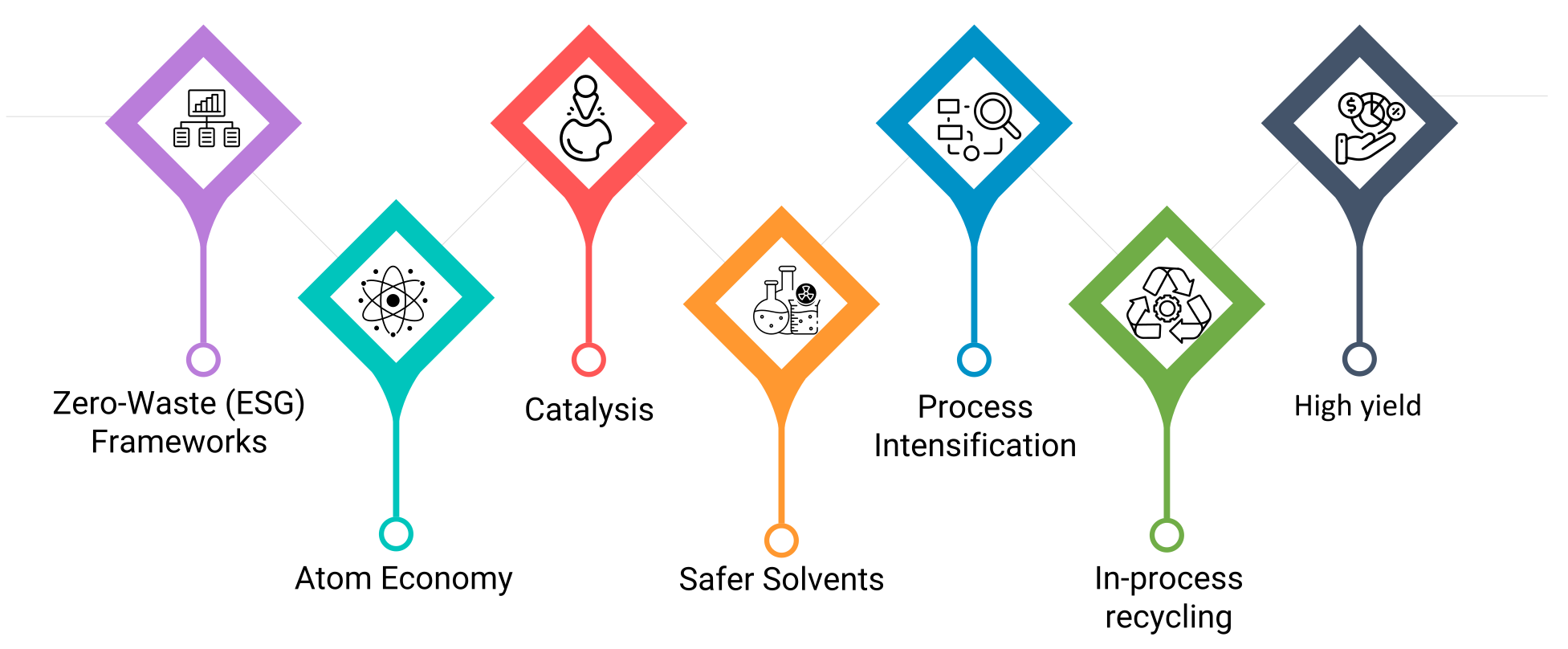
Safer Solvents and auxiliaries
Choosing the right solvent affects sustainability. So, green chemistry promotes low-toxicity and eco-friendly options.
Water, supercritical CO₂, and bio-based solvents are preferred. Chlorinated and persistent organic solvents are minimized in modern synthesis strategies.
Process Intensification:
Merging steps or running reactions in continuous flow boosts efficiency.
This approach cuts time, waste, and energy use significantly.
When intermediates can stay in the mix, the process is cleaner and uses fewer resources. A shorter sequence also helps.
In-process recycling:
This means reusing materials during production. Instead of throwing them away, they are used again.
Examples include:
These actions help reduce raw material use and waste.
High yield and lower batch variability
Getting high reaction yields cuts down on wasted materials and byproducts.
Many organizations focus on reaction pathways that provide high yields.
They prefer these, even if the chemistry is complex. This choice helps lower downstream processing costs.
Enabling Technologies and Sustainable Practices
Solvent Recovery and Recycling:
Advanced purification units recover over 90% of process solvents.
This greatly cuts down the need for fresh solvents. In one installation, solvent usage dropped from 0.86 to 0.22 kg/kg API (Solvent 1) and 0.51 to 0.11 kg/kg API (Solvent 2).
Many plants recycle about 80%. Next-generation systems aim for over 90% efficiency and lower VOC losses.
Continuous / Flow Processing:
Switching from batch to continuous reactors reduces waste. Reactions happen at higher concentrations and with better control.
This change lowers solvent needs by 30–70%. A pilot run even showed yield gains (88% vs. 86%) and a ~60% drop in waste (E-factor 0.986 vs. 2.488).
Continuous flow also makes it easier to merge reaction steps and streamline separations.
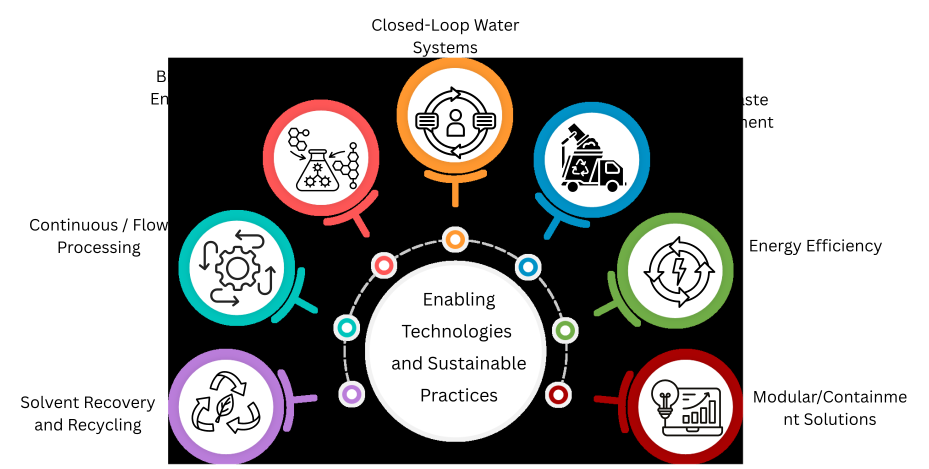
Biocatalysis and Enzymatic Routes:
Enzymes allow for precise transformations in water. A real example showed a 10–13% improvement in yield.
It also had about 19% less waste than the original rhodium-based method.
These systems often reduce side-product formation and simplify downstream cleanup.
Closed-Loop Water Systems:
Facilities can reduce liquid waste by reclaiming and reusing process water.
Modern setups—ultrafiltration, RO, evaporators, and ZLD—can lower water losses by 30–50%.
Many API plants now use nearly self-contained cycles. They combine reuse, rainwater harvesting, and separate wastewater handling.
Solid Waste Management:
Zero-waste efforts start by reducing, reusing, and recycling. Disposal comes last.
Composting biodegradable materials and reducing single-use plastics greatly lowers solid waste.
Some operations turn suitable residues into on-site energy.
This creates a circular system instead of depending on landfills.
Energy Efficiency:
Using energy wisely reduces greenhouse gas emissions. It also lowers the hidden waste linked to power use.
Using waste heat, better insulation, and LEDs cuts energy per kg of API.
Solar and wind setups also lower Scope 2 emissions.
One facility achieved carbon-neutral electricity by combining on-site solar with renewable power sourcing.
Modular/Containment Solutions:
Disposable liners and closed-transfer systems cut down on heavy solvent cleaning.
Modular systems also play a big role in this reduction.
Although first adopted in biologics, these technologies are now extending to small-molecule production.
Flow-based equipment and modern containment systems cut cleaning times and reduce chemical use.
Case studies show big drops in E-factor. Artesunate saw a 97% reduction.
Phenibut and Ibuprofen followed with about 93%. Even the lowest improvement was still at 85%.
These gains come from using less solvent, which cuts reagent waste.
They also improve heat and mass transfer. Biocatalysis uses enzymes for selective reactions.
This avoids heavy-metal catalysts and reduces waste from protection and deprotection steps.
When used with continuous flow, it shows big environmental benefits.
Flow biocatalysis has an E-factor of 53, while batch processes have a baseline of 200.
This means a 73.5% reduction. The approach also supports biorefinery strategies that replace fossil-derived inputs with renewable biomass.
To achieve circularity in solvents and water, we need to:
This is important because solvents contribute significantly to hazardous waste.
Water systems should focus on reuse. Technologies like electrodialysis and crystallization help.
They separate brine from clean water, allowing for closed-loop operation.
Effective water management depends on spotting high-API and low-API streams.
This helps ensure safe discharge and boosts utility efficiency and product recovery.
Financial, Infrastructural, and Data Challenges
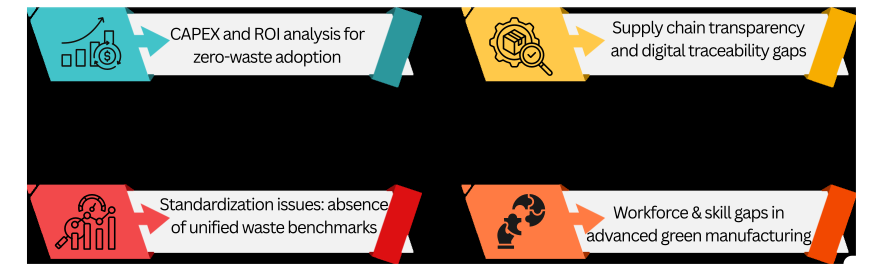
CAPEX and ROI analysis for zero-waste adoption
Implementing zero-waste API plants infrastructure needs a lot of money.
This includes costs for solvent-recovery systems and advanced monitoring and automation tools.
These investments can lower operating costs and waste expenses. But, they often have a long payback period.
This makes some firms hesitant to commit early.
Supply chain transparency and digital traceability gaps
Limited real-time insight into supplier practices makes it tough to know if materials are sourced responsibly or handled with minimal waste.
Digital traceability tools vary widely in their use across the industry.
Standardization issues: absence of unified waste benchmarks
The industry lacks a clear way to define and measure waste. This causes different companies to report inconsistently.
Without standardized benchmarks or consistent E-factor categories, it’s tough to compare environmental performance.
Setting meaningful reduction targets is also difficult.
Workforce & skill gaps in advanced green manufacturing
New green technologies, like continuous processing and enzyme-based catalysis, require special training.
Digital operations also need this training. Many current teams don’t have this training yet.
This limits how fast plants can switch to low-waste production.
Regulatory and Corporate Drivers Toward 2030
International Frameworks (EU Green Deal, UN SDGs, OECD)
Global climate deals, such as the Paris Agreement and UN SDGs, push industries toward net-zero and zero-waste goals.
The EU’s Green Deal aims for climate neutrality by 2050. It also seeks a 55% reduction in GHG emissions by 2030.
This plan includes circular-economy policies and strict reporting rules.
New EU rules on water reuse and industrial emissions push pharma companies to cut waste.
They also need to recycle water and improve effluent quality.
India’s waste control mandates and CPCB/API regulations
India has strengthened environmental rules for its large API sector.
These will require zero liquid discharge (ZLD) and stricter effluent treatment. Many states enforce ZLD.
New standards also aim to reduce antibiotic and chemical pollution in waterways.
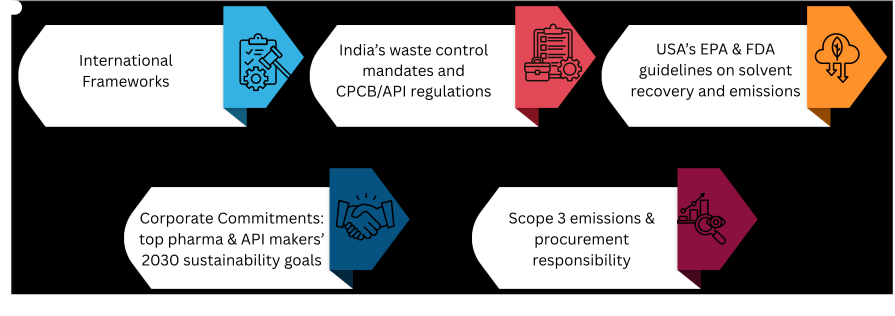
USA’s EPA & FDA guidelines on solvent recovery and emissions
In the USA, the EPA enforces the wastewater limit under 40 CFR 439. These set limits on certain pollutants, solvents, and heavy metals. They apply to different types of pharma plants.
The latest update is under review. Stakeholders focus on controlling endocrine-disrupting drug compounds.
Corporate Commitments: top pharma & API makers’ 2030 sustainability goals
Leading pharmaceutical and API companies are setting ambitious 2030 sustainability targets, including reducing carbon footprints, enhancing energy efficiency, and achieving greener manufacturing processes to meet global ESG expectations.
Scope 3 emissions & procurement responsibility
Pharma companies are increasingly focusing on Scope 3 emissions, which cover indirect emissions across the supply chain, aiming to track, reduce, and report these emissions transparently as part of their overall climate strategy.
Case Studies and Pilot Initiatives
Continuous Manufacturing Pilot Projects (Pfizer, Novartis, Indian API clusters)
Leading pharma firms are testing continuous manufacturing to improve efficiency, reduce waste, and enhance scalability in both global and Indian API production hubs.
Biocatalytic route case for select APIs
Biocatalysis is being adopted for certain APIs to enable greener, more selective reactions, minimizing hazardous reagents and energy use.
Atom economy optimization example
Companies are redesigning synthetic routes to maximize atom utilization, reduce byproducts, and improve overall process sustainability.
Corporate Zero-Waste Roadmaps – how industry leaders benchmark progress
Top pharma players track zero-waste milestones through metrics, audits, and supplier engagement, ensuring measurable progress toward 2030 sustainability goals.
Strategic Feasibility Assessment: Can 2030 Deliver?
Achievability scorecard:
Meeting 2030 sustainability ambitions in the pharma sector depends on a mix of capabilities and conditions.
Evaluating technical readiness helps determine if existing technologies can scale efficiently for greener manufacturing.
Financial feasibility considers whether the necessary investments are realistic and deliver long-term value.
At the same time, infrastructure and regulatory alignment ensure that facilities, supply chains, and policies are equipped to support these objectives, creating a comprehensive lens for assessing what’s truly achievable by 2030.
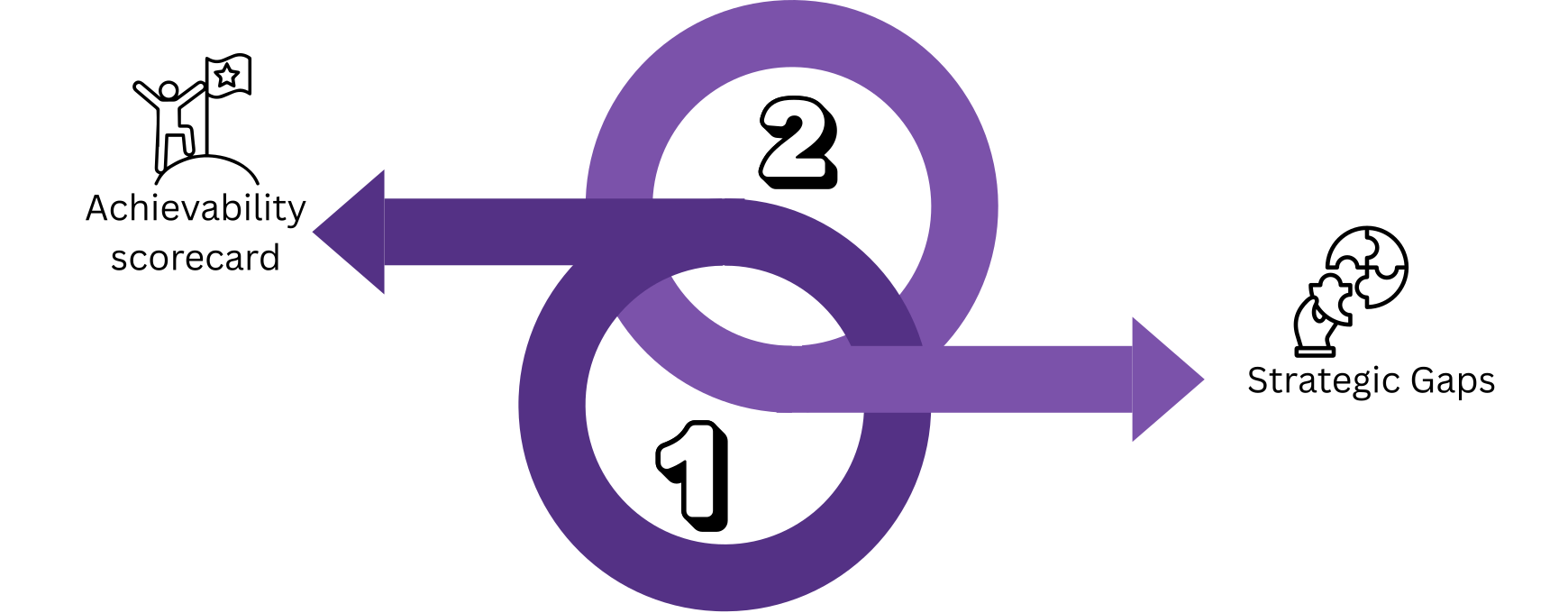
Strategic Gaps:
Several strategic gaps could hinder pharma’s 2030 sustainability goals. Misalignment in financial planning and inadequate incentives can slow investment in green technologies.
The absence of standardized data makes tracking progress and benchmarking difficult, while limited collaboration and technology transfer across companies and regions restrict the widespread adoption of best practices.
Addressing these gaps is crucial for turning ambitious targets into tangible outcomes.
Action Plan and Recommendations
To accelerate sustainable API production, companies should prioritize investments in solvent recovery, continuous processing, and catalytic redesign.
Embedding sustainability metrics into B2B procurement and supplier qualification processes ensures greener choices throughout the supply chain.
Emphasizing process redesign rather than waste disposal, adopting closed-loop systems for high-risk waste, and leveraging digital twins and AI for predictive waste management can collectively drive efficiency and reduce environmental impact.
Conclusion: Toward a Circular API Future
Achieving zero-waste APIs by 2030 is an ambitious yet attainable goal, though progress may vary globally.
Success hinges on collaboration, continuous innovation, and transparent reporting.
Manufacturers and exporters play a pivotal role in leading this transition, shaping a more sustainable and circular future for the API industry.