
The Indian pharmaceutical market is one of the biggest across the globe, with a value of US$50 billion in FY 2023–24.
The value is expected to reach US$130 billion by 2030, and the revenue of all the exports is about US$25.3 billion. APIs are one of the major constituents of this pharmaceutical demographic.
The main constituents of all medicines are active pharmaceutical ingredients (APIs). They can be as simple as painkillers or as complicated as biologics.
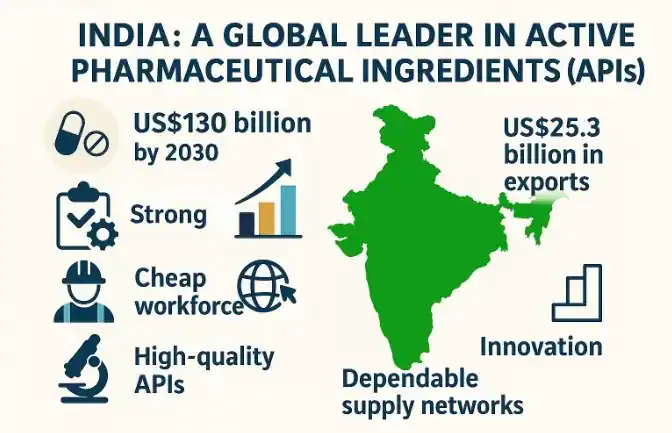
According to the stats, India will be the world’s largest maker of APIs by 2025.
This is because we have good infrastructure, cheap workers, strict rules, and innovations are always coming up. India sells high-quality APIs to consumers and investors worldwide at competitive prices.
It also features dependable supply networks that are supported by government initiatives.
This blog will talk about how India has become a major player in the API world. It will look at its history, market, and main highlights.
We’ll also discuss how it affects the world and what its strategic strengths are. We’ll also look at policy support, innovation, and the change to digital. Lastly, we’ll talk about trends in exports, problems that come up, and good ways to work together.
The History and Evolution of India’s API Industry
India’s API story began with a heavy reliance on imports, notably for important active ingredients that came from China. Earlier, we used to depend on China for almost 66% of API imports.
This dependence made India weaker and helpless in this field. So, the people modified their plans, and the new era of API started.
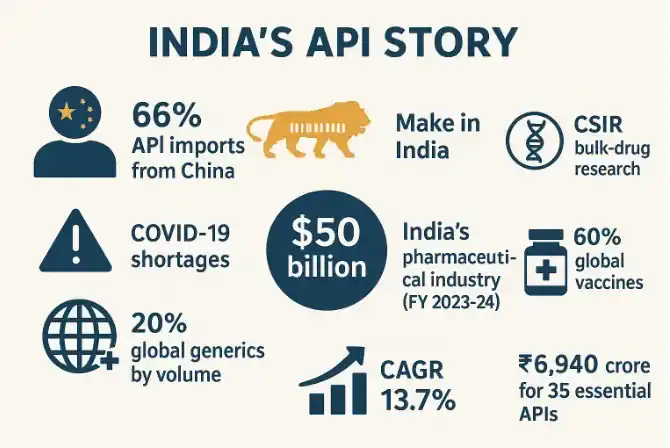
They started substantial campaigns like “Make in India” and began research through CSIR bulk-drug programs. After COVID-19, these attempts sped up. The shortages around the world proved how important it is to get a domestic API.
Today, the pharmaceutical industry in India is worth about $50 billion (for FY 2023–24). The country makes 20% of the world’s generic pharmaceuticals by volume and more than 60% of the world’s vaccines.
India is now the third-largest exporter of drugs in the world by dollar value. This illustrates how well its path of change has gone.
According to projected data, API is expected to grow even more with a CAGR of 13.7%. Furthermore, the government has invested around 6,940 crore rupees for the manufacturing of 35 essential APIs.
India’s API Manufacturing Capacity in 2025
India’s API manufacturing capability will be one of the best in the world in 2025, thanks to its size and ability to follow rules.
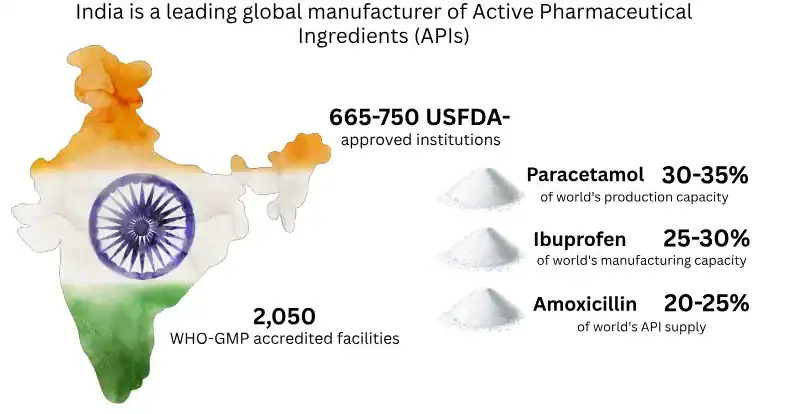
There are around 665 to 750 USFDA-approved institutions in the country. This is the most outside of the United States. It shows that the company is ready to follow rules and export goods around the world.
India has around 2,050 manufacturing locations that have been accredited by WHO-GMP. It also has 286 plants that the EDQM has approved. These facilities fulfill strict quality criteria for markets around the world.
Gujarat is quite important on its own because it has about 130 USFDA-approved facilities and makes up an amazing 28–33% of India’s total pharmaceutical exports.
India’s strong manufacturing base lets it make and ship essential APIs. These include ordinary over-the-counter drugs like ibuprofen and paracetamol, as well as complicated cancer APIs.
This is done at a low cost and with the highest quality requirements. India’s position as a reliable, high-output API hub for both regulated and emerging markets is strengthened by its size and ongoing investments in capacity and automation.
Major API from India and their manufacturing capacity:
Key Drivers behind India’s Rise as an API Hub
India has 8% API share in the global market and a total of 57% WHO-approved APIs.
Furthermore, there are some key reasons why India is the biggest producer of APIs:
Policy Momentum: The Production-Linked Incentive (PLI) plan, which gives incentives for making APIs in India, has led to more infrastructure development and more confidence in the business.
Several pharma companies can use the same facilities in bulk drug parks. This helps save money and make sure everyone follows the rules.
From Domestic Production to Global Supremacy
India’s evolution from an API importer to a worldwide supplier is nothing short of a miracle. It presently boasts one of the largest sets of API facilities that the US FDA has approved.
It also has a higher percentage of compliance than other options and is better able to handle sudden changes in demand.
India is the third-largest producer of APIs in the world. It also has the most prequalified APIs that meet the standards set by the WHO and the US FDA.
These changes made the country go from being reliant on imports to being a net API exporter. Now, it reliably sends medicines to other continents and contributes to improving global health.
Global Impact: Keeping the World Supplied
India’s role as the “pharmacy of the world” is still very important, especially in times of crisis:
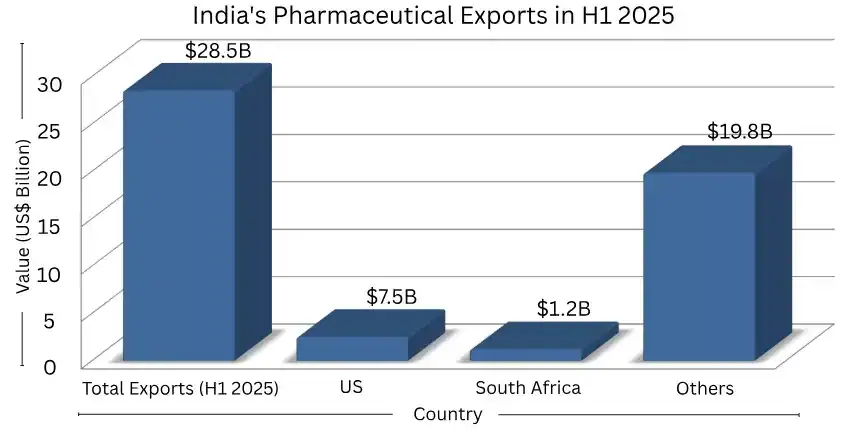
India sent over US$28.5 billion worth of pharmaceutical goods abroad in the first half of 2025. The US was a key market, with sales of around US$7.5 billion, and South Africa was another key market, with sales of about US$1.2 billion.
These numbers show that India is a reliable and consistent worldwide API supply, even when there are problems with politics or the pandemic.
India’s Strategic Edge in the Global API Landscape
India’s rise in global API manufacturing is based on strong strategic pillars:
Government Support & Policy Initiatives
The Indian government is playing a prominent role in making India a world leader in terms of pharmaceuticals.
They are encouraging the companies to manufacture drugs and formulations in the country itself, promoting Make in India.
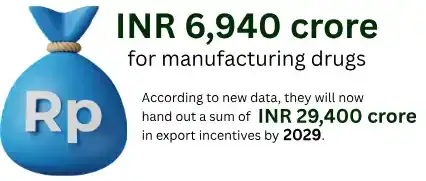
This is why they initiated the Production Linked Scheme with INR 6,940 crore for manufacturing drugs.
According to new data, they will now hand out a sum of INR 29,400 crore in export incentives by 2029. This will elevate our API production and reach every corner of the world.
Building a well infrastructure is also a huge aim to reach. For example, Gujarat, Andhra Pradesh, and Himachal Pradesh are all getting bulk drug parks that focus on APIs.
They provide shared utilities, improved testing facilities, and clearances through a single portal. Exporters have an edge since India is making more trade deals, notably those with EFTA countries and NAFTA markets.
They cut tariffs, making it easier to enter new markets. These steps increase India’s production capacity and make it a more reliable and cost-effective provider of APIs around the world.
Innovation Curve: Beyond Cost Leadership
India’s story is changing from being about being the cheapest to being a leader in innovation.
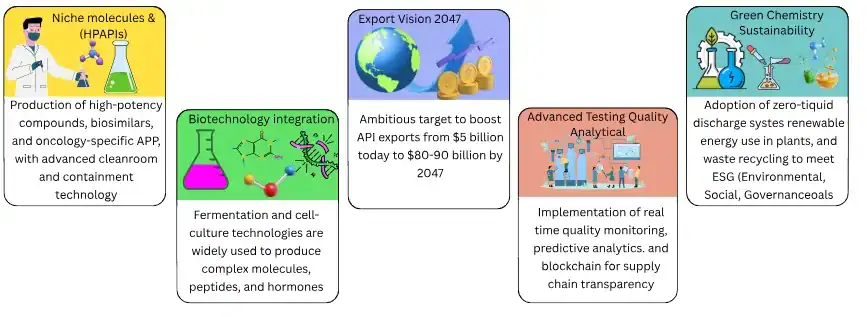
Some of the most important projects are:
Handling Complex & High Potency APIs (HPAPIs)
Indian API makers are now manufacturing high-potency chemicals, such as hormones and cancer APIs.
This improvement is due to improved containment systems with exposure limits in the microgram range, specialized clean rooms, and rigorous manufacturing rules.
These abilities meet the requirements imposed by authorities in the regulated markets.
Digitalization & Automation in API Manufacturing
India’s API Export Strength: Top Stats 2025
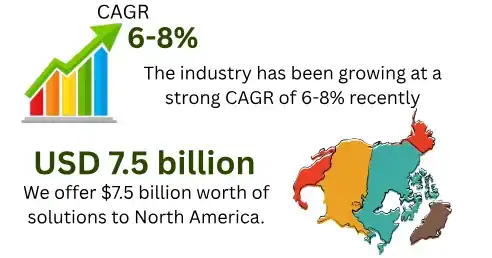
India’s API export business is still booming in 2025. This is possible because demand is steady in both regulated and untapped markets.
The industry has been growing at a robust compound annual growth rate (CAGR) of roughly 6–8% lately. We provide USD 7.5 billion worth of solutions to North America. This proves our capability and the trust that people have in us.
Additionally, we export more than just normal generics. We are also setting our feet in the API market. India is the leader in volume because it has a unique scale and economic advantages, as well as a deliberate plan to diversify.
It is also becoming a major player in the global market for complicated, high-value medicinal components.
Challenges on the Road Ahead
India’s API dominance isn’t unbeatable, as there are some big challenges also:
How to Choose the Best API Manufacturing Partner in India
When choosing an Indian API partner, people from all around the world should think about a few things:
At Actiza Industry, we have checked all the boxes above and prove to be a perfect choice for your API supplier. Our expert and experienced team is well-known for its work and enhances the service for the better.
Partner With a Certified Indian API Manufacturer
India manufactures a wide range of medicines and pharmaceutical products. We have stringent rules and a zeal for innovation and technological advancements.
This proves that we will be a good partner for a long-term plan. We provide DMF, regulatory documents, and samples, enhancing the customer experience.
With us, one can get APIs with affordability, high quality, and as per their preference.
We have a stable and scalable manufacturing environment in 2025.
It is also ready for compliance, which makes it a wonderful alternative for pharmaceutical partners all over the world.
As the world starts to use specialty APIs, biosimilars, and digital supply chains, India will get stronger and smarter.
Our company, Actiza Industry, is an emerging player in the field of API and provides the service at its best. So, request for any inquiries, samples, or quotations today itself.
Our team will assist you at every step and function as per your request.