
Introduction
The pharmaceutical industry accounts for about ~4.4% of global greenhouse gas emissions. API manufacturing is one of the most carbon-heavy parts of this process.
The production of active pharmaceutical ingredients relies primarily on chemical synthesis. This process needs a lot of energy and solvents.
In fact, solvents account for almost half of API production emissions.
In addition to carbon output, solvent waste, and disposal, these create significant environmental challenges.
Sustainability demands are increasing from regulators, investors, and healthcare buyers. So, environmental performance is key when choosing suppliers.
Today, cleaner production methods are key. Reducing carbon footprints is also important. It goes beyond following rules. It’s a smart move in the competitive pharmaceutical market.
Pharma Industry Environmental Footprint
Carbon Emissions
The pharmaceutical sector emits about 54 million metric tons of carbon each year. This reflects the energy needs of manufacturing, logistics, and research.
A significant share of this impact comes from Scope 3 emissions.

These include purchased raw materials, third-party manufacturing, transportation, and distribution. Together, they can account for nearly 75% of a company’s total greenhouse gas footprint.
This shows that pharma’s environmental impact goes beyond its direct operations. So, supply chain sustainability is key to reducing emissions.
Resource Use & Waste
API manufacturing is highly resource-intensive, requiring substantial inputs for each ton of production.
Depending on how complex the process is, it can use about:
This heavy use of water, power, and chemical solvents raises costs and harms the environment. So, improving efficiency is key to sustainable pharmaceutical manufacturing.
Waste Generation
The healthcare and pharmaceutical sectors contribute significantly to global plastic waste, particularly through packaging. Most waste comes from primary and secondary packaging.
This packaging keeps products safe and sterile. Beyond packaging waste, pharmaceutical pollution is another growing concern.
Manufacturers release only about 2% of active pharmaceutical ingredients during production. However, these discharges can have strong effects on nearby ecosystems.
Medicines that patients excrete can end up in water systems. This leads to long-term contamination issues.
We need better waste management and treatment solutions to address this problem.
Shift in API Production Geography and Environmental Risks
Historical Production Shift
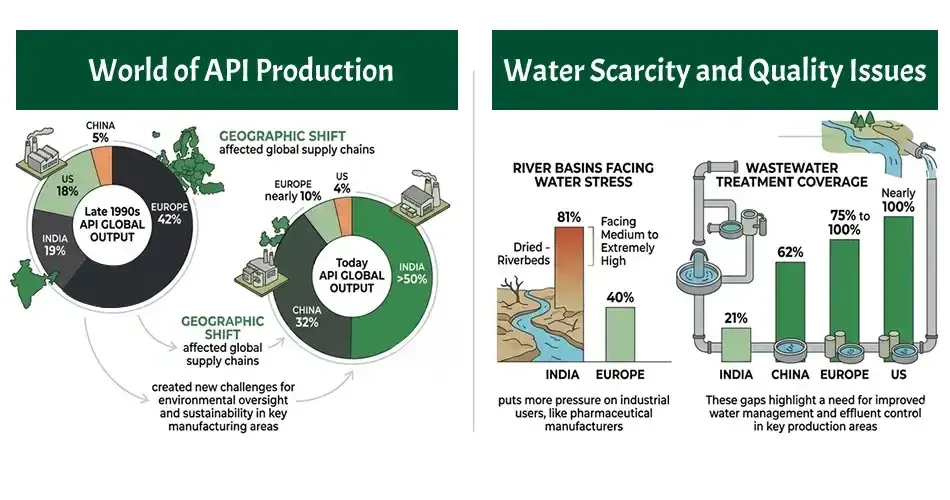
Over the last 25 years, the world of API production has changed significantly. In the late 1990s, Europe made up about 42% of global API output.
India followed with around 19%. The United States was next at 18%, while China had only 5%.
Today, the balance has shifted. A large share of global API production is now concentrated in Asia, particularly in China and India.
China contributes about 32%. Europe’s share has decreased to nearly 10%, while the US holds a share of approximately 4%.
This geographic change has affected global supply chains. It has also created new challenges. These affect environmental oversight and sustainability in key manufacturing areas.
Water Scarcity and Quality Issues
Water availability and treatment capacity differ greatly in key API-producing areas. This leads to uneven environmental risks.
In India, about 81% of river basins face medium to extremely high water stress. In Europe, this is only around 40%.
This situation puts additional pressure on industrial users, such as pharmaceutical manufacturers.
Wastewater treatment coverage varies widely. India treats about 21% of its wastewater.
China handles around 62%. In Europe, treatment ranges from 75% to 100%. The United States treats nearly 100%.
These gaps highlight a need for improved water management and effluent control in key production areas.
Sustainability Integration in the Pharma Industry
Adoption of Environmental Targets
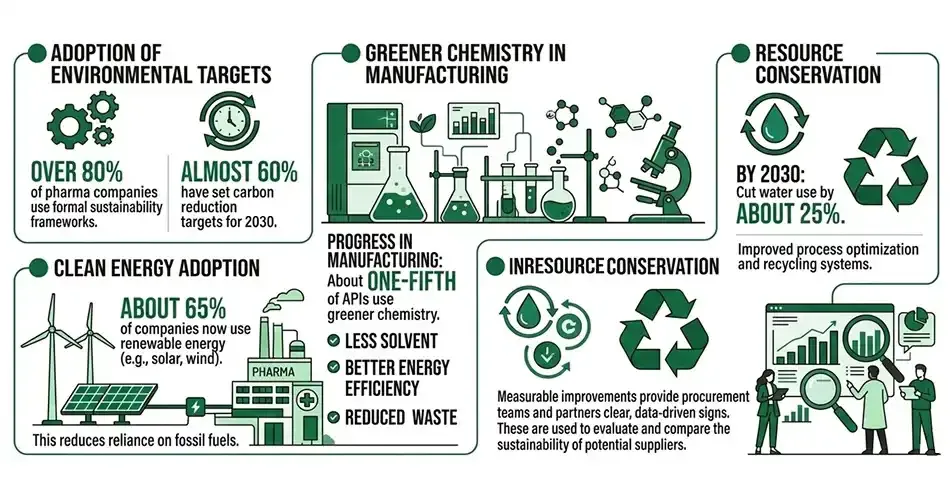
Over 80% of pharma companies now use formal sustainability frameworks. Almost 60% have set carbon reduction targets for 2030.
In manufacturing, progress is clear. About one-fifth of APIs use greener chemistry. This means less solvent, better energy efficiency, and reduced waste.
This change shows a larger trend in the industry. Companies are focusing on responsible growth and eco-friendly production.
Renewable Energy & Conservation
The pharmaceutical industry is steadily strengthening its environmental commitments through clean energy adoption and resource conservation.
About 65% of companies now use renewable energy. This includes solar and wind power in their manufacturing and research facilities. This helps reduce their reliance on fossil fuels.
By 2030, improved process optimization and recycling systems will cut water use by about 25%.
These measurable improvements give procurement teams and partners clear, data-driven signs.
They can use these to evaluate and compare how sustainable potential suppliers are.
Why API buyers are prioritizing environmental performance
Regulatory Pressure
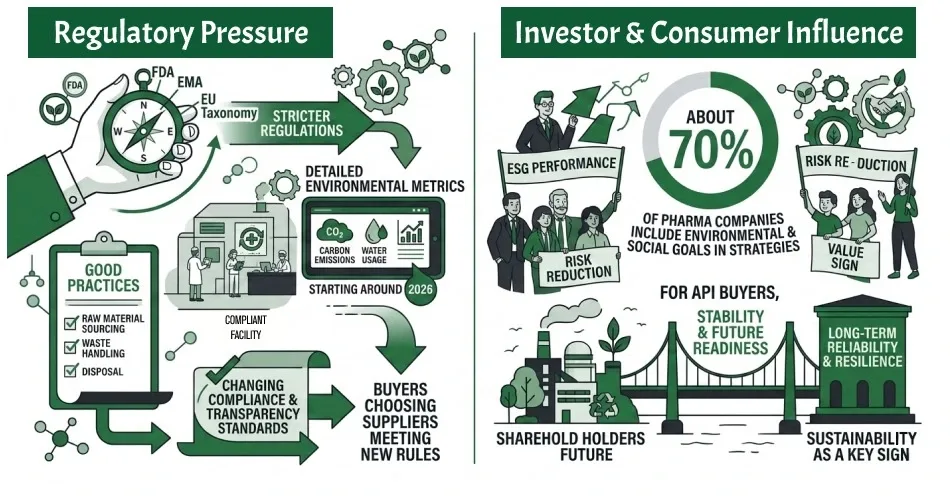
API buyers are now considering environmental performance when making procurement choices. This change is driven by stricter regulations.
The U.S. Food and Drug Administration and the European Medicines Agency expect manufacturers to show good practices.
They want clear responsibility. This includes everything from sourcing raw materials to handling and disposing of waste.
New frameworks are coming. One is the EU Taxonomy for Sustainable Activities. This will soon affect pharmaceutical companies.
Starting around 2026, these companies must share detailed environmental metrics. This includes data on carbon emissions and water usage.
Buyers now choose suppliers who can meet new rules. They want those who keep up with changing compliance and transparency standards.
Investor & Consumer Influence
About 70% of pharma companies now include environmental and social goals in their main strategies. This change comes from shareholders who see ESG performance as both a risk and a sign of value.
For API buyers, these commitments show stability and readiness for the future. This makes sustainability a key sign of a supplier’s long-term reliability and resilience.
Environmental KPIs used by buyers
Carbon & Emissions Metrics
Companies often report normalized CO₂ output. This means they show total emissions compared to revenue. It helps reflect operational efficiency, not just size.
Clear reduction commitments show climate responsibility. They often state percentage cuts by 2030. Reporting Scope 1 (direct), Scope 2 (purchased energy), and Scope 3 (supply chain) emissions shows transparency. It makes the information clear. It also reflects maturity in environmental reporting.
Water Usage and Wastewater Treatment
Measurement of water consumed per unit of API produced (e.g., liters per ton) to evaluate production efficiency.
The percentage of total wastewater treated correctly before discharge shows compliance. It also reflects environmental responsibility.
Assess facilities using regional water risk indices. This checks if they are in areas with moderate to severe water scarcity.
Waste and Solvent Management
The volume of solvent waste per ton of API made shows process efficiency and environmental impact.
Amount of hazardous waste (kg per ton of API) produced during manufacturing. This shows how well we follow waste reduction rules.
Percentage of solvents and materials recovered, recycled, or reused in operations. This helps reduce disposal and saves on raw materials.
Environmental Performance as a Risk Mitigation Tool
Strong environmental performance is increasingly viewed as a safeguard against operational disruption.
Climate events like heatwaves, water shortages, and extreme weather can disrupt API production. They may also delay supply commitments.
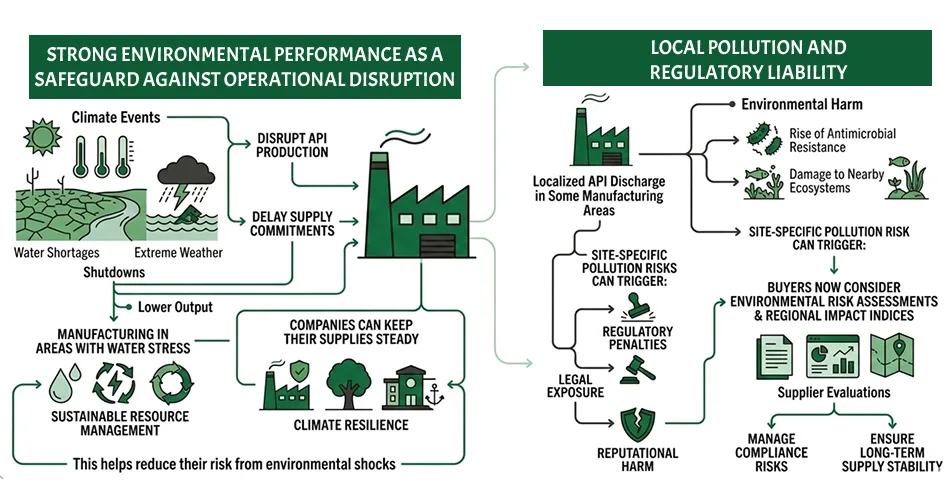
Manufacturing in areas with water stress can lead to shutdowns. It may also lower output. Companies can keep their supplies steady.
They should focus on sustainable resource management. Climate resilience is also important. This also helps reduce their risk from environmental shocks.
Local Pollution and Regulatory Liability
Localized API discharge in some manufacturing areas has been tied to environmental harm.
This includes the rise of antimicrobial resistance and damage to nearby ecosystems.
These site-specific pollution risks can trigger regulatory penalties, legal exposure, and reputational harm.
Buyers now consider environmental risk assessments and regional impact indices in supplier evaluations. This helps them manage compliance risks and ensure long-term supply stability.
Case Benchmark: Environmental Performance in API Production
Company Environmental Goals
A top API manufacturer has made strides in sustainability. They’ve reached about 60% carbon neutrality for Scope 1 and Scope 2 emissions. They also have a plan to achieve full neutrality by 2030.
The company has cut indirect emissions (Scope 3) by about 5% since FY 2021. It aims to reduce them by nearly 12.5% more by 2030.
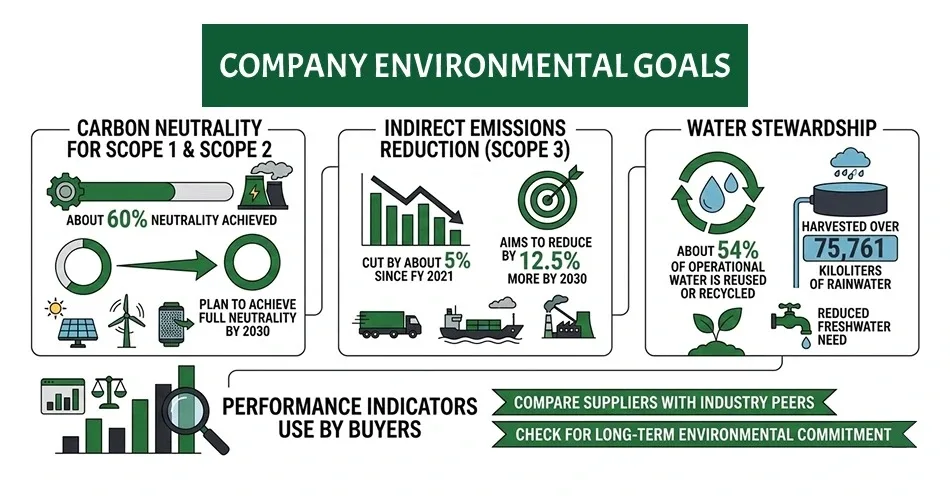
Water stewardship is impressive. About 54% of operational water is reused or recycled. The company has harvested over 75,761 kiloliters of rainwater.This helps reduce the need for freshwater.
Buyers use these performance indicators to compare suppliers with industry peers. They also check for long-term environmental commitment.
Green Chemistry and Environmental Innovation in API Manufacturing
Green chemistry is a strong tool for reducing the environmental impact of API manufacturing.
Companies can reduce solvent use by 70%. They can do this by changing reaction pathways and using continuous flow reactors. This greatly reduces Process Mass Intensity (PMI) and waste.
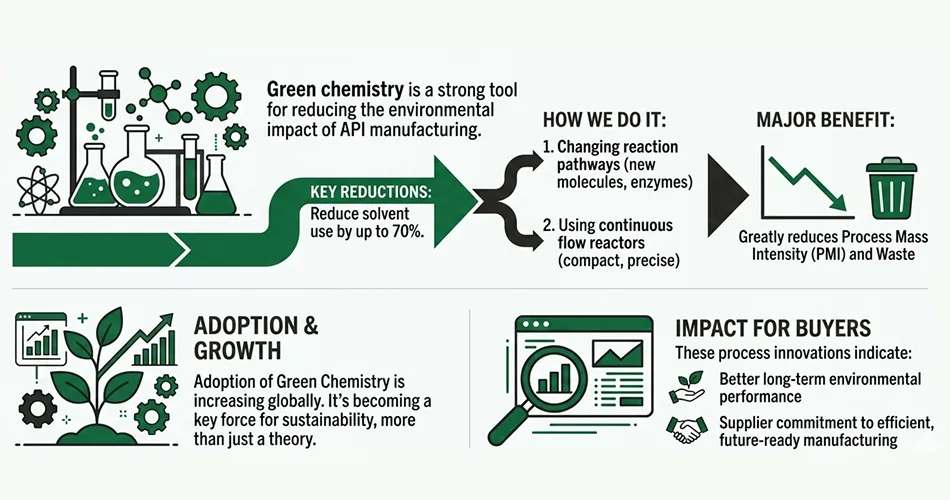
Green chemistry is becoming a key force for sustainability as adoption increases. It’s more than just a theory now.
For buyers, these process innovations show better long-term environmental performance. They also indicate a supplier’s commitment to efficient, future-ready manufacturing.
How Buyers Score Environmental Performance
Environmental performance is now part of supplier evaluations. It’s assessed with traditional factors like quality, reliability, and cost.
Buyers use scorecards with clear benchmarks. These help them measure sustainability metrics and compare vendors fairly.

Renewable Energy Adoption measures the percentage of electricity that comes from renewables. Many buyers want at least 50% adoption.
Emerging Global Standards & Reporting
Global procurement practices are increasingly guided by standardized environmental disclosure frameworks.
Environmental Product Declarations (EPDs) offer verified data on a product’s environmental impact. They cover everything from raw material extraction to disposal.
This helps make sourcing decisions clearer.
Life Cycle Assessment (LCA) and the ISO 14040 series are useful tools. They measure and report environmental impacts clearly. They help ensure consistency and make comparisons easier.
Buyers want credible data. Following these global standards boosts supplier accountability. It also helps in evaluating sustainability based on solid evidence.
Environmental Performance as Core Requirement
Environmental sustainability is now a key expectation in the pharmaceutical industry. It’s no longer just a choice.
Industry projections say yearly investments in sustainable practices could top $14 billion by 2025. This shows strong growth in the sector.
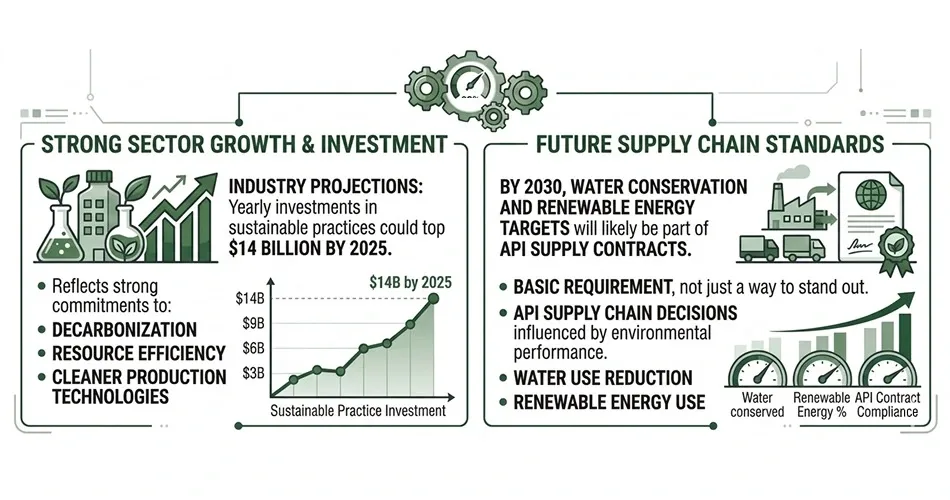
This reflects strong commitments to decarbonization, resource efficiency, and cleaner production technologies.
By 2030, water conservation and renewable energy targets will likely be part of API supply contracts. Environmental performance will be a basic requirement, not just a way to stand out.
Conclusion
Environmental responsibility has evolved into a non-negotiable requirement in API procurement.
Buyers now measure supplier carbon intensity and water use. They use sustainability KPIs as filters for qualifications. They also include environmental disclosures in scorecards.
Long-term supply agreements now expect commitments. These include decarbonization pathways and green chemistry.