
Introduction: A Structural Shift in API Sourcing
The pharmaceutical industry worldwide is seeing a major change this year. These days, companies are finding new ways to source Active Pharmaceutical Ingredients (APIs).
It’s a change from what they did before. Before, cost was the main focus. These days, decisions are based on rules, geopolitical risks, and having a reliable supply chain in place. Minimizing supply disruptions.
Since 2020, the pharma industry has seen major changes. Over 70% of companies now find what they need differently. They now like multi-region supplier networks.
They don’t want to rely on just one country. This change makes stability better and lowers risks. It ensures quality is consistent and supplies are steady worldwide.
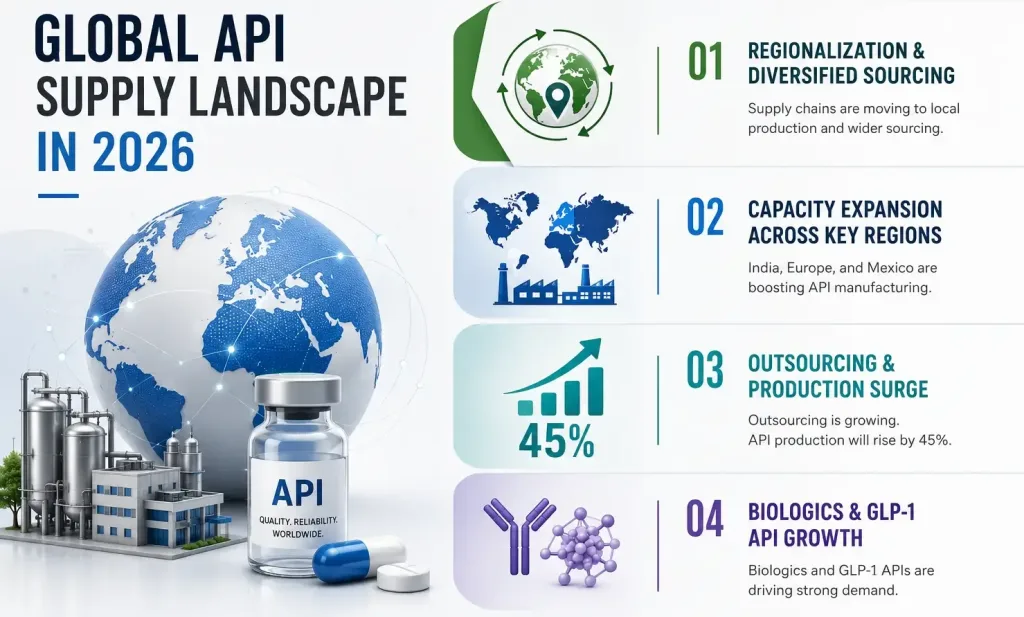
Global API Supply Landscape in 2026
Things are moving quickly in the API supply scene in 2026. Safety, innovation, and demand are the key drivers of this change. Companies are now big on building strong supply chains.
They’re using cutting-edge tech and high-end production methods to ensure efficient production. This change keeps them competitive. It also makes them reliable around the world.
They no longer just aim for low-cost manufacturing. Here’s the global API Supply Landscape in 2026:
High-Growth API Segments Driving Sourcing Decisions
The API market is growing fast. There’s a big demand for new ideas and innovation. High-Growth API Segments Driving Sourcing Decisions include:
High-Potency APIs
High-potency APIs are taking off, driven by a surge in cancer treatments. It’s a quickly growing field. These APIs need special care and advanced features. Companies choose expert CDMO partners for strong reasons.
They need safe and high-quality oncology meds. They also want a steady supply of these complex medications.
Biologics Growth
Biologics are made up of peptides and monoclonal antibodies. They’re one of the fastest-growing types of APIs. Companies often need skilled manufacturers. This is due to complexity and high demand.
These manufacturers have the latest technology and follow strict quality rules.
Generic Pipeline
Over 70 blockbuster drugs will see their patents expire by 2030. This boosts the need for generic APIs and intermediates. Companies want suppliers they can rely on. They need to get quality products delivered fast and in bulk.
Chronic Therapies
APIs for diabetes, heart, and respiratory diseases are popular. Demand is steady and keeps going up. Global health needs are on the rise. As a result, sourcing decisions are shifting to trustworthy suppliers.
The suppliers will keep essential medicines in stock. They’re also promising high-quality products.
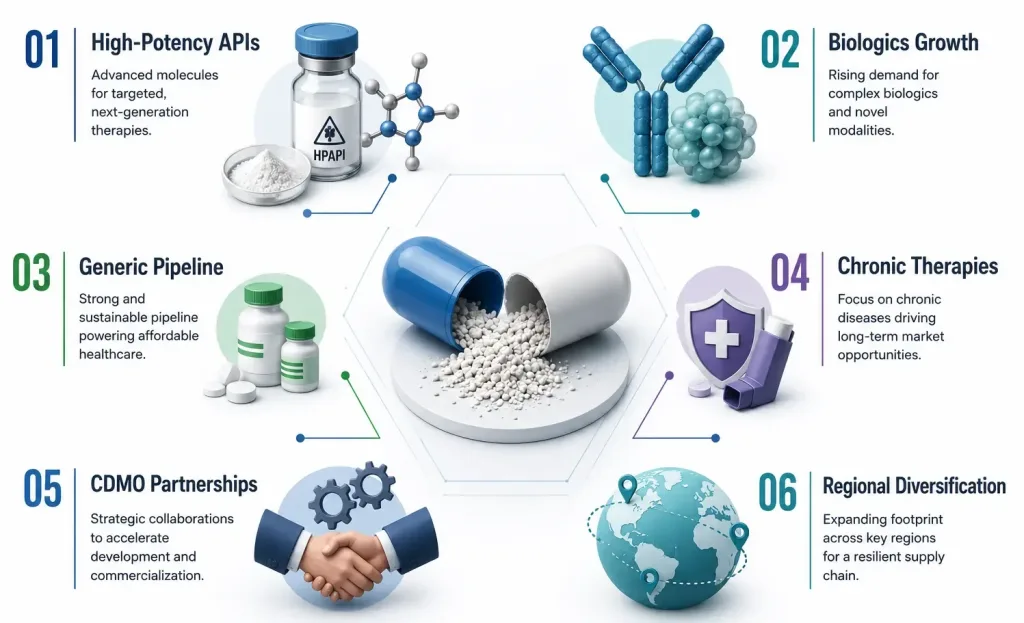
CDMO Partnerships
Outsourcing to CDMOs is on the rise. This is true, especially for complex APIs. Companies pick partners with solid R&D and manufacturing skills. This lowers risks and speeds up production, which helps a lot in a tough global market.
Regional Diversification
To lower risks, companies are adopting a “China plus one” approach. They create supply chains in lots of areas. This prevents things from going wrong. It boosts stability and compliance as well.
They don’t rely on just one supplier from a single country. Instead, they use multiple sources.
What Pharma Buyers Prioritize in 2026
Pharma buyers in 2026 focus on safety, quality, and stability over cost. Companies are now opting for trusted partners. They’re better at managing risks. They are changing to meet tough API markets. Here are the key priorities shaping sourcing decisions:
Core Priorities
Core API sourcing priorities have changed. Now, they focus on balancing quality, compliance, and capacity. Buyers like suppliers who are audit-ready. They want documentation from many places. It should not come from just one country.
API Pricing
API pricing is more about the total cost than scoring the cheapest deal. Hidden costs and price changes can really mess with your budget. Long-term contracts are a big help when it comes to planning a steady supply.
Risk Shift
Risk-Based Procurement Shift changes how buyers think. It focuses on managing risk instead of just looking at cost. They map supply chains and check where raw materials come from. They choose partners who care about quality.
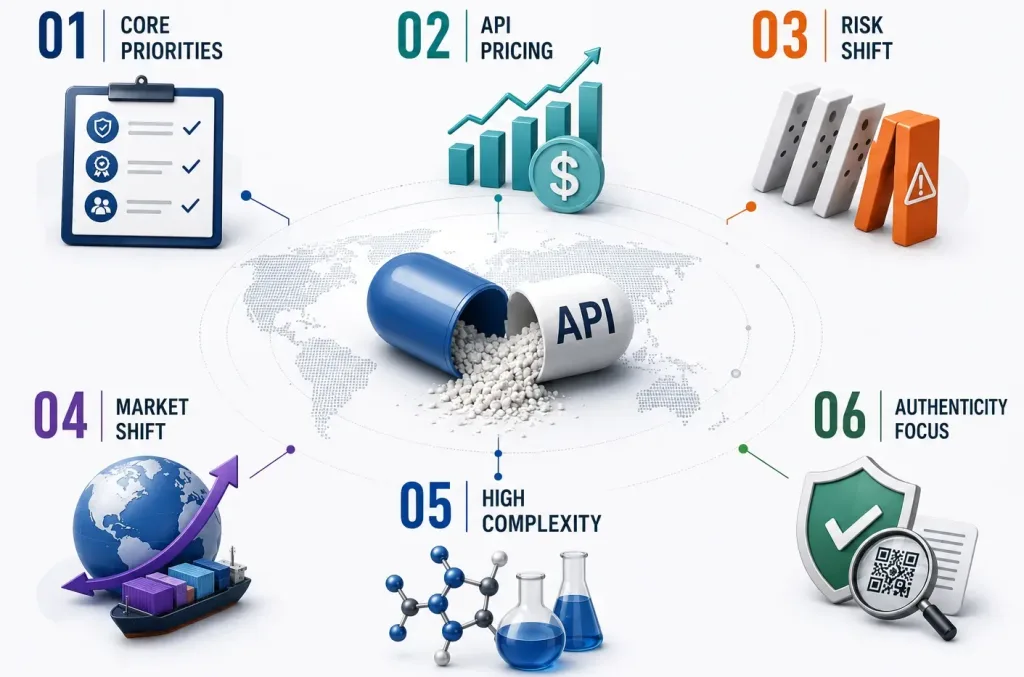
Market Shift
The market is moving towards complex drugs. This includes peptides, biologics, and HPAPIs. The demand for advanced manufacturing is rising. This growth is caused by chronic diseases. Aging populations also play a role. New therapies need complex manufacturing, too.
High Complexity
The API market is getting more complex by the day. New tech, tough rules, and complicated molecules are driving this change. Nowadays, buyers want suppliers who offer more. They look for specialist skills, strong digital systems, and a good understanding of regulations.
Authenticity Focus
Authenticity Focus ensures suppliers are real manufacturers, not just traders. They must be the ones making the products. Buyers check audit trails. They look at GMP compliance and transparency. This helps them avoid risks and follow global rules.
Key Challenges in API Sourcing in 2026
In 2026, API sourcing is looking increasingly complex. There are lots of risks and changes to consider. Companies face more supply risks now. Here are the key challenges impacting buyers today.
Supply Chain Fragility
In 2026, supply chain fragility is a key concern. Relying too much on a few areas can make our supply chain weak. This reduces its stability. One disruption can lead to serious problems. A delay or shutdown can result in global shortages.
Geopolitical Risks
Risks related to geopolitics and trade are on the rise. Tariffs, conflicts, and export controls are to blame. These factors can affect supply routes and increase costs. This situation might lead companies to try new sourcing strategies.
Price Volatility
Price volatility has a big impact on API sourcing. It affects it pretty strongly. Energy costs, freight rates, and raw materials keep changing. This causes unstable pricing. That’s a problem for buyers who need to budget and plan for the long term.
Regulatory Complexity
Regulatory complexity is on the rise. It’s mainly due to strict rules from global agencies. Companies have to meet some tough standards. This covers things like data, quality, and the environment. If they don’t, they face delays, penalties, or rejected shipments.
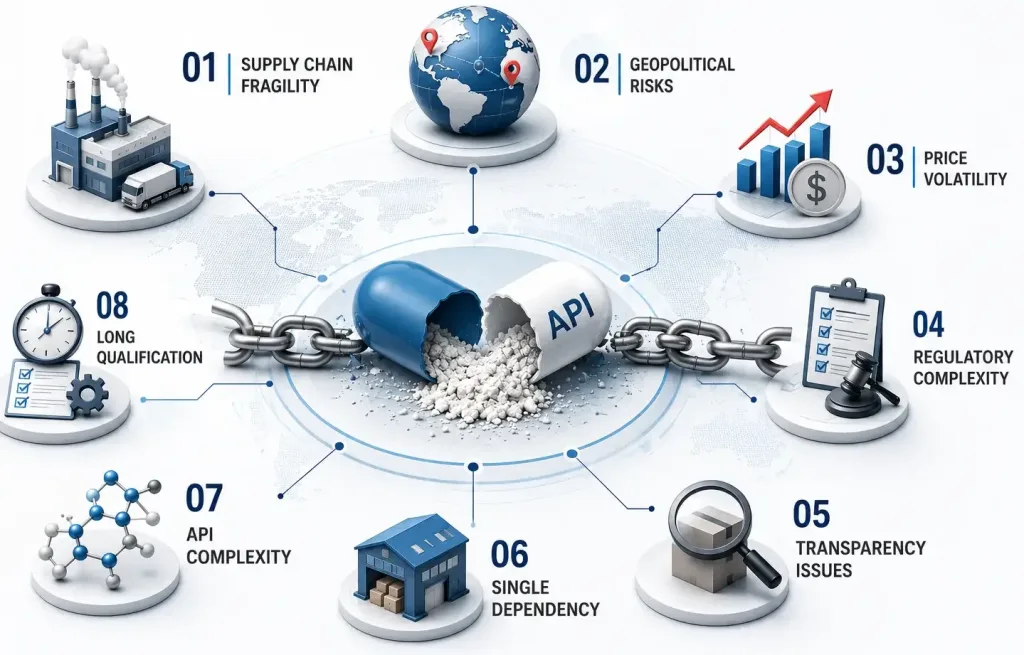
Transparency Issues
A lack of transparency in the supply chain hides risks. Many suppliers use upstream sources that aren’t always clear. This can make it hard for buyers to trace materials and check if they meet compliance standards.
Single Dependency
Depending on just one source boosts the risk. Depending on just one country or supplier can create supply problems. To avoid this, companies should check different sources. They also need to use a mix of sourcing strategies. This makes their supply chain better.
API Complexity
APIs are getting more complicated. They now include biologics and HPAPIs. To keep up, we need more advanced tech and experienced partners. Many traditional manufacturers find it hard to meet these high technical demands.
Long Qualification
Long qualification processes make it hard to switch suppliers. They really slow things down. Audits, testing, and approvals take a lot of time. This creates problems for companies. They really need to switch suppliers fast, especially in emergencies or when things go wrong.
Future Outlook: API Sourcing Beyond 2026
API sourcing will change after 2026. It will focus on three main areas: resilience, technology, and sustainability. Here are the key future trends shaping sourcing.
Regionalization
Regionalization will speed up. Companies will depend less on global markets. It’s a trend that’s set to continue. Sourcing from different regions will help. Local manufacturing hubs will also boost supply security. They will lower risks and speed up delivery in key markets.
Rise of Advanced API Therapies
Advanced APIs are becoming more popular. This includes biologics, HPAPIs, and complex therapies. They need special facilities, skilled workers, and strong partnerships to get the job done. This helps them produce things safely, to a high standard, and on a big scale.
Digital Transformation
Digital transformation will change how we find and get what we need. It uses AI, automation, and clever technology to make things work smarter. Companies will use predictive tools and will track events in real-time.
They will also access digital platforms. This will help them boost efficiency, cut risks, and manage supply chains better.
End-to-End Transparency
Getting a clear view of the entire supply chain is going to be crucial. Buyers follow materials every step of the way. It helps to avoid running out of supplies. Plus, it builds trust by showing clear visibility at every step of the supply chain.
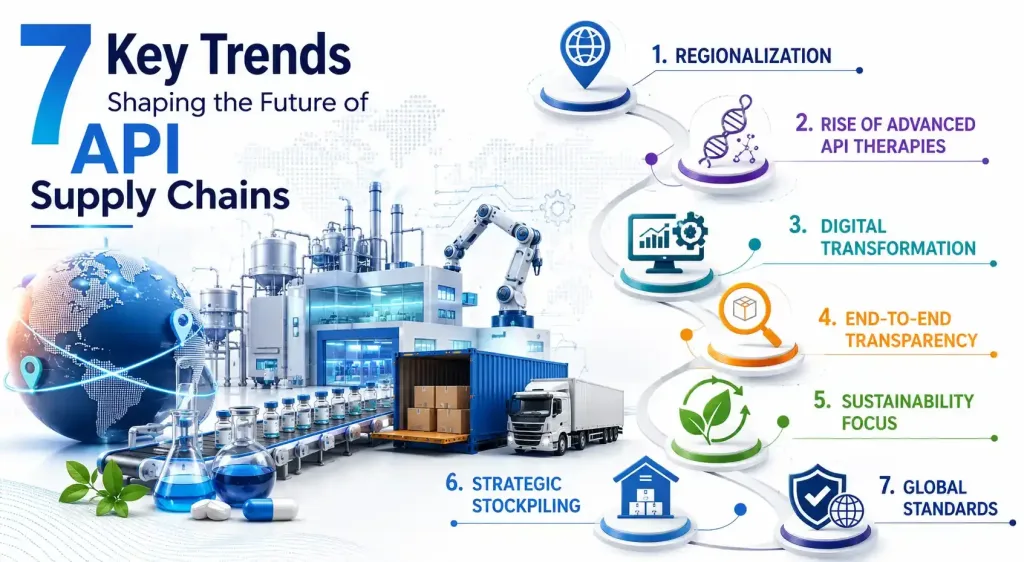
Sustainability Focus
Sustainability will be required, not a choice. Green chemistry, cutting waste, and using less energy will influence how things are sourced. These factors will play a big role in deciding where to get stuff from.
Companies have must comply with strict environmental rules and ESG standards.
Strategic Stockpiling
Strategic stockpiling will take the place of just-in-time models. Companies will keep extra stock and set up local warehouses. This helps them handle any disruptions that may arise. This keeps things steady and lowers the risk of running out suddenly.
Global Standards
Global standards will get stricter in all markets. To succeed, companies need to focus on strong compliance. They should also build effective data systems. Finally, they must meet regulations.
This approach helps them keep their processes up to scratch. It’ll also keep their documentation consistent globally.
5 Hidden Risks in Sourcing APIs from India (And How to Mitigate Them)
Sourcing APIs from India can save money, but it also comes with hidden risks. Buyers should go for smarter and safer ways to source things. Below are the key risks and how to mitigate them.
Regulatory Trap
The Regulatory “Paperwork” Trap is a big risk. Weak documentation and missing stability data can hold up shipments. Poor compliance systems do the same. They could cause inspections or even lead to product rejection in regulated markets.
To fix this, companies should choose suppliers who are ready for audits. They need strong systems in place to comply with rules. Do a thorough check and make sure the DMF is up to par. They should check that partners meet global GMP standards before shipping.
China Dependency
The “China Dependency” ripple effect has a big impact that’s not immediately obvious. Many Indian manufacturers depend on China. They need important materials from there. If things go wrong, it can really impact API production. This also causes delays.
To tackle this, buyers need to see their whole supply chain. They should also mix up where they get their stuff from. This way, they’re not relying on just one source. Pick partners with multiple raw material sources. Also, use buffer stock strategies. This will lower upstream risks.
Logistics Risk
Temperature and time logistics are really important. Getting these two things right is crucial. APIs, especially sensitive ones, can suffer during transport. Poor handling and temperature changes can also lead to issues. Unverified logistics partners create financial risks.
To solve this, companies should team up with experts in pharma logistics. Keep product quality safe from the factory to delivery. Use cold-chain system and validated transport. Track everything along the way. This means ensuring the product is moved correctly.
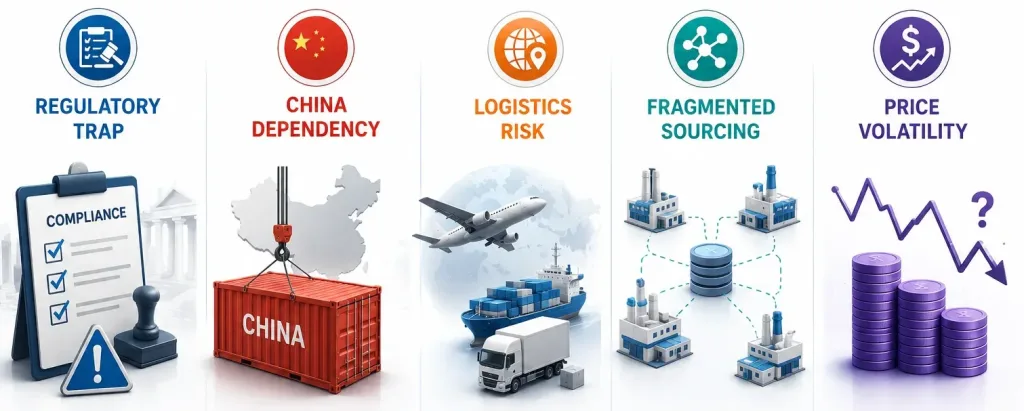
Fragmented Sourcing
The complexity of “fragmented” sourcing makes things less efficient. Dealing with lots of suppliers for APIs, intermediates, and excipients can drive up costs. It can also slow coordination. This raises the risk of supply failures or production stops.
To fix this, buyers should team up with strategic partners. This helps them source better. Working with fewer trusted suppliers is easier. It makes things simpler. It reduces costs and keeps supplies steady across the whole value chain.
Price Volatility
Price volatility and market intelligence are tough challenges. They are growing problems. Changes in raw material costs, energy prices, or regulations can really impact API prices. These swings can really significantly impact budgets. They also make it tough to plan ahead.
To fix this, companies should rely on market insights. They should also use long-term contracts. Looking ahead and being flexible with deals can really cut down on risks. It’s also a good idea to forecast prices. It also leads to more stable and cost-effective decisions when sourcing.
Conclusion
By 2026, sourcing APIs is about more than just finding the cheapest option. It’s not just about cutting costs anymore. Nowadays, companies are all about safety, quality, and a consistent supply.
They work with multiple regions and trusted partners to lower their risks. This change allows them to be ready for any disruptions that may come up. It also helps them confidently and consistently meet global demand.
In the future, sourcing will be more digital, clear, and eco-friendly. Powerful APIs and solid partnerships are going to define what’s next. They’ll play a big role in shaping the future. Companies that look to the future, manage their risks, and invest in smart systems are the ones that will succeed.
They have a strong chance of staying ahead. A balanced way of sourcing things is a big help for growth that lasts. It also means you’ve got a steady supply coming in. This, in turn, leads to improved healthcare results all over the world.