
Introduction: Why Trust Is the New Currency in API Sourcing
Today, trust is the top priority in the pharma supply chain. It’s more important than getting a good deal. These days, buyers prioritize safety, quality, and reliability when picking API partners. They prioritize reliability and compliance.
Trust helps to reduce losses, ensure a reliable supply, and build lasting success in the global market. Here’s the key stats, risks, and sourcing shift:
More than 70% of pharma companies put supplier reliability near the top of their list. It’s a key factor for them.
Globally, supply problems are slowing drug launches. They are delayed by about 3 to 6 months.
One quality failure can raise batch costs by 20 to 30 percent.
Reliable API manufacturing processes help ensure consistent quality, reduce supply chain disruptions, and support faster product launches in global markets.
Buyers today are looking for partners who can minimize risk. They’re moving away from suppliers who are only cheap.
How Global Buyers Evaluate API Suppliers in 2026
In 2026, API buyers focus on risk, quality, and steady supply over price. They study data, reliability, and long-term value. This helps them avoid losses and ensure safe, smooth, and timely drug production. Here’s how global buyers evaluate API suppliers in 2026:
Risk Mapping
Buyers figure out their whole supply chain. This covers everything from raw materials to APIs and logistics. They look for areas where things can go wrong, like country risks and supplier issues. This helps them avoid surprises that can cause delays and costs.
Cost Impact
Supply issues are costly. Around 64% of large pharma firms see a revenue loss of 6 to 20%. That’s a big blow to their bottom line. Spot buying can cost 214% more during shortages. This raises the overall costs a lot.
Quality Checks
Buyers take a look at audits, GMP records, and past failures to get the full picture. They review all this stuff to make informed decisions. One quality issue can raise costs by 20-30%. It might even cause recalls, which can hurt trust and market value.
Dual Sourcing
Companies work with two suppliers to cut down on risk. Smart split sourcing provides a backup supply at a low cost. It boosts reliability and helps lower costs in the long run.
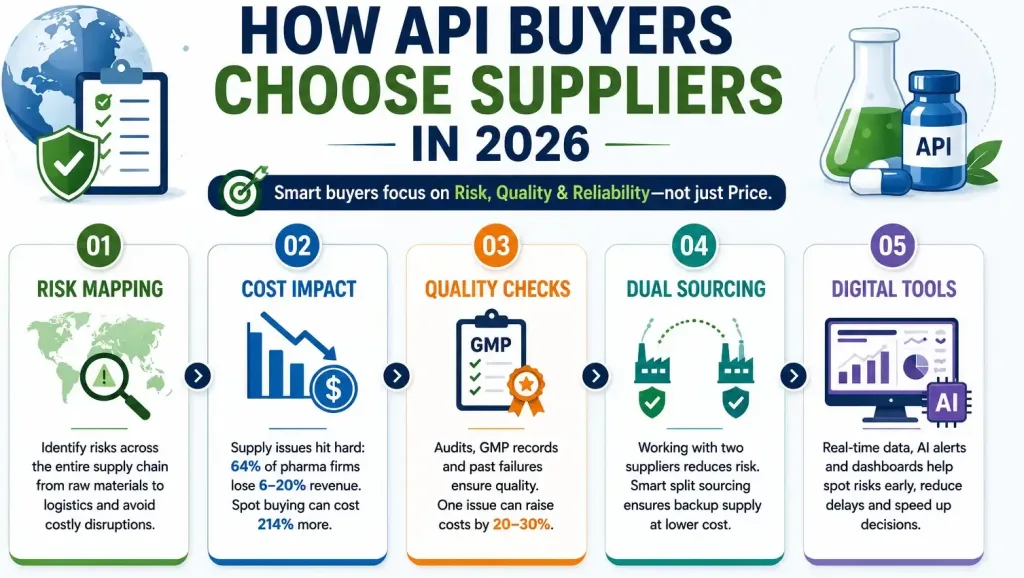
Digital Tools
Real-time data makes it easier to keep an eye on supply risks. AI alerts and dashboards give the latest updates. These tools help get things noticed, cut delays, and speed up decision-making. This boosts supply chains and makes them more dependable.
What “Trust” Means in API Supply
Trusting your API supply means choosing reliable companies. They are safe and always deliver. It’s not just one thing; it’s a whole system of checks. Buyers consider different factors. They need suppliers that can meet their technical, operational, and long-term needs. This way, they can be sure they’re getting what they need. Key trust factors include:
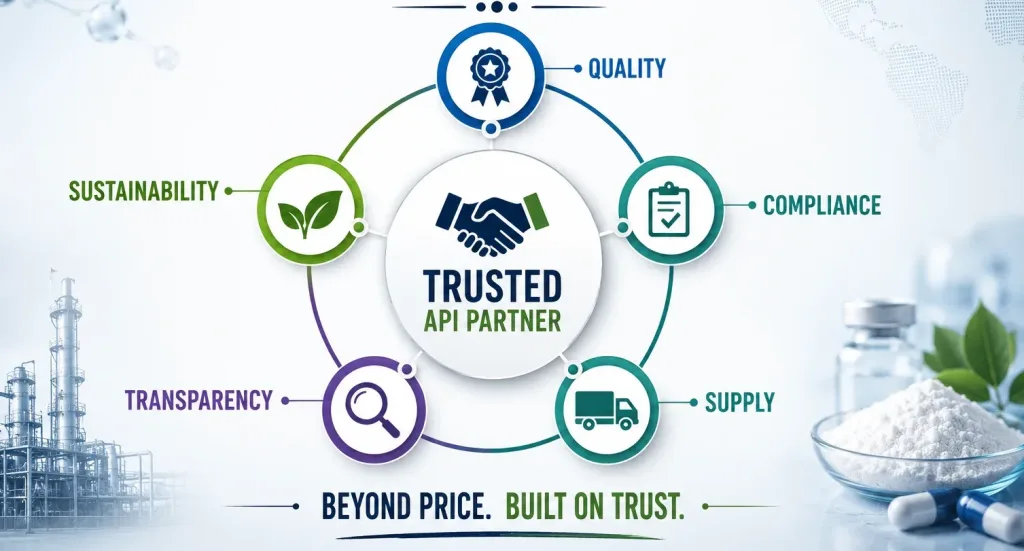
Trust in API supply is complex. Suppliers must be strong in many areas. This includes technical, operational, and strategic skills. This helps build trust and supports lasting partnerships in global markets.
Core Pillars That Define a Trusted API Supplier
Selecting a trusted API supplier is important. It ensures getting safe and effective medicines. Buyers want partners they can count on. This helps guarantee good quality, a steady supply, and success that lasts. Key pillars of a trusted supplier include:
Global Certifications
Suppliers must get certified around the world. This includes GMP and ISO. This shows they’re following really strict quality rules. Certified suppliers offer safe and tested APIs. These APIs are reliable for regulated global markets.
Consistent Quality
A reliable supplier always provides top-notch products. You can expect the same high standard each time. To ensure medicines are safe and effective, you need strong checks and testing. This keeps defects low.
On-Time Delivery
Timely delivery matters a lot in pharma supply chains. Trustworthy suppliers help us meet the deadlines. They also prevent delays. They keep production running smoothly. They also help stop costly interruptions, like stock outs.
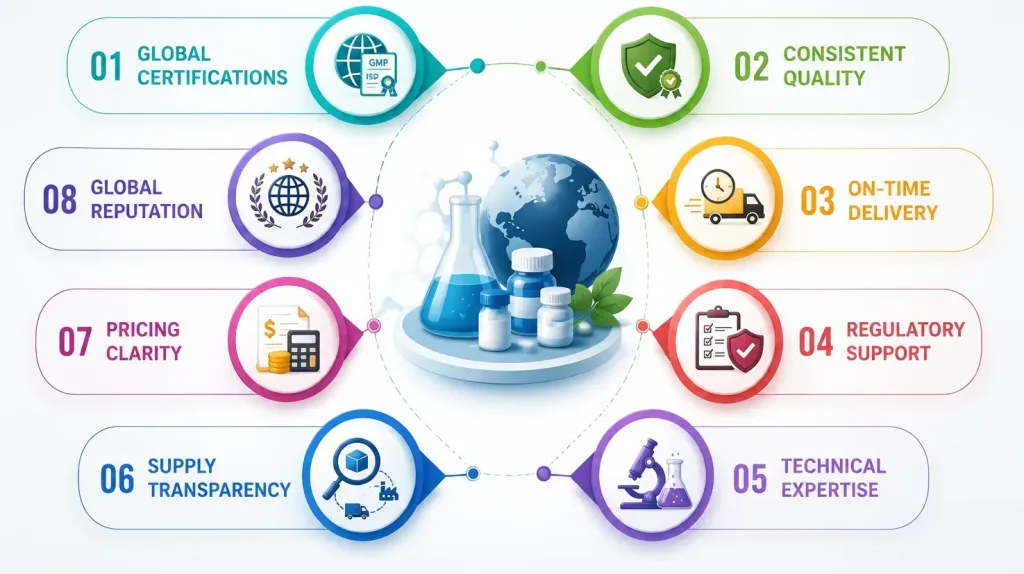
Regulatory Support
Suppliers have to help out with getting approvals. They’re also expected to assist with audits and sorting out the paperwork. This approach keeps things moving. Having strong regulatory support really helps buyers stick to global rules. It also means they can get products to market faster in different places.
Technical Expertise
Seasoned suppliers usually have a good handle on tech and are experienced in R&D, too. They’re all about making processes better and solving problems. They also help buyers deal with complex APIs in a more efficient way. This brings about more new ideas.
Supply Transparency
When you see how sourcing works, it helps. The same goes for production and logistics. Each part makes a big difference. Suppliers who are upfront share key info openly. This makes it easier for buyers to keep an eye on quality, handle risks, and make better plans.
Pricing Clarity
Transparent pricing means being clear. There are no hidden costs or surprises. A good supplier offers fair prices, clear terms, and payment options that work for you. This helps buyers keep track of their budgets. It also lowers financial risks.
Global Reputation
A strong global reputation means people can rely on you and trust you. Suppliers with a good track record tend to be more reliable. Getting good feedback from clients is a plus. Winning industry awards is also great. These factors help them give steady performance. They also create long-term value.
Data-Driven Supplier Evaluation Scorecard
| Criteria | Weight (%) | KPI |
| Regulatory Compliance | 20-25% | Audit success rate |
| Product Quality | 20-25% | Batch consistency |
| Supply Reliability | 15-20% | On-time delivery |
| Technical Capability | 10-15% | Yield efficiency |
| Documentation | 10-15% | DMF readiness |
| Cost Structure | 10-15% | Total landed cost |
Key Factors That Build Trust in API Suppliers
Building trust in API suppliers is really important. It helps ensure that drug production is safe and steady. Buyers want partners they can trust and rely on. Here are key trust-building factors:
Strong Compliance
Suppliers should follow global rules and standards closely. They can prove they meet safety, quality, and data needs. This helps them avoid delays. This stops warnings and approval issues from popping up in global markets.
Consistent Quality
Trusted suppliers give the same API quality each time. Good testing systems and process control really cut down on defects. They help you avoid recalls, too. This makes sure patients get safe medicines. It also ensures they get ones that actually work.
Clear Documents
Simple documentation lets buyers look at data. They can also check approvals and processes easily. It’s a lot easier to get submissions done quickly when files are in order. It also makes audits a significantly easier. This, in turn, helps build trust between suppliers and their customers.
Process Capability
Suppliers should update and refine their processes as time goes on. Optimizing processes makes a big difference in efficiency. It reduces waste and helps meet the needs of new products. This happens faster and with more flexibility.
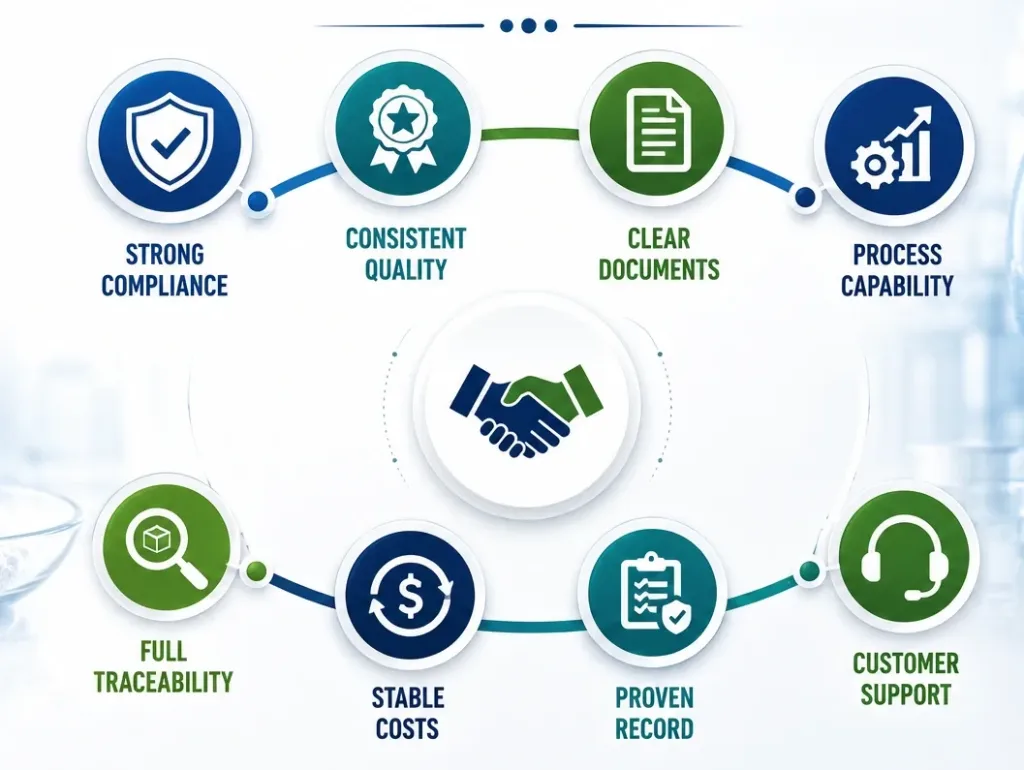
Full Traceability
Traceability is a big help when it comes to tracking raw materials. It also keeps tabs on the final API batches. It helps spot problems fast, boost safety, and keep complete control of the supply chain.
Stable Costs
Keeping costs steady is key to planning and budgeting. Good suppliers keep their prices fair and steady. They don’t surprise you with sudden changes or hidden fees that can raise costs.
Proven Record
A track record that has proven itself is a good sign of experience and reliability. Suppliers with a long history are often more reliable. Good audits and positive feedback help them perform well over time.
Customer Support
Good customer support helps build strong partnerships. Teams that respond quickly can fix problems in no time. They help with approvals. They also keep communication flowing well. This happens during the product lifecycle.
Tips to Choose a Reliable API Supplier
Picking a reliable API supplier is crucial. It’s key to making sure medicines are safe and work well. Here are simple tips for smart supplier selection:
Quality Assurance
Make sure the supplier has quality systems in place. Check if they have GMP and ISO certifications. Regular testing and good controls are key to keeping APIs safe. They also make sure the APIs work well and do what they’re supposed to.
Regulatory Compliance
Make sure the supplier follows global rules. They must provide all the required approvals and documents. Sticking to the rules can help avoid delays and bad inspections. This also helps products get approved easily. They can enter many different markets.
Strong R&D
Go for suppliers who have research teams that are actually doing something. Good R&D boosts processes. It quickly solves problems, and it also creates better products. These products meet new market needs. They also satisfy customer wants.
Supplier Reputation
Look into the supplier’s history, their past work, and client feedback. It’s clear they can deliver because they have a track record of steady results. It also shows they can manage long-term pharma partnerships pretty well.
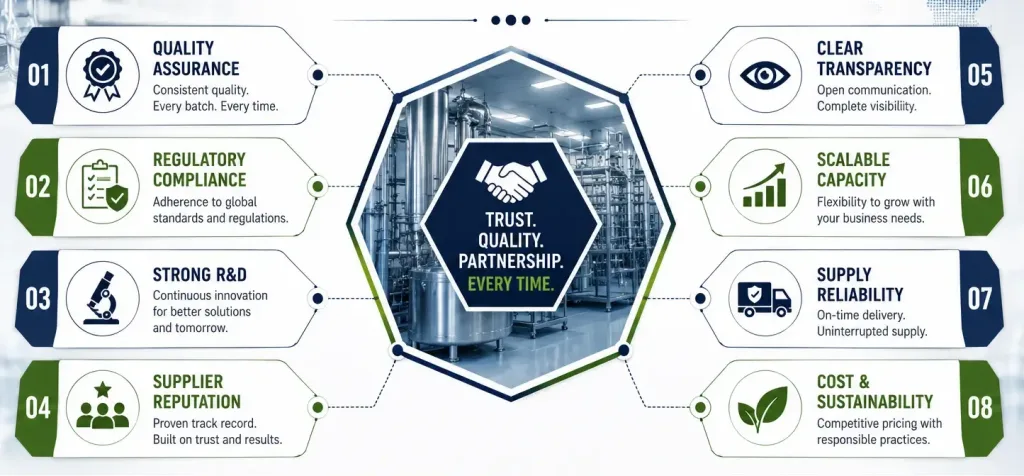
Clear Transparency
Pick suppliers who are clear about their products. They should also explain their processes and prices. Being transparent helps build trust. It reduces risks and keeps your working relationship honest and running smoothly over time.
Scalable Capacity
Make sure the supplier can grow with you. Having a strong production capacity and flexible systems makes it easy to adapt to changes in demand quickly. This helps prevent hold-ups and keeps the quality high.
Supply Reliability
Check their logistics. Find out when they deliver. Also, look into their backup plans. A stable supply chain is key to keeping production on track. It helps stop costly disruptions in your daily operations.
Cost & Sustainability
Look past the price tag and think about the value you’ll get. Pick suppliers who offer good deals, are ethical, and don’t harm the environment. This choice is good for growth over time, and it promotes responsible manufacturing.
Key Metrics Buyers Use to Evaluate API Suppliers
To make a good choice, buyers check key factors to see if an API supplier is reliable and secure. Here are the key performance indicators used to evaluate API Suppliers:
Batch Failure Rate
A low batch failure rate is a sign of stable processes. This results in better quality control and cuts the risk of delays or rejected materials. It’s a way to keep everything running well and avoid problems later.
Compliance Score
A supplier’s compliance score shows how well they follow global standards. It’s a way to see how well they follow the rules. High scores mean strong audit readiness. They also show good documentation. Plus, there are fewer risks of warnings or penalties.
On-Time Delivery
The on-time delivery rate tells us how often suppliers deliver APIs on time. A high rate is really helpful for planning production. It stops costly delays in production and product delivery.
Lead Time Stability
Lead time consistency checks if delivery times remain steady. It’s all about seeing if things stay stable over time. Reliable lead times help companies plan inventory. This makes stock management easier. It also cuts down uncertainty in their supply chain.
RFT Rate
The Right First Time (RFT) rate shows how often products meet quality standards. It tells us how often they do this without needing rework. A high RFT rate means processes work well. This leads to less waste and faster production cycles.
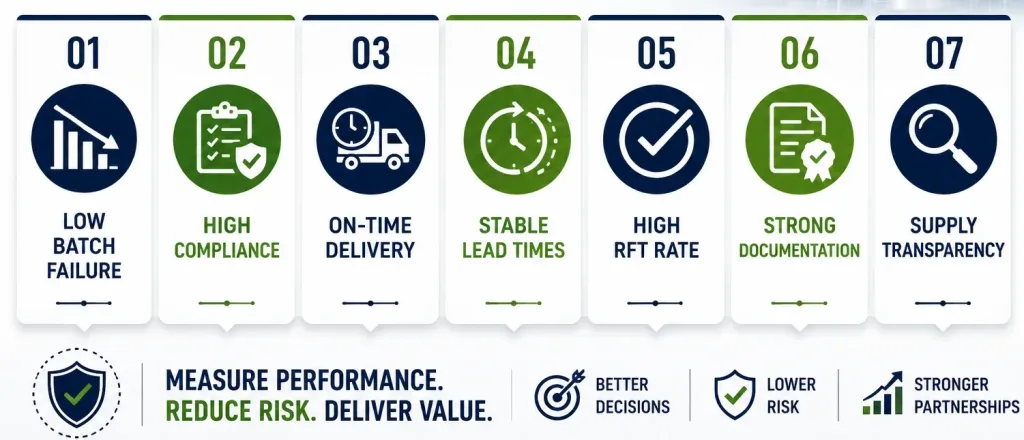
Documentation Index
The documentation completeness index measures how accurate supplier documents are. It also shows how complete they are. Good documentation really speeds up the approval process. It also makes audits much easier and helps with compliance everywhere.
Transparency Score
The supply chain transparency score tells you how open suppliers are about sharing info. It covers factors such as where they source stuff, how they produce it, and logistics. More transparency builds trust. It boosts visibility and helps manage risks better.
Role of Certifications & Global Standards
In the API industry, certifications and global standards are a big deal. They play a big role in helping you build trust with users and partners.
They confirm that products meet strict quality rules. They also check that processes follow safety rules. This helps companies meet rules and reduce risks.
When suppliers get certified, buyers can trust them more. This helps buyers make confident choices.
These standards help companies work better every day. They help make production better, cut down on waste, and get more done with less.
Certification is a big help to businesses looking to go global. It also gives them an edge when competing with others.
It builds customer trust by being open about quality, safety, and responsibility in the supply chain. This transparency helps customers see that they are with a trustworthy partner.
Risks of Choosing the Wrong API Supplier
Picking the wrong API supplier can cause big issues. This can really hurt drug companies. They might lose a lot because of it. These risks impact safety, costs, timelines, and trust in the brand. Key risks and impacts include:
Compliance Issues
Not following the rules can cause issues. It can lead to failed audits, which is a big deal. You might even get a warning letter. It can also lead to product recalls. Not following GMP rules can get you into legal trouble. It can also hold up approvals in tough global markets.
Low Quality
Poor API quality leads to impurities. It also results in batches that are inconsistent and products that just aren’t safe. This harms drug performance and lowers patient safety. It also raises the chance of failing quality tests.
Supply Breaks
Supply chain disruptions can stop production quickly. They happen all of a sudden. It’s a bad idea to rely too heavily on just a few suppliers or regions. You may face problems like delays or shutdowns. It’s harder to get things delivered on time when this happens.
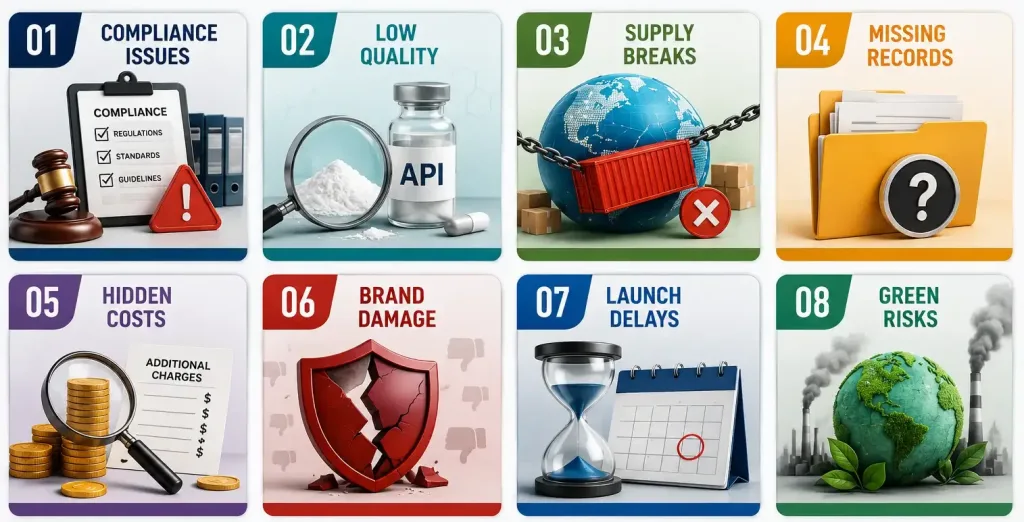
Missing Records
When documentation is incomplete, it leads to delays. This impacts approvals and submissions alike. Missing data in files or unclear change messages can slow down regulatory processes. This can also make it tougher to comply.
Hidden Costs
Hidden costs often come from having to redo work. They appear during urgent searches or extra testing. Starting with low prices can end up costing more in the long run. Suppliers are often inefficient and perform poorly.
Brand Damage
Damage to a brand’s reputation occurs when poor quality leads to issues. This can result in recalls or things going wrong. When customers and regulators lose faith in a business, it’s a blow to growth. The company’s market position takes a hit too.
Launch Delays
Delayed Time-to-Market can hurt a product’s success. It can also reduce profits. Issues with sourcing, quality, or compliance can put development on hold. This allows competitors to enter the market. They can gain an advantage.
Green Risks
Sustainability & Compliance Risks. If a company doesn’t follow the rules, it can get into trouble. They may also include practices that are not ethical. Ignoring green standards can have serious consequences. It can lead to global partners losing faith in you.
Challenges Faced by API Suppliers in Building Trust
It’s not easy to build trust in API suppliers these days. The global market is a complex place. These issues hurt our quality, reliability, and partnerships. Key challenges affecting trust include:
Supply Risks
Supply chain disruptions can cause big delays. They also lead to API shortages. Relying on only a few regions can be quite risky. Political issues, natural disasters, or sudden changes in rules can cause problems. This uncertainty can make buyers nervous.
Digital Gap
When digital tech isn’t used very much, it’s harder to track things right away. This also makes it tougher to share data with others. Suppliers find it hard to boost efficiency. They also struggle to identify risks early. Plus, it’s tough to meet transparency demands without modern tools.
Low Transparency
It’s really hard to track where things come from when you can’t see what’s going on in the supply chain. When information is unclear, buyers feel unsure. This can lower their trust and make it hard to check product quality.
Cost Pressure
To stay competitive on price, suppliers have to balance low costs with high quality. If something is very cheap, people might ask if there are hidden problems. These could include poor materials or shortcuts in production.
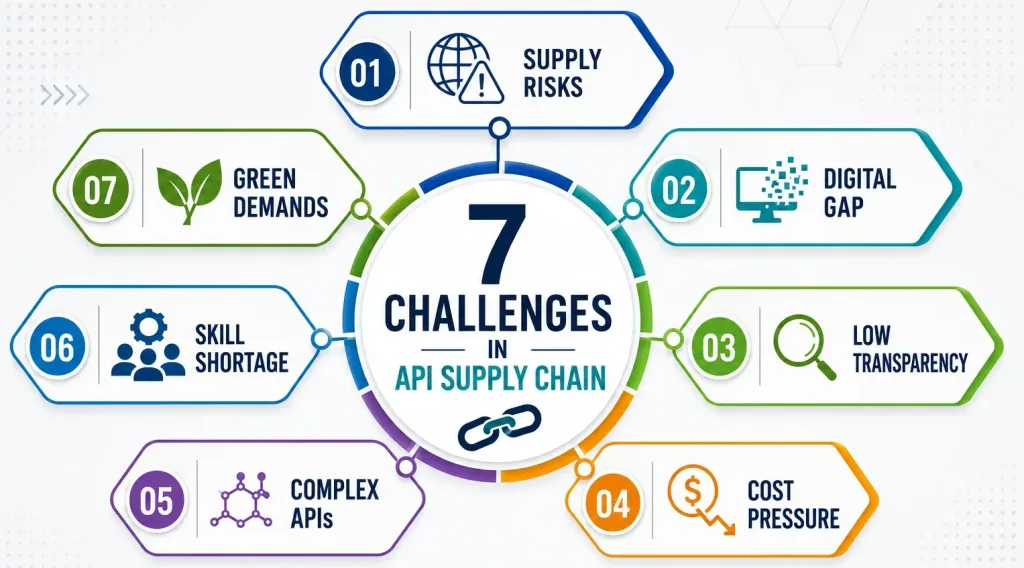
Complex APIs
High-potency APIs need special facilities because they’re pretty sensitive. They also need careful handling to stay safe. Managing safety, precision, and compliance is tougher now. This makes it harder to keep quality and trust consistent.
Skill Shortage
Workforce limits hurt production. They also affect quality control. A shortage of skilled workers can cause mistakes and slow things down. This makes it tough to follow strict rules and meet customer needs. It’s a challenge to balance these two things.
Green Demands
Suppliers should go green. This helps them live up to sustainability standards. It’s hard to follow environmental rules and control costs. But doing both is important. It builds trust with buyers and regulators worldwide.
Future Trends: Trust in the Next Generation API Market
The API market is moving quickly, with some new factors building trust. These trends help buyers pick API partners. They make it easier to choose safe, smart, and reliable options. Future trends shaping trust include:
Digital Integration
Digital integration makes it easier for data to flow. This makes systems work together better. Companies get a lot of benefits from connected platforms, cloud tools, and smart systems. These tools let them share live data, which cuts down on errors. As a result, buyers trust them more.
Full Visibility
End-to-End Supply Chain Visibility makes it easy to keep tabs on your items. It begins with the raw materials and takes you right through to delivery. Keeping an eye on things in real time helps spot risks right away. This boosts buyers’ faith by preventing delays.
Smart Manufacturing
Smart API Manufacturing is into AI and automation. It lets them work non-stop. These tools cut waste, boost quality, and keep output steady. This helps suppliers work better and get things done faster in global markets.
Green Practices
Green manufacturing is now a key trust driver. Suppliers can meet global standards by using eco-friendly methods. Lower emissions are beneficial as well. Sustainable processes help build trust. They create strong bonds with both regulators and customers.
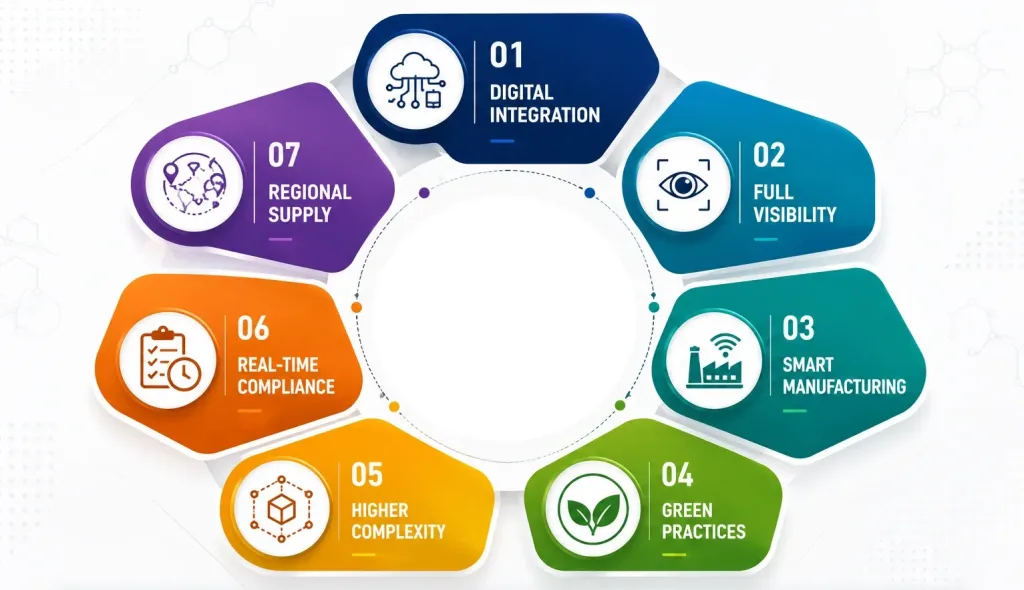
Higher Complexity
APIs are getting very complex. It needs better skills and tech to manage them. New drug types need simple, clear processes in place. This basically forces suppliers to enhance their capabilities. They’ve also got to maintain quality and deal with more difficult production issues.
Real-Time Compliance
Real-Time Regulatory Monitoring is a big help when it comes to keeping up with global rules. It keeps being compliant at all times. Digital systems track data, audits, and quality checks right away. This helps suppliers get ready for inspections. It also helps them avoid delays.
Regional Supply
Regionalization is on the rise as companies create local supply hubs. This helps spread things out and gets delivery moving more quickly. It also protects supply chains. This helps against global disruptions and risks.
What Differentiates a Strategic API Partner from a Vendor
Getting the API relationship right is key to growing. Here are the key differences:
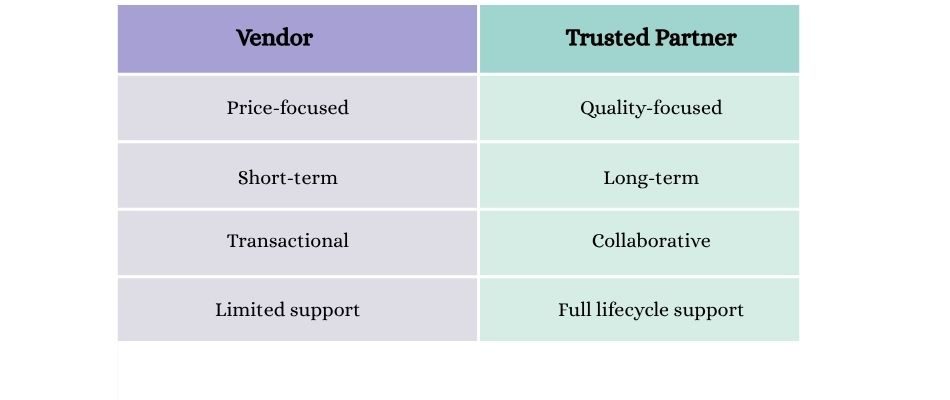
A vendor helps you get things done. A strategic partner focuses on driving success. The right choice can make all the difference in your API’s growth, efficiency, and long-term strength. It lays the groundwork for a successful journey.
Strategic Recommendations for API Suppliers
API suppliers need to move past just cutting costs. They should focus on building strong partnerships. Here are key improvement areas for suppliers:
Consistent Quality
Invest in quality that’s consistently good by setting up solid processes and checks. This helps to build a strong foundation. The goal is to have stable production, fewer failures in each batch, and to keep improving all the time. This makes sure our APIs are safe and work well for everyone.
Supply Resilience
Build a stronger supply chain by mixing up your raw material sources. And don’t forget to keep some safety stock handy. Be prepared for risks like delays, shortages, or disruptions that can happen anywhere. That way, you’ll have a steady API supply whenever you need it.
Better Documentation
Keep your documentation up to date. Make sure your records are clear, complete, and current. This means making sure all the info is easy to understand and accurate. This makes it easier for customers to get approvals, audits, and register products in global markets.
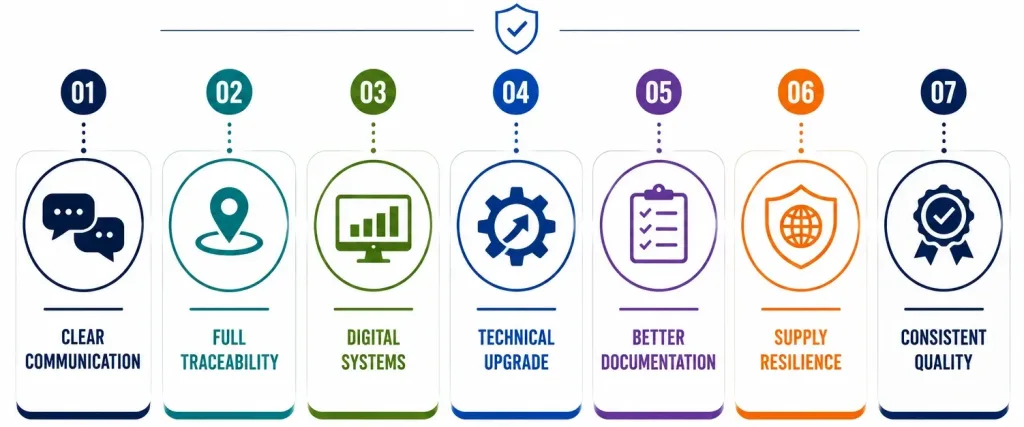
Technical Upgrade
Enhance your tech skills by investing in the latest technology and skilled teams. This will help you stay ahead in the market. Stay ahead in the API industry by focusing on complex chemistry and innovation. It’s important to use efficient production methods. They help to thrive in a competitive market.
Digital Systems
Speed up digital change with AI, data tools, and smart systems. These tools are super helpful for planning and cutting down on risks. They also provide real-time insights. This helps you make better decisions and solve problems faster.
Full Traceability
Make your supply chain clear and track everything. This includes raw materials and final delivery. To improve things, use digital tools. They make everything clearer, cut down mistakes, and fix issues fast throughout the supply chain.
Clear Communication
Keep everyone updated regularly. Be open and direct. Working closely with buyers helps build trust and avoid confusion. It also makes it easier to manage risks and delays. This coordination is really important for a smooth process.
Conclusion
Trust is now the foundation of API sourcing in the global pharma market. In today’s market, you can’t have one without the other. Buyers now care more about quality, safety, and a steady supply than just low prices. Having good suppliers makes a big difference. They can help you cut down on risks, steer clear of delays, and keep costs in check. Strong systems and clear data build confidence. Proven results help both sides succeed over time.
Going forward, trust is likely to increase thanks to digital tools, transparency, and eco-friendly practices. Companies that invest in quality tend to stand out. The ones that focus on technology and communication also do well. Shifting from a basic vendor role to a real partner leads to better results. This change makes supply chains more stable. It also speeds up growth and helps build stronger global relationships in the API industry.