
Introduction
It is increasingly difficult to obtain clean water. However, most of the world’s fresh water goes to industry and agriculture.
In rich areas, industrial water use may contribute to approximately 23% of the total freshwater.
This includes factories that manufacture active pharmaceutical ingredients.
These facilities require significant amounts of water for processing and cleaning, resulting in elevated effluent loads.
Understanding water use and the impact of wastewater is key.
It helps protect ecosystems and supports sustainable global manufacturing.
Global Water Consumption in Pharmaceutical Manufacturing
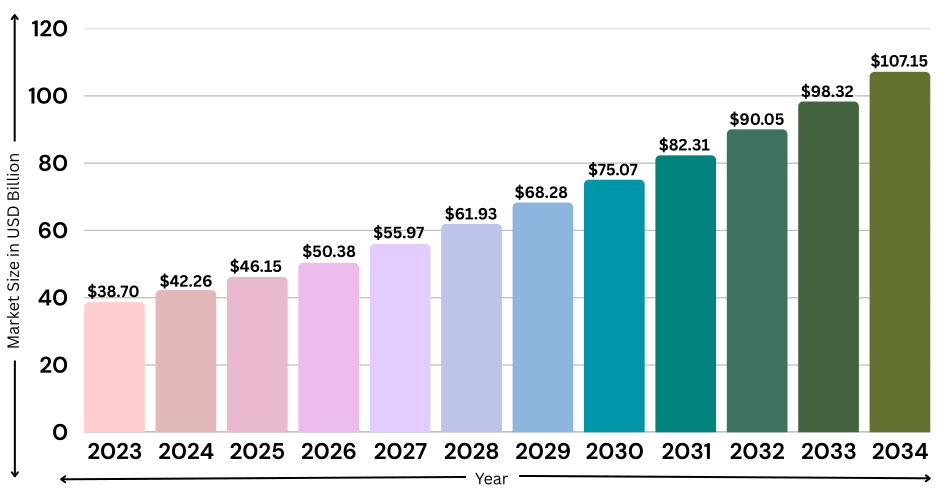
Water use in pharmaceutical manufacturing is rising alongside market growth and stricter quality needs.
In 2023, the pharmaceutical water market was valued at USD 38.70 billion.
By 2034, it is set to surpass USD 107 billion.
This increase shows a growing demand for purified water in production, cleaning, and compliance processes worldwide.
Here are the main points that show how quick market growth links to higher water use in pharmaceutical manufacturing:
Typical Water Intensity in API & Pharma Production
API and pharmaceutical production processes use a lot of water. Water is needed at every stage of production.
To produce one ton of API, you need a lot of water about 100,000 to 500,000 litres.
The breakdown primarily involves water. It’s used for chemical reactions, purification, cooling, and keeping equipment in good shape.
Due to high water use, water efficiency and reuse are essential for these sectors.
They help cut down environmental impact and ensure pharmaceutical manufacturing operations remain sustainable in the future.
Effluent Characteristics & Pollutant Load in API Plant Wastewater
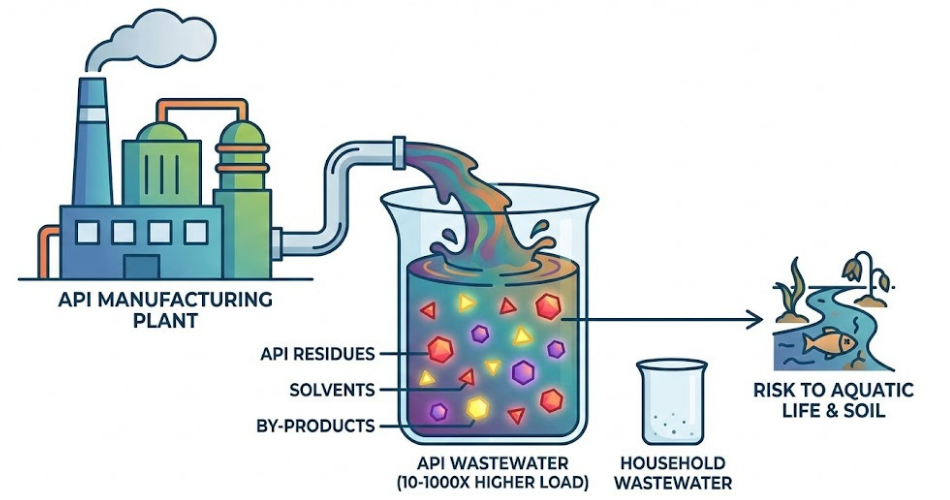
Wastewater from API manufacturing contains complex and concentrated pollutants.
Research shows that pharmaceutical wastewater can have much more API residues.
It can be 10 to 1,000 times higher than regular household wastewater or treated water from most plants.
This high pollutant load contains active pharmaceutical ingredients, solvents, and reaction by-products.
This makes treatment harder and raises risks to rivers, soil, and aquatic life if not managed well.
COD/BOD/TSS – Key Effluent Load Parameters in Pharma Wastewater
Pharmaceutical wastewater contains organic and solid contaminants.
When it comes to API manufacturing effluent, COD, BOD, and TSS are the go-to metrics for assessing pollution levels and treatment complexity.
COD Levels
Chemical Oxygen Demand is extremely high in raw pharma effluent.
Indian studies report COD values around 7,280–9,900 mg/L, showing very high organic pollution before any treatment.
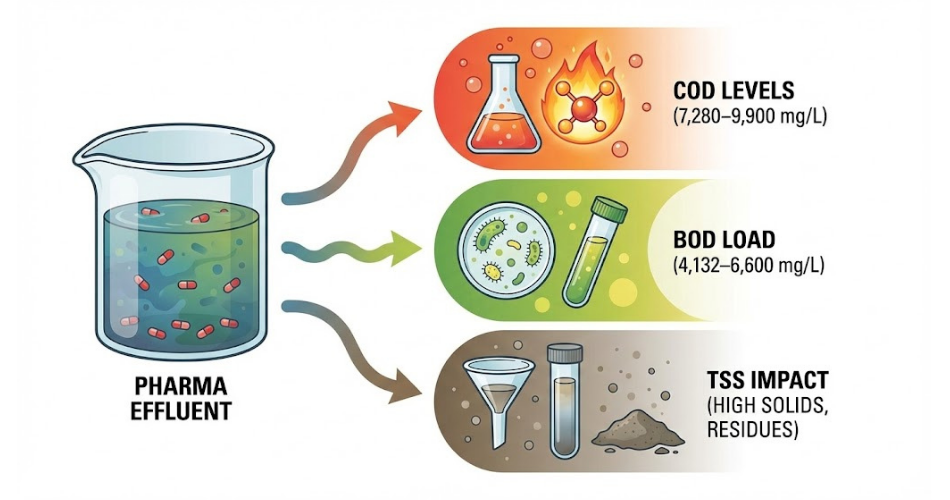
BOD Load
Biological Oxygen Demand is also severe in API wastewater. BOD levels range from 4,132 to 6,600 mg/L.
This shows there is a lot of biodegradable organic matter, which can lower oxygen in nearby waters.
TSS Impact
Total Suspended Solids include solids, residues, and reaction by-products.
High levels of TSS in pharmaceutical wastewater can cause big problems.
They make the water cloudy, mess with treatment systems, and add to the hassle of managing sludge at these plants.
Water Discharge & Effluent Benchmarks – Regulatory Standards
Water discharge regulations act as a safety net. They define the limits for wastewater released into rivers or onto land.
They want to protect the planet by cutting back on pollution in the air, water, and everywhere else.
India (CPCB / EPA Rules)
India’s Central Pollution Control Board sets effluent limits under the Environment Protection Rules.
These criteria ensure proper treatment, prevent irreversible damage, and promote good industrial practices.
If you do not adhere to these standards, you could face penalties, closure orders, or legal action. It’s vital to ensure compliance.
Zero Liquid Discharge (ZLD) Adoption in API Plants
Indian API plants are turning to Zero Liquid Discharge systems to meet critical environmental targets.
These ZLD systems lower liquid discharge and promote water recycling.
They improve water security in regions with limited resources.
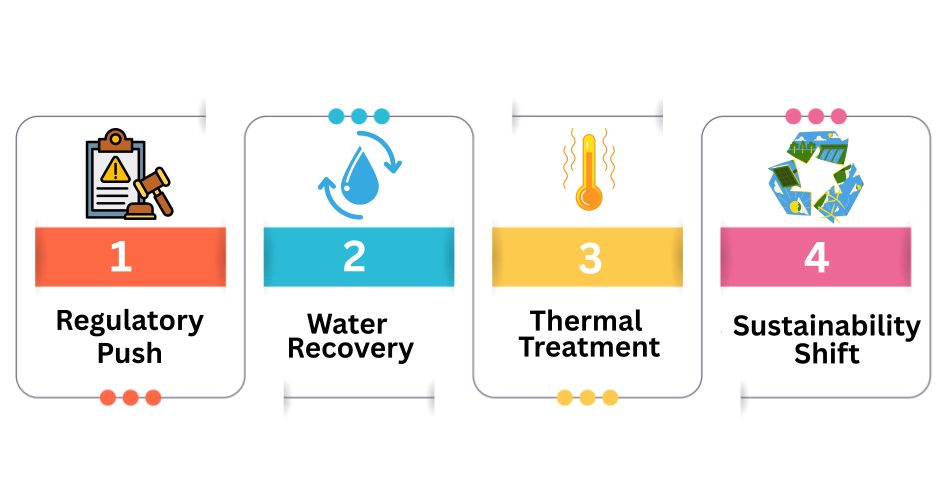
Regulatory Push
To meet stricter environmental rules, major API clusters in India adopt ZLD systems.
These systems get rid of all wastewater discharge.
They also help keep operations safe and ensure compliance with regulations for the long term.
Water Recovery
ZLD technologies can reduce effluent volumes by up to ~98%.
Pre-concentration stages recover about 60–80% of water, which is recycled for process use or utility needs.
Thermal Treatment
Evaporation and crystallization units are used to evaporate the water to be reused.
The dissolved salts and impurities form crystals.
This turns the liquid waste into solid waste, making it easier to manage.
Sustainability Shift
ZLD helps API plants move from water scarcity to water security. Limited water resources are protected.
This allows for better water management and less reliance on fresh sources.
Water Reuse & Treatment Efficiency Benchmarks in Pharma
Pharma water systems recycle water in a closed loop, capturing natural water, treating it, and delivering it to the city or industry.
Wastewater is collected, processed, and reused.
This method cuts down on discharge into our rivers and helps keep natural water sources safe.
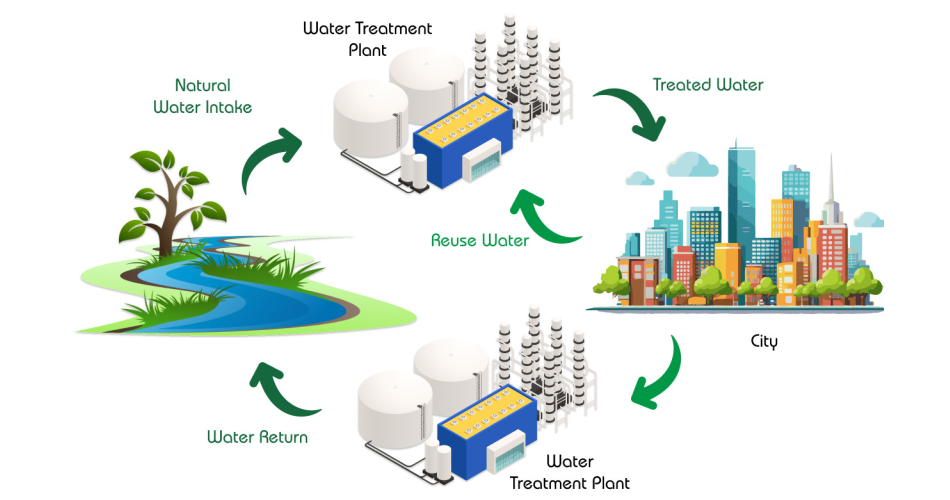
New systems like biological treatment, reverse osmosis, and evaporation are improving water reuse.
They are now more effective than ever. These systems enable facilities to use treated water wisely, reducing waste.
In one example, evaporation and treatment processes saved over 90% of water for reuse.
This reduced water use and improved treatment efficiency.
API Residues, Environmental Impact & Ecological Benchmarks
Water Reuse & Treatment Efficiency Benchmarks in Pharma
API residues in water systems raise significant environmental concerns.
Residues can harm aquatic life and disrupt ecosystems. They may also exceed ecological standards.
Trace Pollution
API residues are often detected at µg/L levels in effluent and receiving waters.
These concentrations are much higher than normal safety limits.
They are connected to real effects on aquatic organisms.
Research shows that antibiotics, such as ciprofloxacin, often contaminate our waterways.
Their levels can rise, sometimes hitting tens of thousands of µg/L.
These high concentrations can harm aquatic ecosystems. This situation creates toxicity risks and fosters resistance.
Ecological Limits
Ecological benchmarks define safe API levels to protect biodiversity.
Exceeding these limits can disrupt food chains and change species balance.
This shows the need for better treatment and monitoring controls.
Regional Case Study: High API Detection in River Systems
Studies in India and China show high levels of active pharmaceutical ingredients (APIs) in rivers near drug manufacturing zones.
Factory releases account for just 2% of total API pollution.
Still, they lead to local hotspots with high concentrations.
In India’s key pharma hubs and some areas of China, surface and groundwater contamination have been found.
This shows the need for good effluent treatment and monitoring.
Environmental Footprint Beyond Water Sludge & Solid Waste Generation
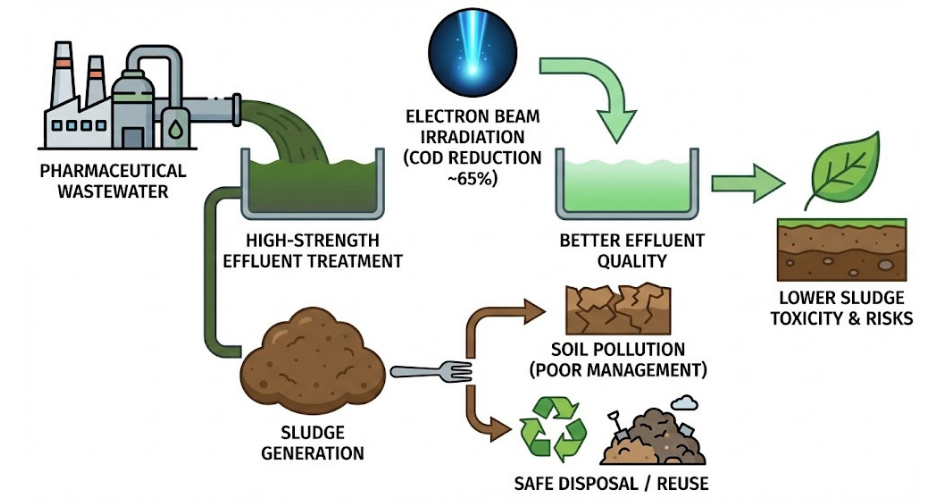
Pharmaceutical wastewater treatment affects much more than the water itself.
Strong wastewater leads to thick sludge and solid by-products.
These can complicate the treatment process. To keep the soil and air clean, we must handle these by-products carefully.
They should be disposed of safely or reused when possible.
Advanced processes now help cut pollution and change the type and amount of waste created.
Sustainability & ESG Water Stewardship Benchmarks
Water stewardship is essential for ESG reporting in the pharma industry.
Companies now keep a close eye on their water use.
They track how much each product needs, how much water they reuse, and any cuts in wastewater.
These practices also play a key role in lowering environmental risks arising from API manufacturing effluent discharges.
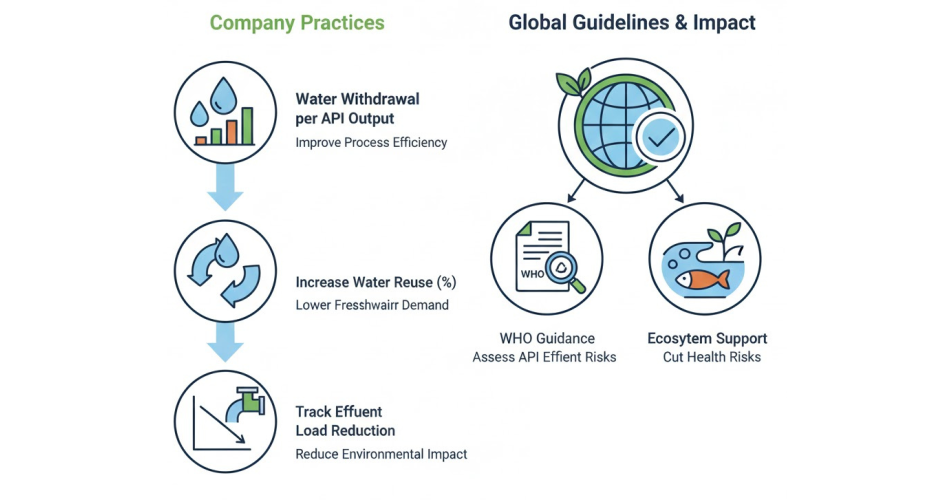
Global guidelines are crucial in these efforts. They stress the need to assess the environmental risks linked to API waste.
Regulatory bodies like the WHO focus on controlling pollution.
This supports ecosystems and cuts down health risks.
For the pharmaceutical sector, these benchmarks and practices are crucial for good water stewardship and sustainability.
Cost & Efficiency Implications of Water/Effluent Management
Managing water and wastewater effectively has a significant impact on the cost and efficiency of pharmaceutical manufacturing.
Treating and reusing wastewater cuts down on fresh water needs.
It also helps lower regulatory risks. In some cases, disposal costs can be up to 15× higher when recycling systems are not used.
Using reuse technologies keeps water prices low. It cuts down on waste and promotes efficient operations in the long run.
Future Water & Effluent Regulations Impacting the API Sector
Regulators around the world are set to introduce stricter water and effluent rules for API makers.
They seek to boost environmental safety, tackle antibiotic resistance, and ensure public health in the long term.
Key expected impacts include:
Strategic Takeaways for API Manufacturers
API makers can gain big benefits for their business and the environment.
These strategies help organizations follow the rules, cut costs, and boost their social and environmental impact.
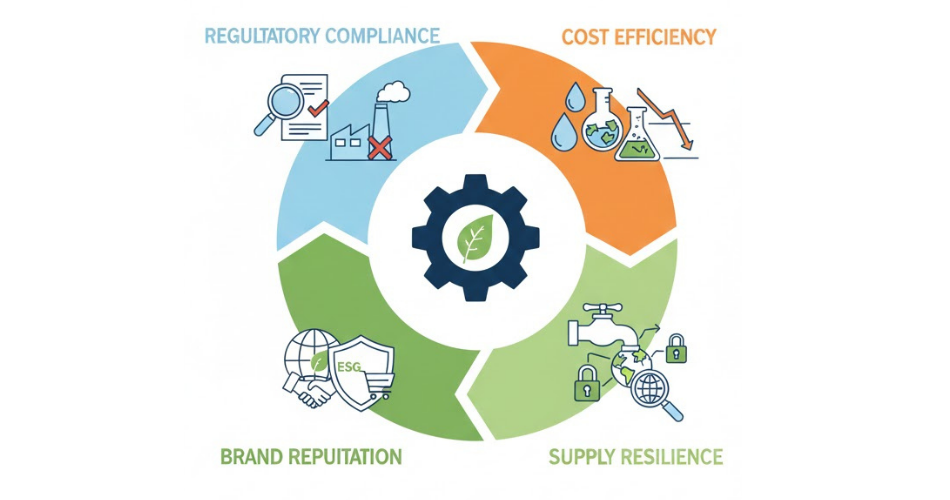
Regulatory Compliance
Sticking to global wastewater rules keeps you compliant and helps you dodge fines.
It also helps reduce environmental risks. Observing API residues in wastewater helps to ensure safe operations.
It also lowers risks to the community and the ecosystem.
Cost Efficiency
Recycling water and solvents helps save freshwater. It also reduces chemical use and saves energy.
Techniques such as reverse osmosis and distillation purify water.
They can help cut operational costs and support more sustainable API manufacturing practices.
Brand Reputation
Using sustainable water management and ESG practices boosts a company’s image.
Being environmentally responsible helps earn customer trust.
It is also crucial for tapping into global markets that value sustainability.
Supply Resilience
Relying less on outside water sources can help prevent shortages and issues.
Keeping an eye on suppliers ensures water standards remain steady in the supply chain.
This helps with smooth operations and improves risk management.
Conclusion
API manufacturing greatly strains the world’s water supplies.
It uses a lot of water and creates complex wastewater. Good water management is crucial.
It helps tackle rising production, strict discharge limits, and the risks of pollution.
Advanced treatment, reuse, and ZLD systems cut environmental damage.
They also help control costs and meet ESG goals.
Good monitoring and future-focused practices can help protect ecosystems.
They also work to ensure that pharmaceutical manufacturing is sustainable in the long run.