
Introduction
The global API market is expected to reach USD 353.0 billion by 2030, growing at a CAGR of around 6.0%.
India is one of the leading pharmaceutical hubs, recorded to export worth USD 27.9 billion in FY 2023–24.
It is known as the significant rise from USD 19.1 billion in FY 2018–19.
India still relies on imports for key APIs, mainly from China, despite this growth.
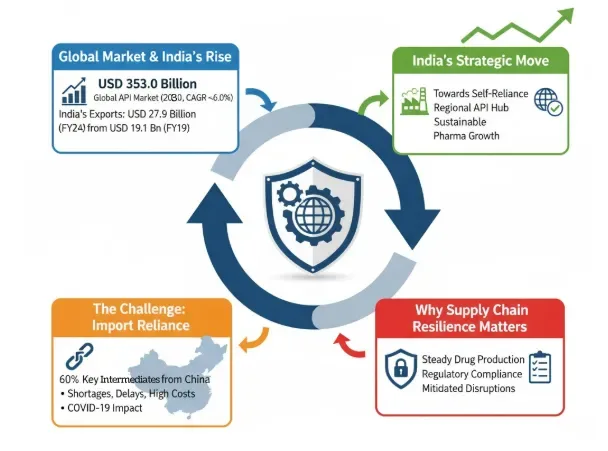
This reliance puts the pharma industry at risk. So, building a strong supply chain will be key for the next phase of global API sourcing.
But do you know why supply chain resilience matters?
Since the COVID-19 disruption, it became clear that overdependence on limited suppliers and geographies can cause API shortages, production delays, and higher costs.
Building supply chain resilience helps maintain steady drug production.
It also supports regulatory compliance and lowers risks from outside disruptions.
The API market keeps growing. Strong and varied sourcing will be key for lasting pharmaceutical growth.
India is moving towards self-reliance and a regional API manufacturing position.
Global Dependence & Vulnerabilities in API Sourcing
The global pharmaceutical system depends on a few key countries for active pharmaceutical ingredients (APIs) and their intermediates.
China presently controls the creation and export of critical API intermediates, supplying a large share of the world’s antibiotics and chemical precursors. India is the top exporter of finished drugs.
However, it relies heavily on Chinese imports for many bulk drugs and intermediates.
This is especially true for antibiotics and fermentation-based compounds.
This dependence, in turn, creates structural vulnerabilities, as seen during the COVID-19 pandemic.
The factory shuts down during export restrictions and logistical bottlenecks.
The crisis, however, exposed how concentrated sourcing was and limited geographical diversification.
India’s Strategic Advantages for Resilient API Sourcing
India is a global leader in pharmaceuticals, providing a solid base for developing resilient API supply chains.
As of 2024, the country hosts.
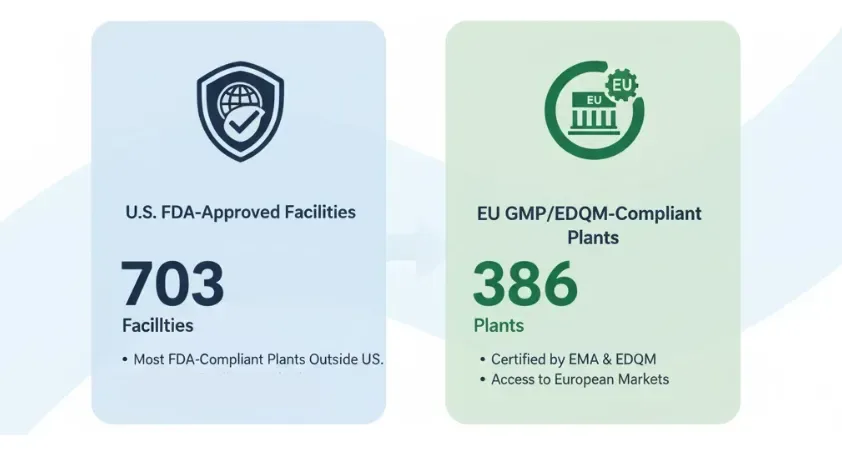
There are 241 WHO-GMP-certified facilities. This shows strong regulatory compliance and global trust.
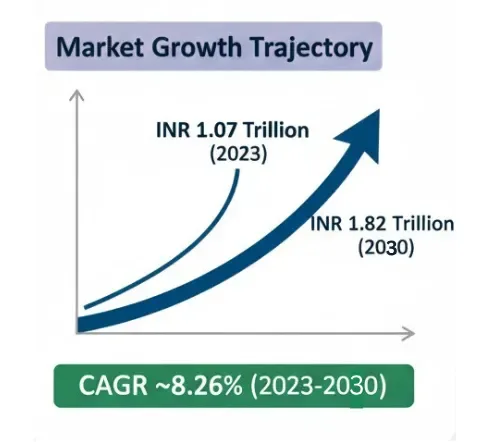
The Indian API market is worth INR 1.07 trillion in 2023. It is expected to reach INR 1.82 trillion by 2030.
This shows a strong growth rate of about 8.26% each year.
India’s low production costs and skilled workforce make it a great place for sourcing.
Plus, progressive government policies, like the Production-Linked Incentive (PLI) schemes, support sustainability.
Government Policy Driving API Supply Chain Resilience
India’s PLI Scheme
With a budget allocation of ₹6,940 crore (USD 940 million), the PLI scheme aims to cut India’s 70% import dependence on China for critical drug intermediates and APIs.
Its incentive domestic manufacturing, ensuring long-term competitiveness and security in the pharmaceutical value chain.
Under this initiatives, 35 key APIs, which earlier represented about 67% of total imports with ~90% dependence on China, have been prioritized for local production.
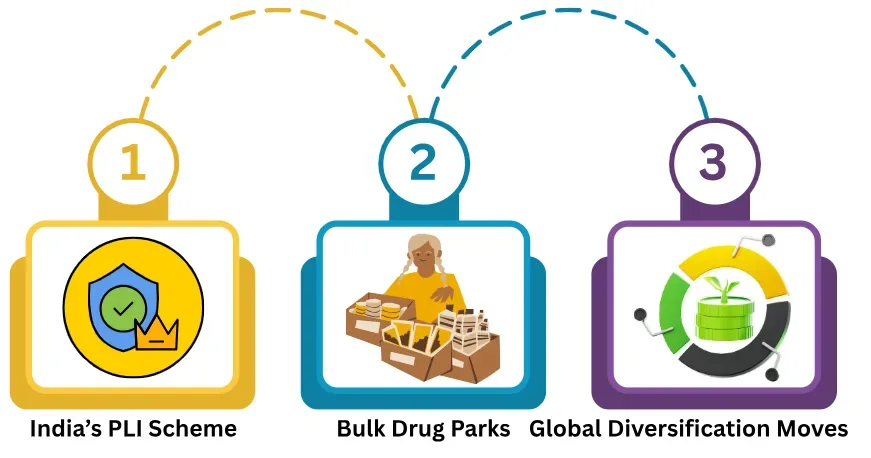
Bulk Drug Parks
The government has also sanctioned the development of three Mega Bulk Drug Parks with a total investment of ₹3,000 crore (~USD 400 million).
These parks are mainly designed to reduce manufacturing costs by 20–25% through-
Global Diversification Moves
Beyond India, global powers are also focusing on supply chain resilience.
For instance, the European Union’s Critical Medicines Alliance (2023) aims to reduce overdependence on limited suppliers, while the US FDA is exploring domestic API stockpiling.
Challenges & Risk Factors in API Supply Chain Resilience
India’s strong growth in pharmaceutical exports is impressive. However, reliance on imported intermediates remains a significant weakness.
Many key raw materials and fermentation-based compounds come from China. This makes Indian API production vulnerable to global supply issues and price swings.
Technological & Operational Enablers
The next step for API resilience is digital transformation. It also needs clear visibility into operations.
Adopting supply chain mapping, predictive analytics, and alternative sourcing platforms helps companies.
A consistent global CAGR for API supply chain digitalization isn’t always available.
However, the trend clearly shows a steady move toward data-driven resilience.
This shift boosts agility and transparency in manufacturing ecosystems.
Sustainability as a Core Sourcing Requirement
Environmental Compliance
Sustainability has become an integral part of long-term API sourcing strategies. India’s manufacturing hubs, like Hyderabad, Vizag, and Baddi, now follow Zero Liquid Discharge (ZLD) rules.
This helps reduce effluent waste. Environmental scrutiny is on the rise.
Pollution fines in major pharma areas went up by 40% in 2022–23, as reported by the Ministry of Environment, India.
Pharma ESG Commitments
Leading Indian companies are aligning with global sustainability targets top pharmacies to source 30–40% of their energy from renewable sources by 2030.
On the global front, over 60% of European Union pharmaceutical tenders are expected to include ESG (Environmental, Social, and Governance) compliance requirements by 2027.
Future Outlook & Growth Projections
India’s API industry is set for strong growth. Projections show a CAGR of about 8.26% from 2025 to 2030. This is expected to reach an estimated INR 1.82 trillion by 2030.
This growth will stem from higher global demand, more domestic manufacturing due to PLI schemes, and tech upgrades in API clusters.
India’s pharmaceutical exports could nearly double to USD 65 billion by 2030.
This growth relies on a few key factors:
These trends show that India will likely lead in strong, sustainable, and high-value API production within the next decade.
Case Study / Real-World Examples
The Economic Survey 2024 highlighted India’s strong growth in pharmaceutical exports.
However, it also warned about the ongoing reliance on imported APIs and intermediates.
The report noted that India is boosting its status as the “Pharmacy of the world.” Real self-reliance in pharmaceuticals means relying less on outside sources for key inputs.
The Government of India launched the Production-Linked Incentive (PLI) Scheme.
This is a key policy response to the challenge of boosting APIs and bulk drugs.
This initiative focuses on 35 essential APIs and bulk drugs.
These products used to make up almost 90% of India’s import reliance. Now, they are prioritized for domestic production.
Some projects in the scheme are approved or commissioned. This is a key step to reduce import reliance.
It helps secure supply and boosts India’s pharmaceutical value chain for the long run.
Conclusion
Supply chain resilience in API sourcing is vital. It ensures affordability, quality, and security in the global pharmaceutical industry.
India is becoming a key player in the global API ecosystem. It’s growing manufacturing scale and strong rules help.
Plus, the government is proactive in supporting these changes. This makes India more resilient and self-reliant as trade dynamics shift.
To keep this thrust going, we need to capitalize more in upriver intermediates. We should also follow environmental and ESG standards.
Finally, modernizing our technology across operations is essential.
By strengthening these pillars, India can protect its supply chains.
It can become a trusted leader in global pharmaceutical sourcing in the next decade.