
Introduction: Why API Efficiency Is the Real Profit Driver
In today’s drug manufacturing, efficiency in APIs is really important. It boosts profits, fosters growth, and is key to global success.
A more efficient API can increase earnings and help to build a stronger presence around the world. Small process gains can cut costs. In modern API manufacturing, efficiency is the driving force behind lower production costs, higher output, and sustainable business growth.
Good systems, automation, and a smooth flow of data all make a big difference. They help cut waste, speed up work, and increase output. This is why efficiency is so important for making a profit.
Below are the key stats and impacts of API efficiency:
A strong API system helps businesses grow, strengthen their global presence, and stay competitive in international markets. It boosts output and enables easier operational scaling.
What Defines API Production Efficiency?
API production efficiency is about creating more with less waste. It keeps quality consistent, too. This method really helps simplify things and saves time. Key performance indicators (KPIs) show how well plants meet their targets. Below are the KPI metrics and benchmarks:
API production efficiency depends on the mentioned KPis. Keeping a close eye on KPIs helps plants a lot. They waste less, save money, and produce more. It helps them keep their product quality the same.
Root Causes of Low Efficiency in API Manufacturing
Producing APIs is a complex process. There are many regulations. So, it’s important to follow the rules closely. Below are the key causes that lower efficiency in API:
1. Yield Loss
When doing multi-step synthesis, you often lose some material. This can lower the overall yield of the batch. Reactions that don’t work well and constant adjustments can waste a lot of good raw materials. This can stop production and raise costs.
2. Batch Variability
Batch differences can happen for a couple of reasons. One is uneven processes, and the other is the raw materials themselves. The variability in production has a big impact on quality. It can lead to mistakes that need to be fixed, which hold up the whole manufacturing process.
3. Poor Monitoring
Without real-time monitoring of key process parameters, issues aren’t caught quickly. This makes it hard to find problems as they occur. Delayed responses can really mess things up. They lead to wasted materials and a drop in production efficiency.
4. Material Waste
It’s not unusual for some material to be lost during complex chemical reactions. This kind of loss is a normal part of the process. Inefficient transfer steps and weak recovery methods can drive up operational costs. They may also cut yields.
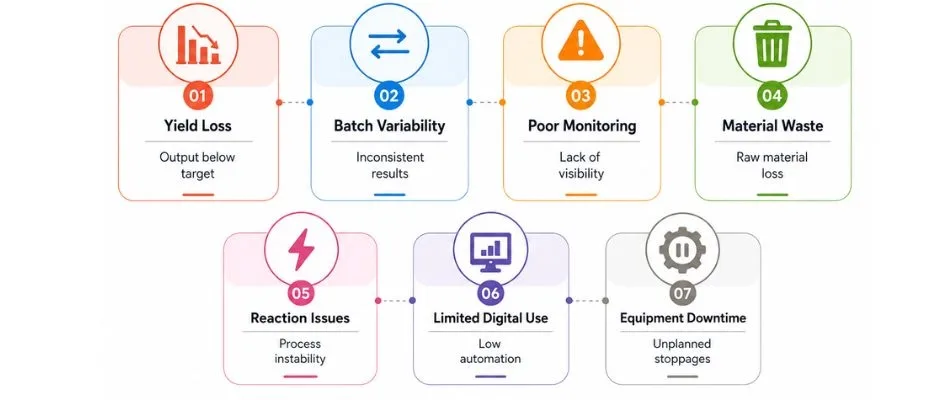
5. Reaction Issues
Synthesis doesn’t go well when the conditions are off. Temperature and pH changes can make it a lot less efficient. These conditions can cause reactions to be incomplete. They can also create unwanted by-products.
6. Limited Digital Use
Many manufacturers aren’t using digital tech. They’re also passing on AI and predictive analytics. This makes it harder for them to improve processes. They also struggle to predict failures. This affects their overall equipment efficiency, or OEE. Getting their equipment to run smoothly is a challenge.
7. Equipment Downtime
Regular breakdowns of equipment can really throw off production. When maintenance doesn’t go as planned, it causes problems. Failures or setup issues also cut into throughput. This also causes more differences in batches. It slows product delivery.
Smart Ways to Improve API Production Efficiency Fast
API production should be fast, safe, and cost-effective. It’s about being efficient and keeping costs low, but not at the cost of reliability. Below are the key strategies to improve API manufacturing performance:
Process Optimization
Decide on the best synthesis path early on. It’ll optimize your process routes. This reduces waste, saves you money, and speeds things up. It also helps you scale up more easily, with fewer issues down the line.
Continuous Flow
Switching to Continuous Manufacturing can help to leave batch processes behind. This change leads to a smoother and steadier production flow. This makes things more consistent. It cuts downtime and speeds up output. Plus, it allows real-time monitoring for better quality control.
Smart Analytics
AI and data analytics help to look at production data and catch problems before they happen. This helps us make better choices, cut down on errors, adjust settings, and improve efficiency with careful actions.
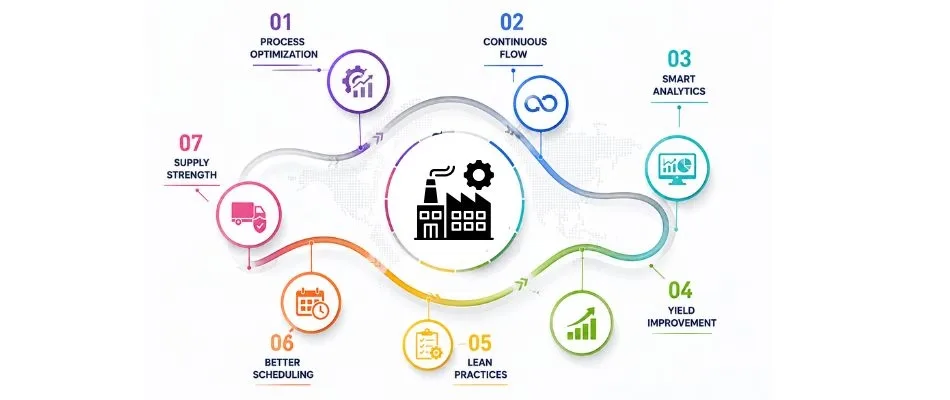
Yield Improvement
Keep your process conditions in check to cut down on variability. It’s a good way to get better yields. Having stable processes is key to getting consistent quality. This basically means to have fewer failures and less waste. This also raises output and makes production easier.
Lean Practices
Use Lean Manufacturing principles to cut waste and boost workflow. Taking simple steps can make a big difference. A better layout and sticking to set processes can really speed things up. Cutting down on waiting saves time and boosts productivity.
Better Scheduling
Make production scheduling better so machines and teams are used in the best way possible. Proper planning is a big help. It helps cut out delays, cuts down on wasted time, and keeps the workload in check. All this leads to a faster, smoother production cycle.
Supply Strength
To boost supply chain efficiency, raw materials must arrive on time and be of high quality. This helps things run more smoothly. A good supply chain is really important for operations. It helps to avoid delays and also helps to manage risks. This way, everything can flow smoothly.
Data-Driven Efficiency Benchmark
Metric Low Efficiency Plant High Efficiency Plant
Key Metrics That Define API Production Efficiency
The API tracks how efficiently it’s producing, including what’s being output, what’s going to waste, and overall performance. It uses clear metrics to measure these areas. Below are the key efficiency metrics and KPIs:
Failure Rate
The Batch Failure Rate gives you the number of batches that don’t make it through production. Lower failure rates mean you’re in control. This also leads to less waste and fewer delays. This improves efficiency in making APIs.
OEE Score
Overall Equipment Efficiency shows how well a machine works. It combines performance and availability. It also includes quality. All three are in one measure. Higher OEE means the equipment is running well with fewer stops. This helps to increase output and cut down on production losses. It’s a big plus for overall performance.
Mass Intensity
Process Mass Intensity gives you an idea of the amount of material used. It’s basically a comparison between that and the end product. Lower values mean less waste and more efficient use of resources. This gives a boost to sustainability and helps cut costs.
E-Factor
E-Factor, or Waste Generation, tells you how much waste is produced for each unit of API. It gives a clear measure of waste per unit. Having a lower E-Factor is great because it leads to cleaner processes. This also cuts the environmental impact. It makes things more efficient.
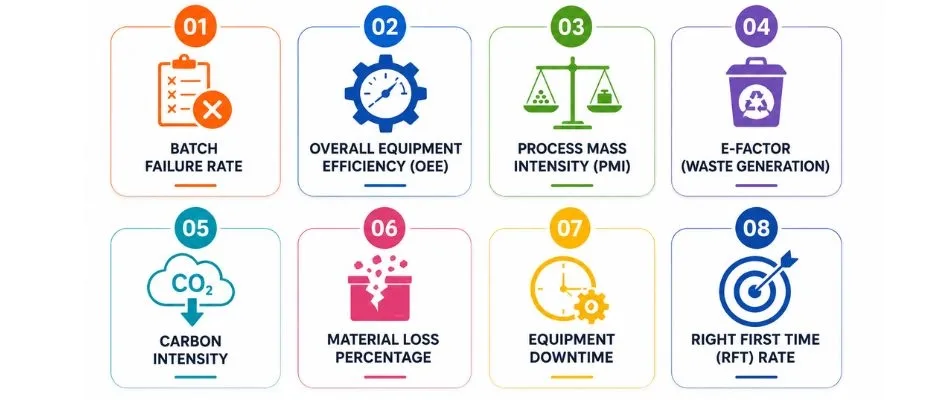
Carbon Impact
Carbon Intensity looks at the emissions that happen when something is being made. Lower carbon output leads to greener manufacturing. It also saves energy and improves environmental performance, which is a big plus. It also ensures that production runs smoothly and efficiently.
Material Loss
Material Loss Percentage tells you how much raw material goes to waste. This waste occurs when the material is being processed. When we reduce losses, we not only save costs but also improve our yield and make production more efficient. This method helps everyone.
Downtime Use
Downtime shows how often machines break down. It’s a measure of how much they’re not in use. Equipment utilization, on the other hand, tells you how well they’re being used. Less downtime helps production. Better use makes it faster and more efficient.
RFT Rate
The Right First Time Rate shows how often batches hit the quality mark. It’s a measure of batches that are good to go, no rework needed. A higher RFT means fewer errors. It saves time and gives production performance a boost.
Business Impact of Improving API Efficiency
Improving API efficiency can really boost businesses. It also helps cut costs. This also leads to more output and higher profits. Here’s the key business impact and results:
Challenges in Improving API Efficiency
To boost API production efficiency, quick and smart actions are needed. These changes affect both processes and people. Fixing these gaps really makes a difference. It cuts down on waste, saves you time, and boosts quality. Here are the key challenges and improvement actions:
Reduce Variability
Standardizing your raw materials can help reduce batch differences. It would make a big difference. Also, standardizing your processes can have a good impact. This way, you can minimize differences between batches.
Improve Visibility
Limited real-time visibility slows decision-making. It can really hold things up. Using real-time data tools helps spot issues early. This leads to quick fixes, better control, and improved efficiency in the production cycle.
Cut Material Loss
Minimizing material loss during processing is simple. It largely depends on improving handling, mixing, and filtration. Good process control really makes a difference. It helps cut losses and makes the most of your materials. This is key when they cost a lot.
Optimize Reactions
Bad reaction conditions don’t help. They lead to low output and a lot of waste. Getting the temperature, mixing, and timing just right can really boost how well a reaction works. It cuts down on impurities and makes the whole production process more efficient.
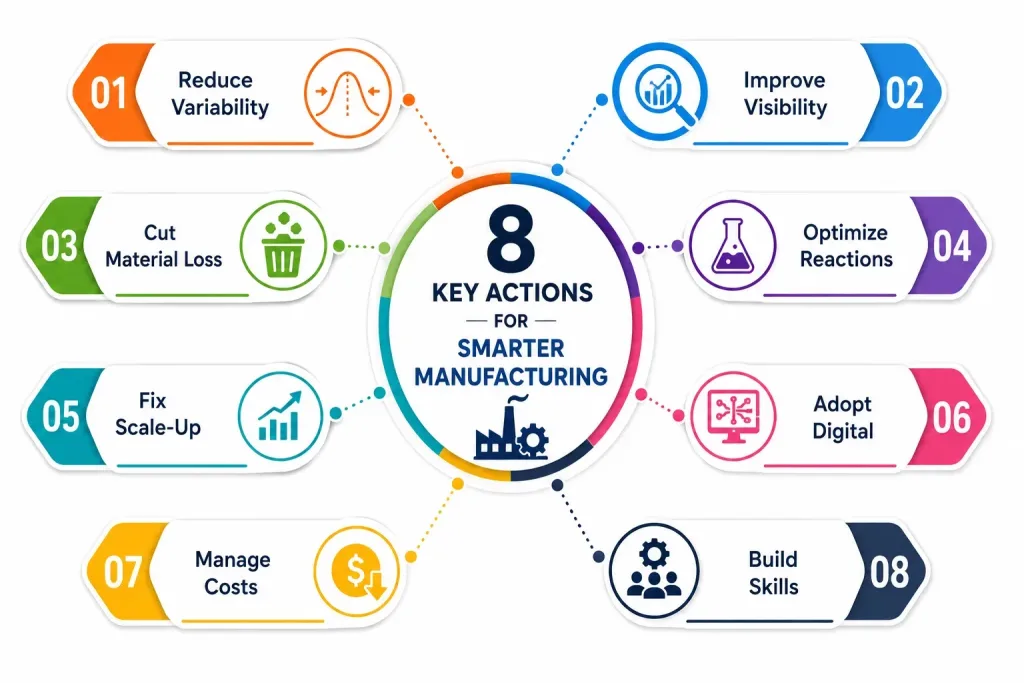
Fix Scale-Up
Scale-up inefficiencies happen when lab results don’t succeed at a larger scale. Careful testing and knowledge sharing keep performance in top shape. It helps the shift from small-scale to full production run smoothly.
Adopt Digital
A lot of businesses are being really slow to adopt digital technologies. Automation, data systems, and analytics boost accuracy. They make tasks clearer and more reliable. They also speed up decision-making and make it easier for teams to manage their processes.
Manage Costs
Initial investment costs can be pretty high, and that can delay upgrades. Invest smart by breaking it down into simple steps. Zero in on what really matters to get the best results. This way, you can improve efficiency without spending too much.
Build Skills
Workforce Limitations can impact performance. Having skilled workers and trained teams is essential. They keep processes in check and help implement new technologies. It’s a big help for API production to run smoothly. Plus, it makes the whole process more efficient.
Role of Digital Transformation in API Efficiency
Digital transformation is giving API manufacturing a big boost. It’s getting faster, smarter, and more dependable all at once. Here’s how digital tools are improving efficiency :
AI Use
Using AI is a great way to spot problems and improve processes. It helps teams identify issues and improve performance. It checks out data patterns, makes decision-making better, and helps reduce errors. This all results in a higher yield by enhancing process control.
Live Monitoring
Real-Time Monitoring tracks process conditions. It uses sensors to do this instantly. It helps spot problems early. This way, you can maintain high quality and act quickly. As a result, you face fewer losses and improve overall efficiency.
MES Integration
MES integration connects all the steps in production. It does this in a digital way. This tool helps you plan, track batches, and keep your workflow running smoothly. This helps teams manage operations. They can do it more accurately and with better control.
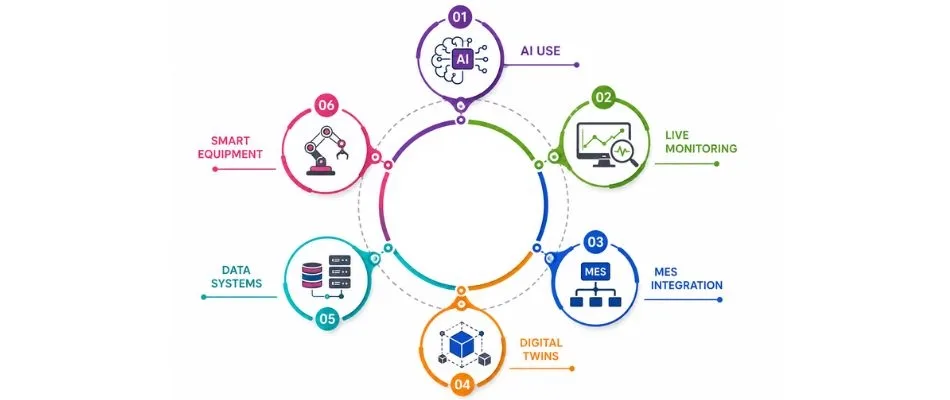
Digital Twins
Digital Twins for Process Simulation make virtual copies of processes. They represent different ones. These models let you test changes safely. They help you figure out what might happen and make things more efficient. The best part is, they do all this without putting your actual production at risk.
Data Systems
Data Integration combines information from various systems and puts it all in one place. It’s a way to get everything together. This helps teams see trends. They can make quick decisions. It also improves process performance.
Smart Equipment
In pharma plants, smart equipment is pretty common these days. It uses sensors and automation to get the job done. It cuts down on breakdowns and helps with maintenance, so machines run smoothly. This gives you a productivity and efficiency boost.
Future Trends in API Production Efficiency
The API production space is changing quickly. This is due to the rise of new technologies and the development of smarter systems. Below are the key future efficiency trends:
Predictive Systems
Predictive manufacturing will become common. This change will happen as data tools get better. These systems pick up on problems right away, which means fewer failures. They also help teams act quickly. This keeps production on track and running smoothly.
Green Focus
The Green API manufacturing sector is going to be a key driver of growth going forward. Companies are going to go green. They’ll cut down on waste, conserve energy, and stick to tough environmental guidelines. This will contribute to greater efficiency and help to save on costs.
Local Supply
API Supply Chain Localization is set to increase reliability. Producing close to your market reduces delays, lowers risks, and keeps supplies steady. This makes production better. It also speeds up response times.
Complex APIs
The growth of strong, complex APIs will need new, advanced processes. These APIs need careful management. They also require the right technology and skilled teams. It helps them work efficiently and keep their standards high.
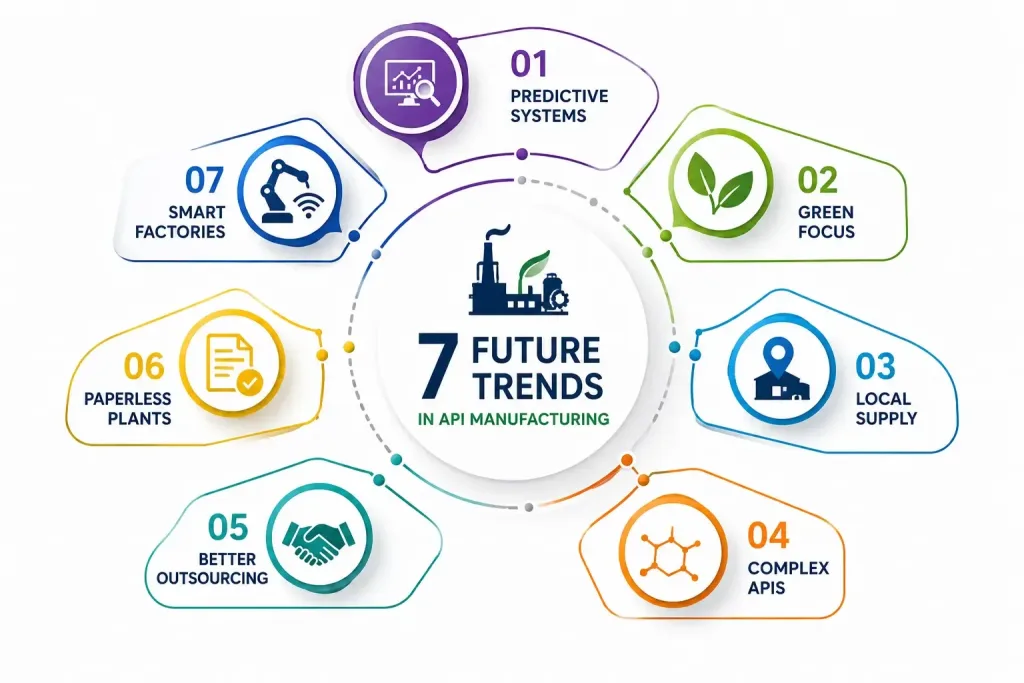
Better Outsourcing
Outsourcing models are a great way to increase efficiency. They work with specialist partners to get the job done. Companies can focus on their key tasks when they outsource. This method cuts costs, speeds up production, and adds flexibility.
Paperless Plants
Fully digital and paperless manufacturing will take over from manual work. It’s a big change that’s on the way. Digital records boost accuracy and speed, helping to meet regulations. They cut down on mistakes and reduce paperwork delays. This helps everything run more smoothly.
Smart Factories
Smart Factories are going to use automation, AI, and connected systems to get things done. They plan to use this tech to improve their operations. It helps them manage things better. This means you’ll have less downtime and your productivity will get a boost. They make decisions in real time and optimize operations constantly.
Framework: Fast-Track API Efficiency Model
Conclusion
Improving API production efficiency is both a technical goal and a smart business move. It’s about making a change that benefits the bottom line. Making small gains in yield and cutting failure rates can really add up and increase profits.
This can save a company a lot of money in the long run. Better processes, real-time monitoring, and digital tools are a big help in reducing waste. They also improve quality and accelerate production. This helps companies stay ahead in global markets.
Focusing on key performance indicators really pays off over time. To make plants more reliable, check the yield. Also, look at overall equipment effectiveness and cycle time.
Strategies like continuous flow, AI, and lean practices can make a big difference in operations. They make things easier to manage and help everything flow better.
You can speed up API production and simplify it with the right teams and systems. This approach also makes it easier to scale for future growth.