Product Overview
Benfotiamine is a man-made lipid-soluble S-acyl derivative of thiamine (vitamin B1).
Benfotiamine, also known as S-benzoylthiamine O-monophosphate, is more readily absorbed by the body than ordinary thiamine salts that dissolve in water.
Because it is amphiphilic, it is easier for cells to take it in and absorb it completely.
This makes cells have more thiamine diphosphate (ThDP), which is important for several metabolic reactions.
It assists in keeping nerves healthy, keeps metabolism in balance, and lowers the harm that high blood sugar does to cells.
Therapeutic Applications
Benfotiamine is mostly utilized as a powerful prodrug for thiamine.
It has a lot of health benefits, notably for problems with metabolism and nerves.
Activating transketolase has been shown to lessen complications from diabetes.
This process moves toxic glucose metabolites away from unfavorable pathways.
This therapy is often used with other treatments for diabetic polyneuropathy and has demonstrated clinical benefits.
It helps nerves send signals better and lessens neuropathic pain.
It helps the endothelium function and abstain advanced glycation end-products (AGEs) from building up.
This keeps your blood vessels safe.
Researchers are looking into its possible benefits for people with mild cognitive impairment and early Alzheimer’s.
It might help lessen neurotoxicity and oxidative damage that come with aging.
Specification Parameters
-
The scientific name of the chemical is S-Benzoylthiamine O-monophosphate.
-
The number of CAS is 22457-89-2.
-
C₁₉H₂₃N₄O₆PS is the molecular formula.
-
The weight of the Molecule is 466.45 g/mol.
-
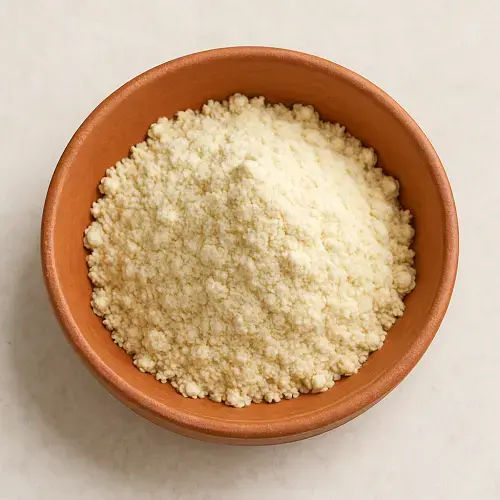
Colour is white to off-white and in the form of crystalline powder
-
Purity is at least 97% (HPLC)
Packaging & Storage
You can get benfotiamine in safe, airtight packaging.
These containers keep moisture out and help the product stay stable for as long as it is on the shelf.
Standard packaging comes in sealed glass vials or HDPE bottles with a high barrier.
Every box comes with certain papers, such as Safety Data Sheets (SDS), Certificates of Analysis (COA), and Certificates of Origin (COO).
Keep Benfotiamine in a cool environment, such as 2–8 °C. Avoid putting it in the sun or a humid place.
Logistics systems that keep an eye on the temperature keep important pharmaceutical ingredients safe while they are being shipped.
They also ensure that the material meets the standards for international shipment.
Regulatory & Documentation
It is important to follow stringent GMP regulations when manufacturing benfotiamine.
This makes sure that it meets the safety and quality criteria for both drugs and nutraceuticals.
There is complete documentation for each batch.
The Certificate of Analysis (COA), Certificate of Origin (COO), and a current Safety Data Sheet (SDS) are all part of this.
The SDS lists the many types of hazards and how to handle them safely according to GHS regulations.
People all over the world buy benfotiamine as a dietary supplement, so regulatory oversight is essential.
Why Choose Us
-
High Purity and Consistency: Manufactured to be at least 97% pure, which ensures that it will work reliably and give the same results every time for research and formulation development.
-
Better Absorption: This type of thiamine is absorbed better than ordinary thiamine salts.
-
GMP-Compliant Production: Made in the best factories with stringent controls during production and final quality tests.
-
Full Documentation: Each batch comes with documentation for tracking and compliance with the law.
-
Dedicated Technical Support: Getting guidance from experts with problems about formulation creation, validating analytical methods, and following the rules.