
Introduction: The Transformation of API Manufacturing
The pharmaceutical industry is changing quickly, especially in producing Active Pharmaceutical Ingredients (APIs).
Traditionally, API manufacturing relied on batch processing, manual oversight, and region-specific supply chains. Global demand is rising. Regulatory pressure is increasing too.
Also, the need for efficiency is pushing companies to adopt advanced technologies more quickly.
Modern API manufacturing is shifting toward data-driven, automated, and sustainable production models to meet rising global demand.
By 2030, API manufacturers that integrate digitalization, automation, and sustainable practices will gain a significant competitive advantage in regulated global markets.
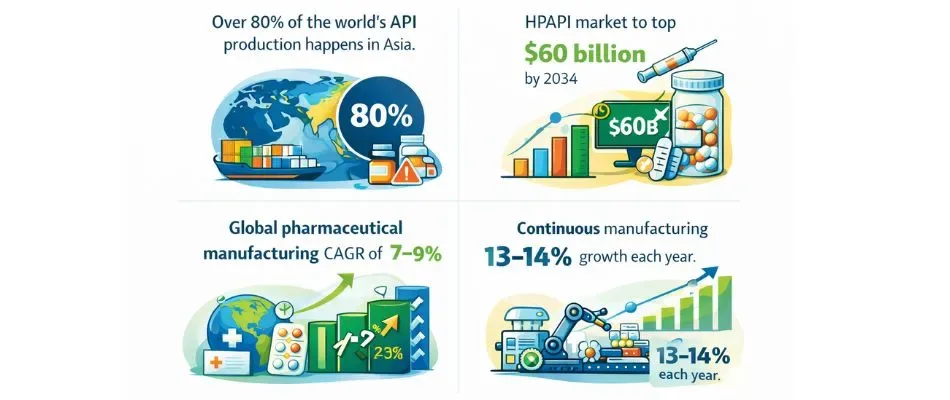
Key Data Insights
Why Next-Gen Technologies Are Reshaping API Manufacturing
Increasing Complexity of Modern APIs
Modern drugs, like biologics and targeted therapies, need exact and controlled manufacturing settings. Complex molecular structures demand advanced synthesis techniques and tighter quality control.
Rising Regulatory Expectations
Regulatory bodies like the FDA and WHO are enforcing stricter compliance standards. Manufacturers must ensure traceability, consistency, and data integrity at every stage.
Demand for Faster Time-to-Market
Pharmaceutical companies feel pressure to launch drugs fast, especially in global health emergencies. Faster development cycles require efficient and scalable manufacturing solutions.
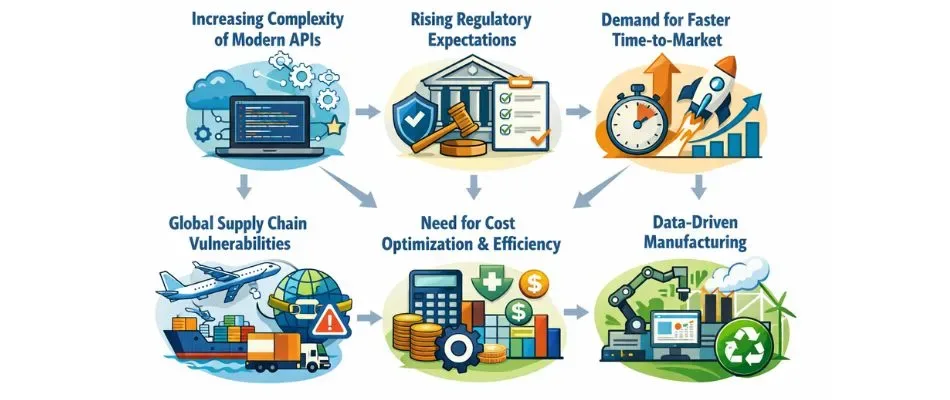
Global Supply Chain Vulnerabilities
Relying too much on a few regions has shown risks. For example, there can be disruptions during pandemics or geopolitical tensions. This is pushing companies toward localized and flexible manufacturing models.
Need for Cost Optimization & Efficiency
Rising production costs and competition demand more efficient processes. Automation and digitalization help reduce waste, labour costs, and production time.
Data-Driven Manufacturing
Real-time data monitoring helps manufacturers improve processes. It lets them predict failures and keep quality steady.
Environmental Regulations
Sustainability is becoming a priority. Governments are enforcing eco-friendly practices, pushing companies to adopt greener manufacturing methods.
Continuous Manufacturing (CM): The Core Disruption
Next-gen API manufacturing tech, like continuous manufacturing, lowers pharma costs. It also improves sustainability. These advancements are more than small upgrades. They mark a significant change in how developers create, improve, and deliver APIs.
Cost Impact
A key benefit of modern API manufacturing is the big drop in production costs.
Traditional pharmaceutical development is both time-consuming and expensive. On average, bringing a drug from discovery to market can take 10-12 years and cost upwards of $2[5] billion. Costs arise from issues such as batch inefficiencies, failed batches, long validation cycles, and high energy use.
With continuous manufacturing and integrated production systems:
Using shared utilities, reusable process data (like the same dossier), and flexible batch scheduling saves costs. These systems help manufacturers respond quickly to demand. They don’t need to keep big, unused facilities.
Impact on API Quality
Next-gen manufacturing tech boosts API quality. It ensures steady production conditions and reduces variability. Manufacturers use real-time monitoring and automation to spot problems right away. This helps reduce human errors and keeps every batch pure and uniform.
Efficiency & Cost Benefits
Advanced manufacturing methods, like continuous processing, boost efficiency. They reduce downtime, speed up production, and lower energy use. This cuts operational costs, reduces material waste, and improves resource use. As a result, the whole process becomes more cost-effective.
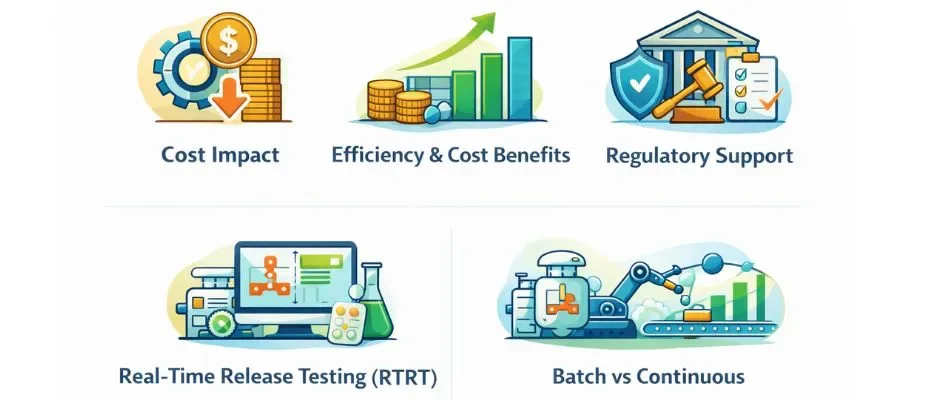
Regulatory Support
Regulatory bodies, such as the U.S. Food and Drug Administration, are promoting new manufacturing technologies. These systems boost transparency, traceability, and compliance. They help companies meet strict rules more easily and speed up approval timelines.
Real-Time Release Testing (RTRT)
Real-Time Release Testing helps manufacturers check product quality during production, not just afterward. This cuts delays and speeds up product release. It also removes long post-production testing. Quality standards remain high.
Batch vs Continuous
Batch manufacturing is a step-by-step process. It has pauses between stages, which makes it slow and variable. Continuous manufacturing operates efficiently, resulting in faster production and consistent quality. This method enhances efficiency, making it the top choice in modern API manufacturing.
Process Analytical Technology (PAT) & Real-Time Release
Process Analytical Technology (PAT) and Real-Time Release Testing are changing API manufacturing.
They allow for constant monitoring and quick quality checks during production. These systems use advanced sensors and data analytics instead of end-product testing.
This approach ensures each stage meets set standards. Releases happen faster. Consistency improves. The risk of batch failures drops.
Process Intensification Technologies
Process Intensification (PI) aims to speed up pharmaceutical manufacturing. It makes processes smaller and more efficient by redesigning traditional methods.
PI combines and streamlines steps into compact, high-performance systems. This approach provides better results while using fewer resources.
It is vital in today’s API manufacturing. It boosts productivity and cuts environmental impact.
Key Technologies in Process Intensification
Process intensification uses advanced tools such as:
These tools help control reaction conditions. They also improve heat and mass transfer. Plus, they let multiple steps happen at once in one system.
Benefits: Efficiency, Speed & Yield
PI boosts efficiency by shortening reaction times and increasing production speed. It boosts yield by cutting side reactions and material loss. It also lowers energy use, manufacturers can achieve higher output in less time with improved product quality.
Role in Continuous Manufacturing
PI combines several steps into one smoother process. This cuts downtime between stages and helps to keep production steady.
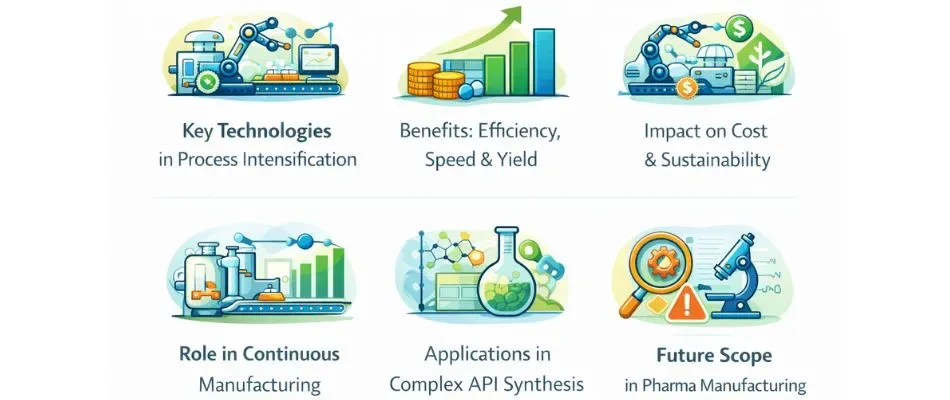
Impact on Cost & Sustainability
PI lowers operational costs and environmental impact. It does this by cutting equipment size, energy use, and raw material waste. It promotes the adoption of eco-friendly manufacturing practices. By cutting emissions and saving resources, it helps companies reach their sustainability goals. Plus, they can still make a profit.
Applications in Complex API Synthesis
PI is very useful for making complex APIs. It allows for precise control over reaction conditions, which is critical. It helps handle hazardous reactions safely. It boosts selectivity and makes it easier to produce high-potency or multi-step molecules with less effort.
Challenges in Implementation
Implementing PI has its perks, but it can be tough.
The main challenges are:
Scaling up intensified processes requires careful planning and validation. You must also ensure regulatory compliance.
Future Scope in Pharma Manufacturing
The future of PI in pharma looks bright. Digitalization, automation, and continuous manufacturing are driving more adoption. As technology changes, PI will likely become the standard for making high-quality APIs. It will do this more efficiently, sustainably, and at scale.
Green Chemistry & Sustainable API Manufacturing
Concept & Principles of Green Chemistry
Green chemistry aims to create chemical processes that reduce harmful substances, minimize waste, and improve efficiency.
Its core principles are:
Importance in Modern API Manufacturing
In today’s pharmaceutical industry, sustainability is no longer optional. Green chemistry helps companies cut environmental risks. It improves safety and lowers production costs. This approach also boosts brand reputation and meets global sustainability goals.
Key Green Technologies (Biocatalysis, Solvent-Free Synthesis)
Biocatalysis uses enzymes for chemical reactions at mild conditions. This method boosts selectivity and cuts down on toxic by-products. Solvent-free synthesis cuts out or reduces harmful solvents. This makes processes cleaner and more sustainable.
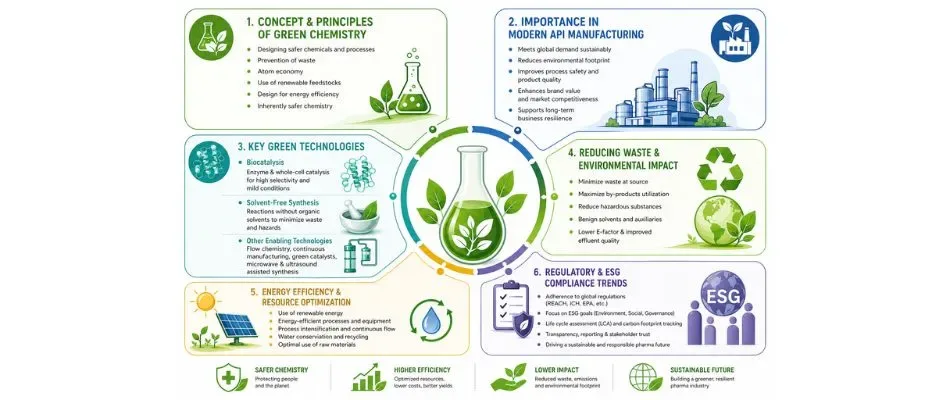
Reducing Waste & Environmental Impact
Green chemistry techniques significantly cut down chemical waste, emissions, and wastewater generation. Manufacturers can reduce their environmental impact and lower disposal costs. They can do this by optimizing reaction pathways and using cleaner inputs.
Energy Efficiency & Resource Optimization
Sustainable manufacturing focuses on lowering energy consumption through optimized processes and efficient equipment. It also helps use raw materials better. This means less waste and more productivity from what is available.
Regulatory & ESG Compliance Trends
Global regulatory bodies and environmental standards are increasingly pushing for sustainable practices. The WHO and ESG frameworks urge drug companies to use cleaner manufacturing methods. These methods should also be clearer.
Digitalization & Smart API Factories
Digitalization is transforming traditional API manufacturing into smart, connected production systems. Smart API factories use automation, IoT sensors, and data analytics.
This helps with real-time monitoring, predictive maintenance, and data-driven decisions.
This leads to better efficiency, higher product quality, less downtime, and more transparency in manufacturing.
Operations become more agile and ready for the future.
Advanced Downstream Processing Technologies
Advanced downstream technologies focus on APIs after synthesis. They work to efficiently separate, purify, and refine them.
Modern methods, such as membrane filtration and continuous chromatography, improve product purity.
Automated purification systems also help achieve higher quality. They also cut processing time and improve overall yield.
These innovations help with scalable and cost-effective manufacturing. They also keep quality standards high.
This speeds up downstream operations in today’s pharmaceutical production. It also makes them cleaner and more reliable.
Emerging Technologies to Watch
AI & Machine Learning in Pharma Manufacturing
AI and machine learning help analyze complex data, improve processes, and predict failures. These technologies help improve decision-making, reduce errors, and enhance overall manufacturing efficiency.
Digital Twins & Smart Manufacturing
Digital twins are virtual replicas of manufacturing systems. They help companies simulate processes, spot inefficiencies, and improve performance in real time. This leads to better control, reduced risks, and improved productivity in smart factories.
Advanced Robotics & Automation
Robotics and automation are streamlining repetitive and precision-based tasks in API production. They lower the need for human input. They boost accuracy and ensure consistent quality. Also, they increase speed and safety in operations.
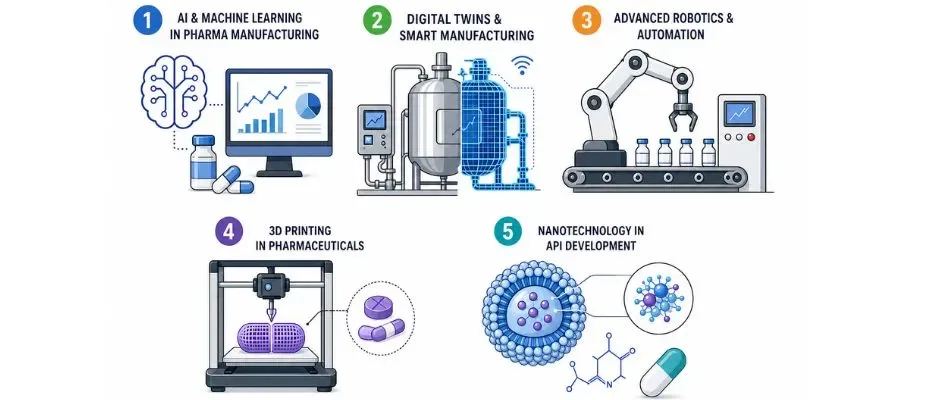
3D Printing in Pharmaceuticals
3D printing is changing the game in personalized medicine. It allows for customized drug dosages and complex formulations. It also supports rapid prototyping and on-demand manufacturing.
Nanotechnology in API Development
Nanotechnology enhances drug delivery by improving solubility, bioavailability, and targeted action of APIs. It’s especially helpful for creating advanced therapies that work better and have fewer side effects.
Challenges in Adopting Next-Gen Technologies
High Capital Investment & ROI Uncertainty
Using advanced technologies, like continuous manufacturing and AI, requires a large initial investment. This includes costs for equipment, infrastructure, and digital tools. Many companies worry about how fast they will recover costs. This is especially true in competitive markets.
Skilled Workforce & Training Gaps
Next-gen technologies demand specialized knowledge in automation, data analytics, and advanced engineering. There’s often a lack of skilled professionals. Current staff also need ongoing training to keep up with new systems and processes.
Regulatory Uncertainty & Compliance Complexity
Although regulatory bodies are supportive, evolving guidelines can create uncertainty. Companies face tough compliance rules, validation steps, and documentation needs. These can delay technology adoption.
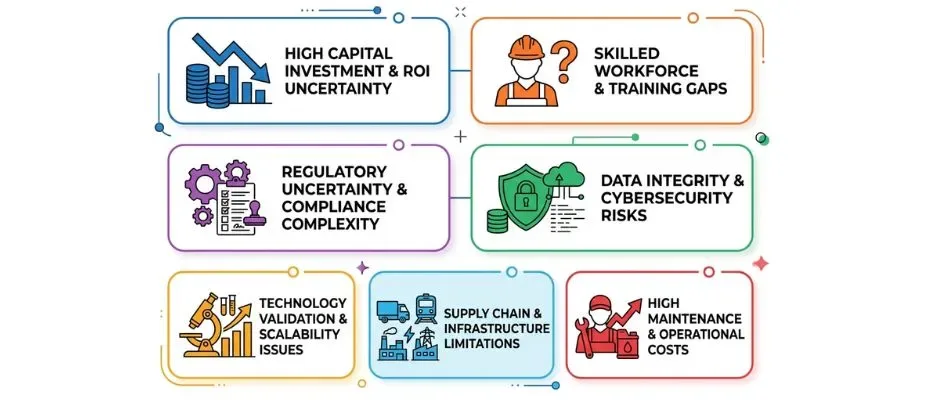
Data Integrity & Cybersecurity Risks
With increased digitalization comes the risk of data breaches, cyberattacks, and system failures. Today’s API facilities face major challenges. They must handle data securely and protect sensitive manufacturing information.
Technology Validation & Scalability Issues
New technologies must undergo rigorous validation to meet quality and regulatory standards. Scaling these technologies from pilots to full production can be tricky. It takes time and needs a lot of testing and fine-tuning.
Supply Chain & Infrastructure Limitations
Existing infrastructure may not support advanced manufacturing systems, requiring costly upgrades or redesigns. Additionally, dependence on specific suppliers for specialized equipment can create supply chain bottlenecks.
High Maintenance & Operational Costs
Advanced systems often require ongoing maintenance, software updates, and technical support. Operational costs can accumulate, so companies must balance innovation with long-term sustainability.
Strategic Importance for API Manufacturers & Exporters
Enhancing Global Competitiveness
Next-gen technologies help API makers boost product quality, cut costs, and enhance production efficiency. This helps them compete in international markets and meet global pharmaceutical companie‘ needs.
Meeting Stringent Regulatory Requirements
Modern manufacturing systems help companies meet strict global rules from agencies like the U.S. Food and Drug Administration. Enhanced monitoring, documentation, and traceability ensure smoother approvals and reduced compliance risks.
Improving Cost Efficiency & Profit Margins
Advanced processes cut waste, save energy, and speed up production. This leads to lower operational costs. This boosts profit margins. It also lets manufacturers set competitive prices in global markets.
Strengthening Supply Chain Resilience
Flexible and digitalized manufacturing systems help companies respond quickly to disruptions. Manufacturers can create a more stable supply chain. They can do this by reducing reliance on limited sources and boosting production agility.
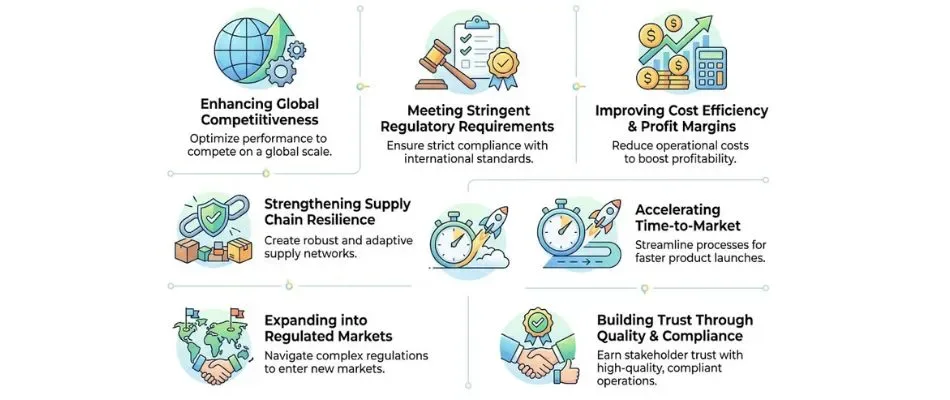
Accelerating Time-to-Market
Faster production methods and real-time quality monitoring significantly shorten development and manufacturing timelines. This allows companies to launch products more quickly and gain a competitive advantage.
Expanding into Regulated Markets
Using advanced technology and meeting high standards helps manufacturers enter strict markets like the US and Europe. This opens up new growth opportunities and increases export potential.
Building Trust Through Quality & Compliance
Consistent product quality, transparent processes, and strict regulatory adherence help build long-term trust with global clients and partners. At Actiza Industry, our next-generation manufacturing infrastructure and compliance-first approach ensure reliable API supply for pharmaceutical companies across regulated and emerging markets.
Future Outlook: What Will Define API Manufacturing by 2030?
By 2030, API manufacturing will be defined by a strong shift toward digitalization, automation, and sustainability.
Technologies like AI-driven process optimization, continuous manufacturing, and smart factories will become standard, enabling faster production with minimal human intervention.
Green chemistry and energy-efficient processes will be key in meeting environmental and regulatory goals.
Manufacturers will focus on creating stronger, localized supply chains.
This will help reduce global dependencies and risks.
The future will favour companies that blend innovation, compliance, and efficiency. This mix will help them deliver high-quality APIs at scale.
Conclusion
Next-gen API manufacturing tech is changing the pharmaceutical industry. It makes production faster, more reliable, and eco-friendly. Companies use innovations like AI optimization, green chemistry, and smart factories to tackle old problems. They also use continuous manufacturing. They improve cost, quality, and scalability.
The world needs more complex, high-quality medicines. So, using advanced technologies is essential, not optional. API makers using digital tools, automation, and eco-friendly methods will better meet regulations. They will further enhance supply chain efficiency and improve their competitiveness in international markets. The growth of API manufacturing will largely depend on continuous innovation and the ability to adapt quickly to changing demands.It will also need a strong focus on quality and sustainability.
1. https://pmc.ncbi.nlm.nih.gov/articles/PMC10913693/
2. https://www.biospace.com/press-releases/high-potency-api-market-size-to-hit-usd-69-13-billion-by-2035-cagr-8-4
3. https://straitsresearch.com/report/pharmaceutical-manufacturing-market
4. https://www.mordorintelligence.com/industry-reports/pharmaceutical-continuous-manufacturing-market
5. https://www.fiercebiotech.com/biotech/drug-development-cost-pharma-22b-asset-2024-plus-how-glp-1s-impact-roi-deloitte