
Introduction
India supplies roughly 8.8% of the world’s Active Pharmaceutical Ingredient (API) output by volume and hosts more USFDA-approved manufacturing facilities than any country outside the United States.
For any pharma company, whether a generic formulator in Africa, a distributor in Southeast Asia, or a mid-size API Manufacturer in Europe or Latin America, sourcing bulk APIs from India is no longer a cost decision alone; it is a supply-chain resilience decision.
The India API market is valued at roughly USD 14-16 billion in 2025-26 and is projected to grow at a CAGR of around 7.7%-8.1% through 2031, according to Mordor Intelligence and Coherent Market Insights industry data.
That growth is being driven by three converging forces: patent cliffs freeing up generic demand, the US Biosecure Act pushing Western buyers away from Chinese suppliers under a “China Plus One” strategy, and India’s own Production Linked Incentive (PLI) scheme rebuilding domestic capacity for critical starting materials.
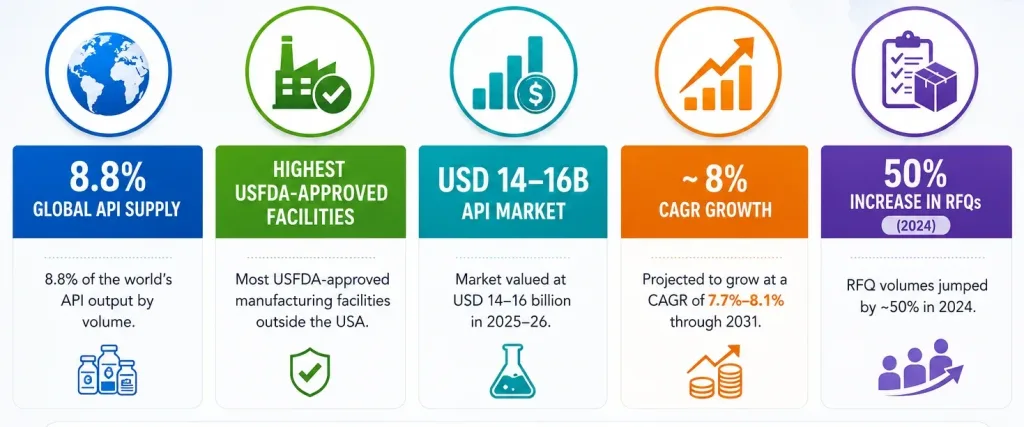
For importers, this is both an opportunity and a caution. Demand for Indian APIs has surged contract manufacturers reported roughly a 50% jump in RFQ volumes in 2024 alone, which means lead times, supplier vetting, and documentation discipline matter more than ever.
This guide walks through the entire sourcing journey: why India, how the process works, what regulators demand, and how to avoid the mistakes that cost importers time, money, and regulatory standing.
Why India Is a Global Hub for Bulk API Manufacturing
India earned the title “Pharmacy of the World” for reasons that show up clearly in the data:
Manufacturing scale and regulatory density
India holds the largest number of USFDA-approved pharmaceutical plants outside the US, alongside thousands of facilities certified to WHO-GMP, EU-GMP, and other international standards.
Cost efficiency
A large, skilled chemistry and pharmacy workforce, India produces over 50,000 science and technology graduates a year combined with mature process chemistry expertise keeps production costs well below Western benchmarks while maintaining internationally audited quality systems.
Export performance
India’s pharmaceutical exports grew 9.4% year-on-year to reach roughly USD 30.47 billion in FY2024-25, according to Economic Times reporting, with APIs and generic formulations forming the backbone of that trade.
Policy tailwinds
The government’s PLI scheme has already made 32 projects operational, worth over Rs 4,024 crore, reviving domestic production of long-import-dependent molecules such as Penicillin-G for the first time in three decades. Three dedicated Bulk Drug Parks in Gujarat, Himachal Pradesh, and Andhra Pradesh are being built with shared effluent treatment, power, and testing infrastructure to cut per-unit costs further.
Global diversification demand
China still controls close to 80% of generic API supply by volume, but tightening NMPA scrutiny (62 warning letters issued in 2024-25) and the US Biosecure Act are actively redirecting Western sourcing volumes toward India.
None of this means India is risk-free later sections cover that in detail but it explains why India remains the default alternative sourcing destination for most global Preseance buyers today.
Understanding Bulk APIs Before You Buy
Before approaching suppliers, an importer should be clear on what exactly is being purchased, because the term “bulk API” covers several distinct categories with different regulatory and handling implications:
Synthetic vs. biotech APIs
Synthetic (small-molecule) APIs made through chemical synthesis dominate the market by volume and revenue share (around 53–66% depending on the estimate), while biotech/fermentation-derived APIs, antibiotics, recombinant proteins, monoclonal antibodies are the fastest-growing segment.
Generic vs. innovative/branded APIs
Generic APIs, used once patents expire, are what most bulk importers purchase; innovative APIs involve tighter IP and supply agreements.
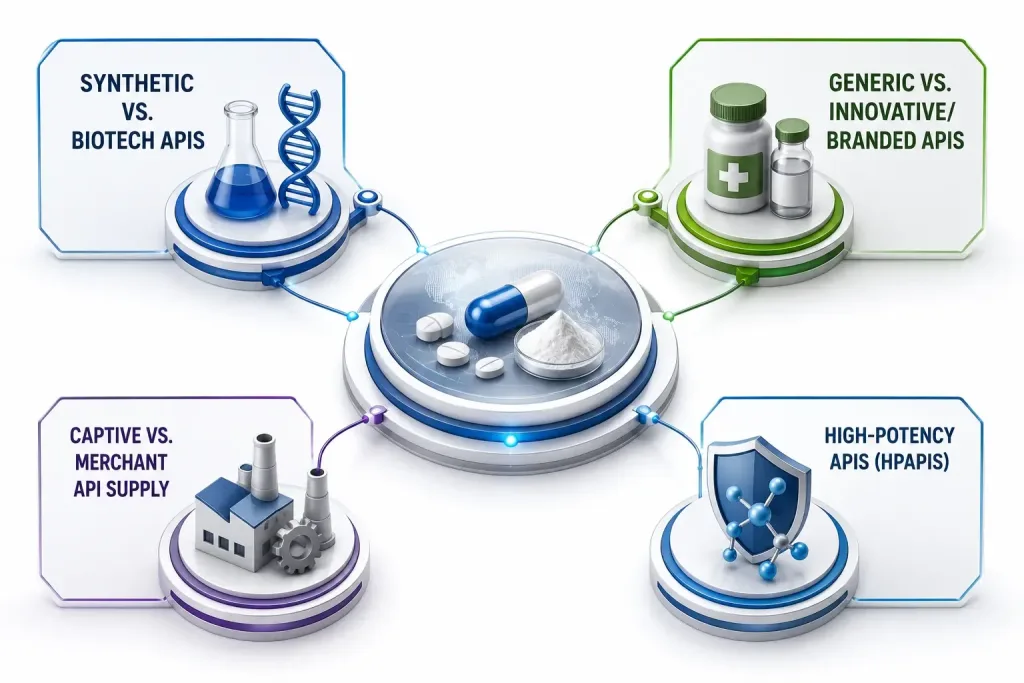
Captive vs. merchant API supply
Captive API producers manufacture only for their own formulation business, while merchant API manufacturers sell openly on the market. Importers sourcing bulk quantities are almost always dealing with merchant suppliers or CDMOs.
High-Potency APIs (HPAPIs)
Cytotoxic oncology drugs, hormones, and ADC payloads require dedicated containment facilities and specialist handling a distinct, higher-cost sourcing category growing at 7.5%-8.8% CAGR.
Knowing which category your target molecule falls into determines which suppliers are even eligible to quote, what documentation to expect, and what your landed cost structure will look like.
Step-by-Step Process to Source Bulk APIs from India
Regulatory Requirements for Importing APIs
Regulatory clearance runs in two directions: what India requires to export, and what your home country requires to import.
On the Indian export side, the Central Drugs Standard Control Organization (CDSCO), under the Drugs and Cosmetics Act, 1940 and Rules, 1945, governs export of drug substances. Manufacturers typically need a valid manufacturing license and, for certain unapproved or restricted molecules, an Export No Objection Certificate (NOC), which comes with strict undertakings that the batch is destined solely for export and will undergo quality control testing per the importing country’s specifications.
On the importer’s side, requirements vary by destination but generally converge around a few pillars:
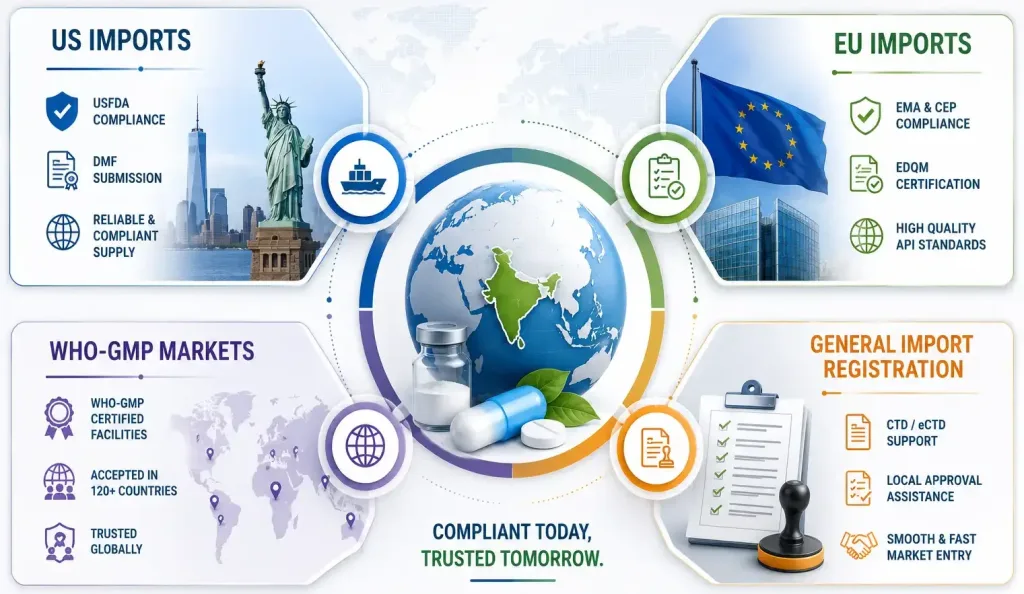
Because these requirements differ by country and are periodically revised, importers should confirm current specifics directly with their national regulator rather than relying on generic checklists.
Documents Every API Buyer Should Request
A serious Indian API supplier should be able to furnish the following without resistance:
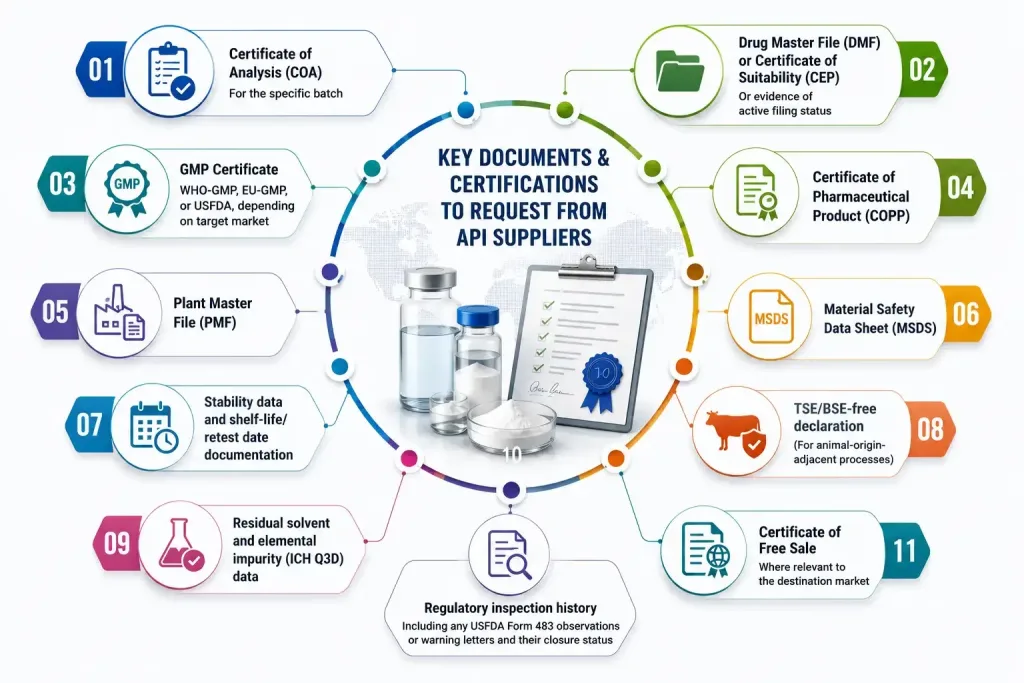
Any hesitation or delay in producing these documents is itself a signal worth noting.
How to Evaluate an API Supplier Beyond Price
Price comparisons are the easiest and most misleading way to shortlist suppliers. A more durable evaluation looks at:
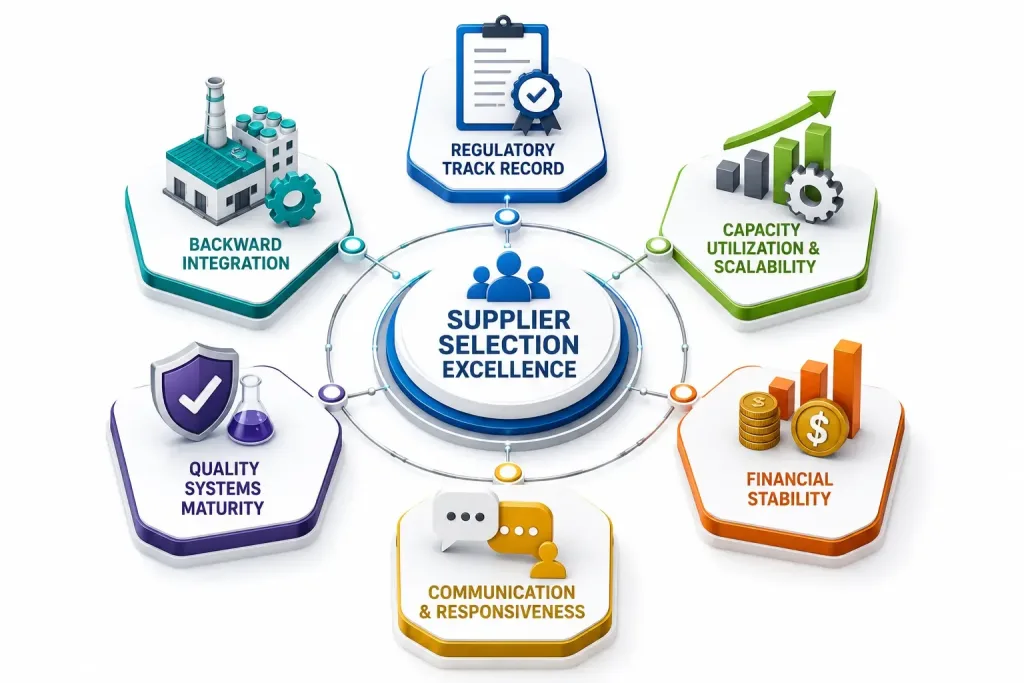
Regulatory track record
Has the facility passed a USFDA, EU-GMP, or PMDA inspection in the last three years? Are there open warning letters or import alerts?
Backward integration
Does the manufacturer control its own key starting materials (KSMs) and intermediates, or is it exposed to the same China-dependency risk it’s meant to help you avoid?
Capacity utilization and scalability
Can the plant handle your volume growth over 3-5 years without requalification delays.
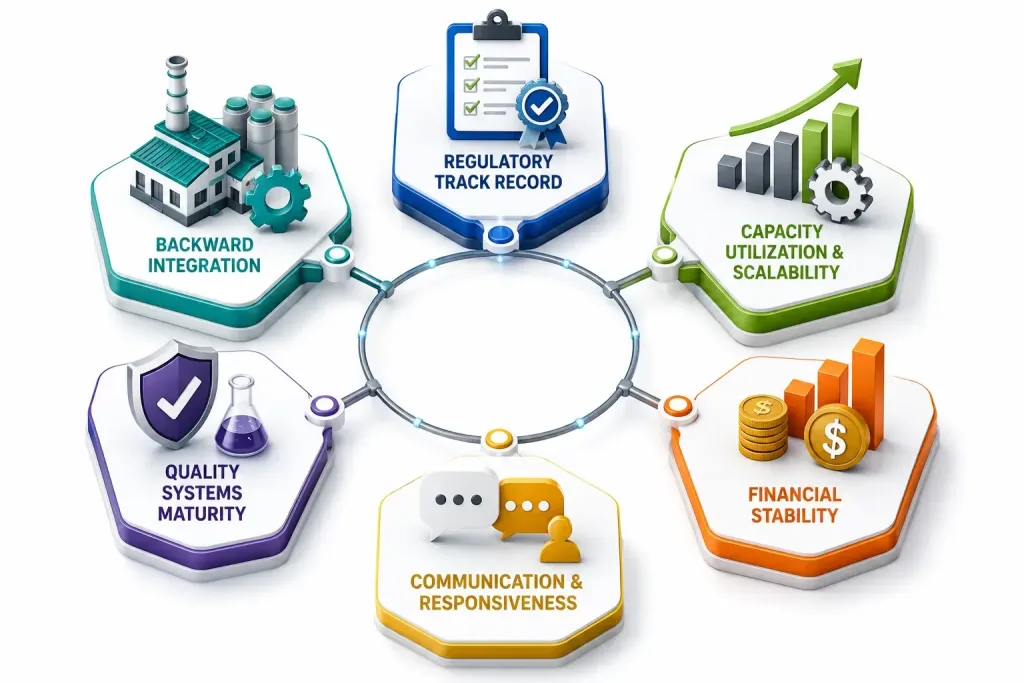
Quality systems maturity
Look for a functioning CAPA (Corrective and Preventive Action) system, robust deviation management, and data integrity controls the exact areas most commonly cited in FDA warning letters to Indian API makers in 2025.
Financial stability
A supplier’s ability to survive a raw-material price shock (fermentation input costs rose 15-20% in early 2025) affects your continuity of supply.
Communication and responsiveness
How quickly and transparently does the supplier respond to technical queries during the RFQ stage? This usually predicts post-contract behavior.
Common Challenges When Importing APIs from India
Risk Mitigation Strategies
Dual/multi-sourcing
Qualify at least two suppliers per critical molecule so a single facility’s regulatory action or capacity issue doesn’t halt your production.
Written quality agreements
Define testing responsibilities, OOS (out-of-specification) handling, and change-notification obligations contractually vague verbal understandings are the root cause of many disputes.
Independent batch testing
Especially in the first 6-12 months of a relationship, test incoming batches independently rather than relying solely on the supplier’s COA.
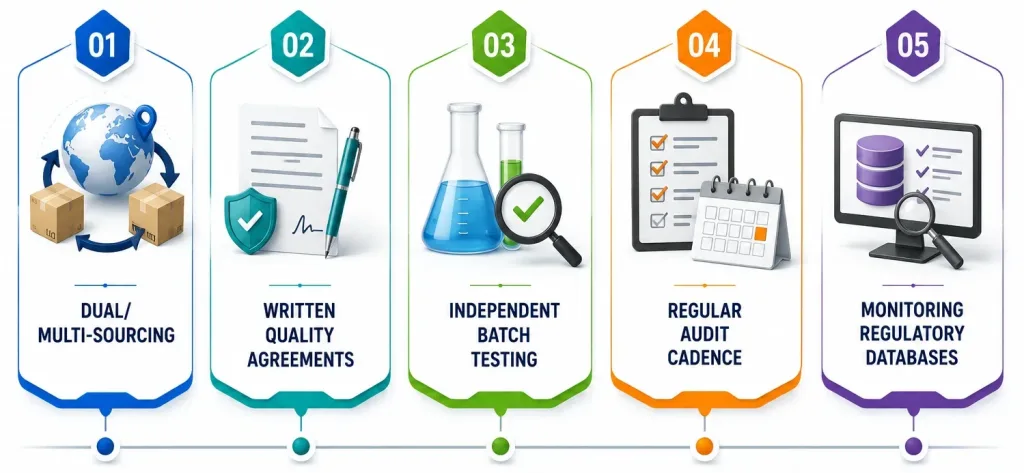
Regular audit cadence
Annual or biennial audits, not just a one-time pre-qualification visit.
Monitoring regulatory databases
Periodically check USFDA warning letter listings and CDSCO notices for your qualified suppliers.
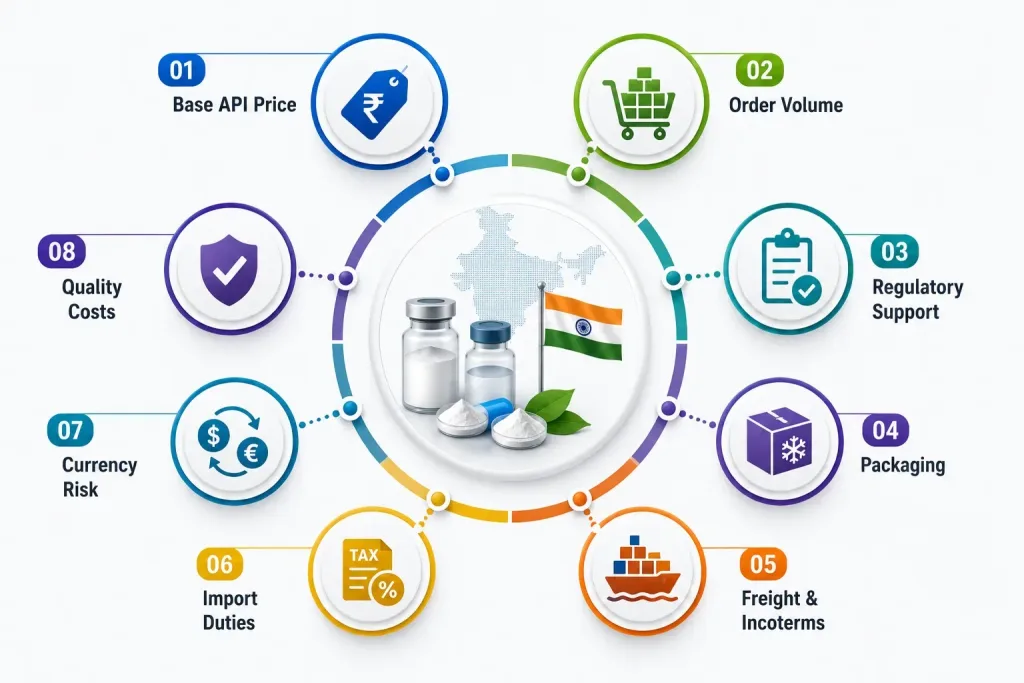
Cost Factors When Buying Bulk APIs from India
Landed cost is rarely just the quoted per-kg price. Importers should model:
Logistics and Shipping Considerations
Incoterms selection
EXW and FOB shift more risk and cost-management responsibility to the buyer; CIF and DDP shift it to the supplier but usually at a price premium.
Temperature and stability control
Many APIs require controlled-temperature shipping; confirm the supplier’s cold-chain packaging validation data, not just a claim of compliance.
Documentation for customs clearance
COA, MSDS, packing list, certificate of origin, and for controlled or narcotic-precursor substances additional import/export permits.
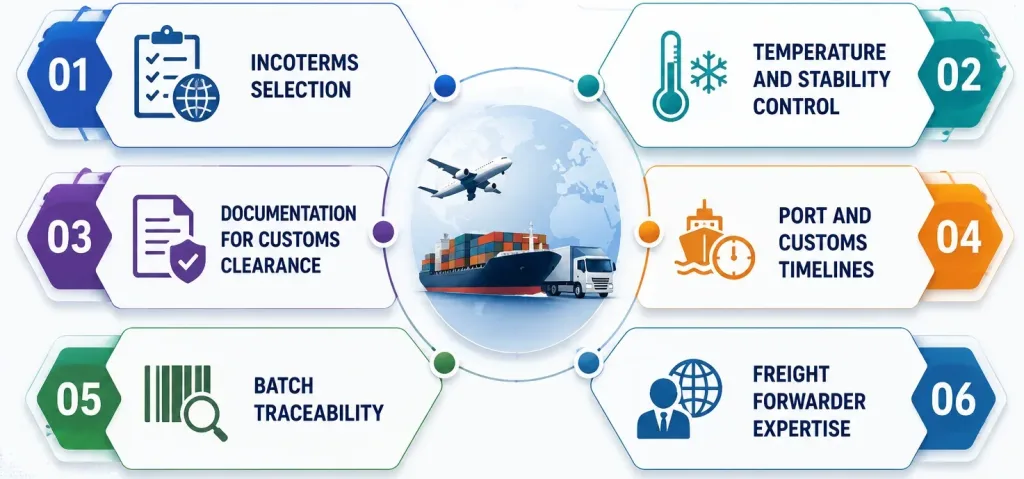
Port and customs timelines
Build realistic buffers; Indian export customs and destination-port customs can each introduce multi-week delays, particularly during peak shipping seasons.
Batch traceability
Ensure each shipment is traceable to a specific manufacturing batch and its corresponding COA and stability data.
Freight forwarder expertise
Work with forwarders experienced specifically in pharmaceutical/API cargo, given the hazardous-goods classification many APIs carry.
Red Flags to Avoid When Selecting an API Supplier
Questions Every Pharma Importer Should Ask Before Purchasing APIs
Why Long-Term Supplier Partnerships Matter
Transactional, price-driven sourcing works for one-off or low-volume purchases, but for ongoing formulation businesses, long-term supplier relationships deliver measurable advantages:
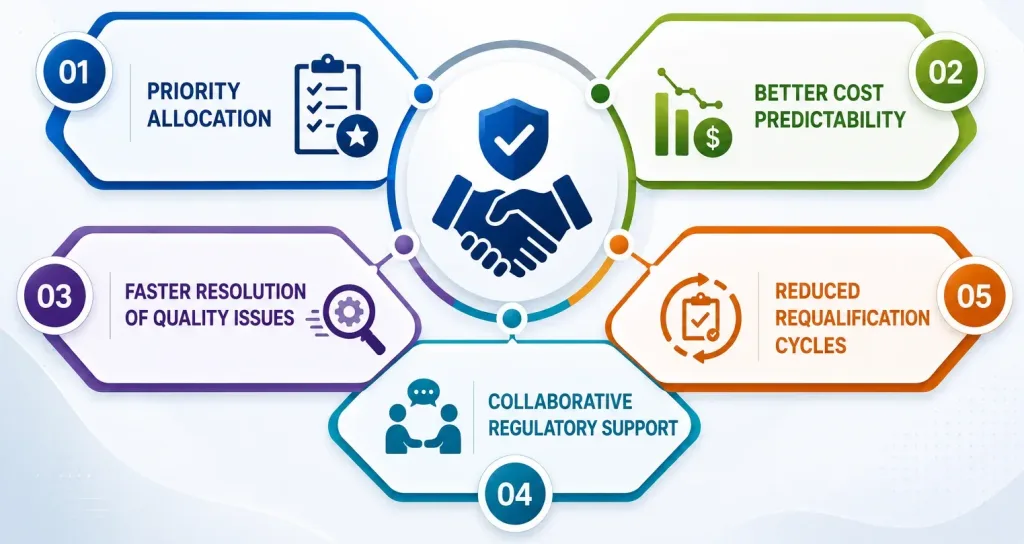
Given that supplier requalification alone can take months, treating API sourcing as a long-term partnership rather than a recurring transaction is generally the more resilient and often more cost-effective strategy.
Why Choose an Indian API Manufacturer with Global Regulatory Experience
Not all Indian API manufacturers are equal, and the gap between a domestically-focused producer and one with genuine global regulatory experience shows up in practice. A manufacturer that has already navigated USFDA inspections, EU-GMP audits, or WHO-GMP certification schemes has, by necessity, built the underlying quality infrastructure data integrity controls, validated analytical methods, robust CAPA systems that a purely domestic-market supplier may not need to maintain.
For an importer, this experience translates into fewer surprises: dossiers that are already structured to international format expectations, staff familiar with foreign regulator queries, and a demonstrated ability to sustain compliance across repeat inspections rather than a one-time certification.
Given that patent-cliff volumes, the “China Plus One” shift, and PLI-backed capacity expansion are simultaneously increasing demand on India’s best-regulated facilities, importers who identify and lock in relationships with globally experienced manufacturers early are better positioned than those competing for capacity once demand peaks further.
Conclusion
India’s position as the world’s largest source of affordable, quality-certified generic APIs is well earned, but it is not a guarantee that any given Indian supplier meets your specific regulatory and quality bar. The data is unambiguous on both sides: India’s API market is growing steadily, PLI and Bulk Drug Park investments are strengthening the domestic base, and global buyers are actively diversifying toward India but regulatory scrutiny, including a continuing stream of USFDA warning letters shows that quality risk has not disappeared alongside geographic diversification.
The practical takeaway for any pharma importer is straightforward: treat supplier selection as a regulatory and quality decision first, and a commercial one second. Verify documentation independently, audit before you commit to volume, diversify your supplier base for critical molecules, and favor manufacturers with a proven track record across international regulatory regimes. Done this way, sourcing bulk APIs from India remains one of the most reliable ways to secure quality pharmaceutical ingredients at globally competitive cost.