
Introduction: Why Sustainability Is No Longer Optional in API Manufacturing
Sustainability is essential in API (Active Pharmaceutical Ingredient) manufacturing. It’s no longer a “nice-to-have.” Pharmaceutical companies now deal with more rules.
They face environmental concerns and must source materials that adhere to ethical standards. So, they are rethinking their old production methods.
Today, manufacturers must cut waste, lower emissions, and use greener methods. They need to do this while still keeping quality and efficiency high.
In a competitive global market, sustainable API production goes beyond compliance. It’s a smart strategy that fosters long-term trust, resilience, and business growth.
The pharma industry contributes about 4-5% of global greenhouse gas emissions.
Moreover, the API manufacturing alone contributes approximately 25% of the pharma emissions.
This is shifting from cost efficiency to compliance and to sustainability-driven manufacturing.
The Environmental Cost of Traditional API Manufacturing
Traditional API manufacturing uses resource-heavy methods that greatly impact the environment.
High energy use, heavy water use, and harmful solvents cause pollution in the air, water, and soil. Inefficient chemical reactions often produce a lot of waste.
Much of this waste is hard to treat or dispose of safely. Poorly managed effluents can harm ecosystems and public health.
With growing global attention, pharmaceutical companies cannot ignore environmental costs. This drives the urgent need for cleaner and more responsible manufacturing.
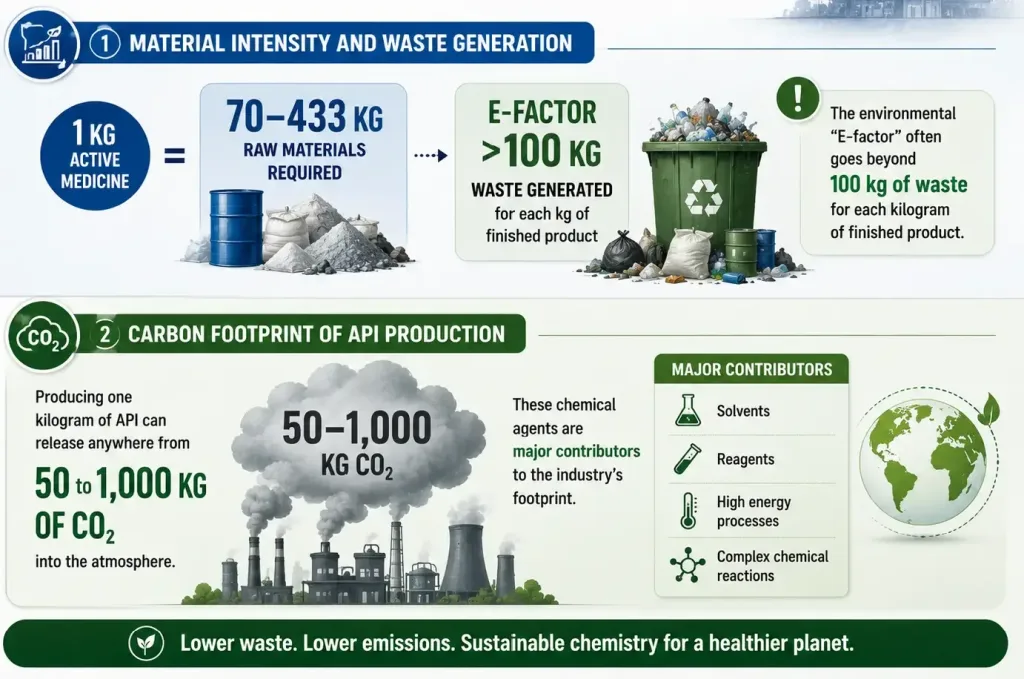
For each kilogram of active medicine made, the process needs 70 to 433 kg of raw materials. The environmental “E-factor” usually goes over 100 kg of waste for every kilogram of finished product.
Producing one kilogram of API can release anywhere from 50 to 1000 kg of $CO_2$ into the atmosphere.
These chemical agents are major contributors to the industry’s footprint, accounting for:
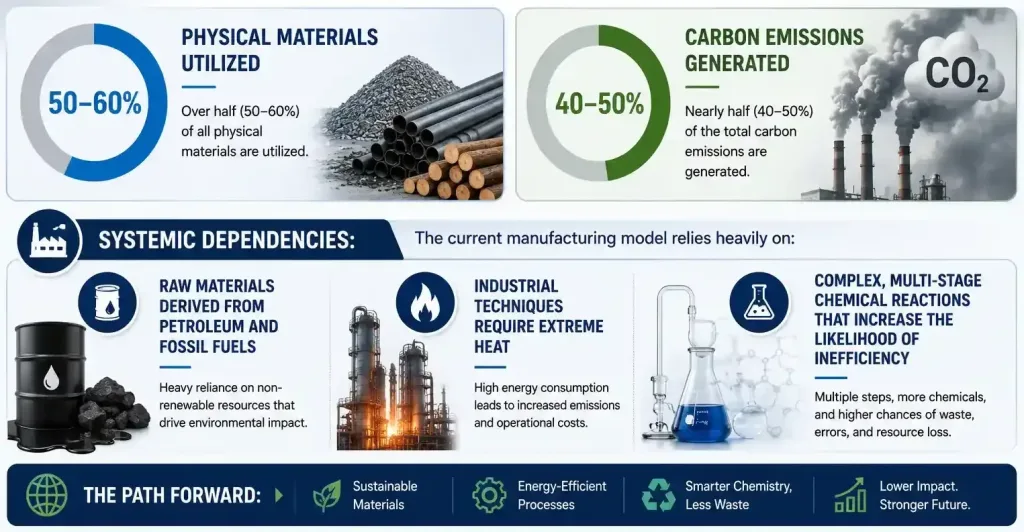
Systemic Dependencies: The current manufacturing model relies heavily on:
What Are Green APIs?
Green APIs refer to environmentally sustainable Active Pharmaceutical Ingredients (APIs) that are developed, manufactured, and processed using eco-friendly practices. In the pharmaceutical industry, traditional API production often involves high energy consumption, hazardous chemicals, and significant waste generation. Green APIs aim to minimize this environmental impact by adopting green chemistry principles, reducing carbon emissions, and optimizing resource utilization.
Material intensity and waste generation
For each kilogram of active medicine made, the process needs 70 to 433 kg of raw materials.
The environmental “E-factor” often goes beyond 100 kg of waste for each kilogram of finished product.
Carbon Footprint of API Production
Producing one kilogram of API can release anywhere from 50 to 1,000 kg of CO₂ into the atmosphere.
These chemical agents are major contributors to the industry’s footprint.
Key Technologies Driving Green API Manufacturing
Biocatalysis & Enzyme Engineering
This method uses natural enzymes. They perform chemical reactions with great precision and create fewer by-products. It cuts down on harsh chemicals and uses less energy. This makes processes cleaner and more efficient.
Continuous Flow Chemistry
Instead of batch production, this method runs reactions continuously, improving control and consistency. It minimizes waste, enhances safety, and significantly reduces energy and solvent usage.
Green Solvent Replacement
Safer, biodegradable alternatives like water or bio-based solvents replace traditional toxic solvents. This shift lowers environmental impact and improves worker safety without compromising product quality.
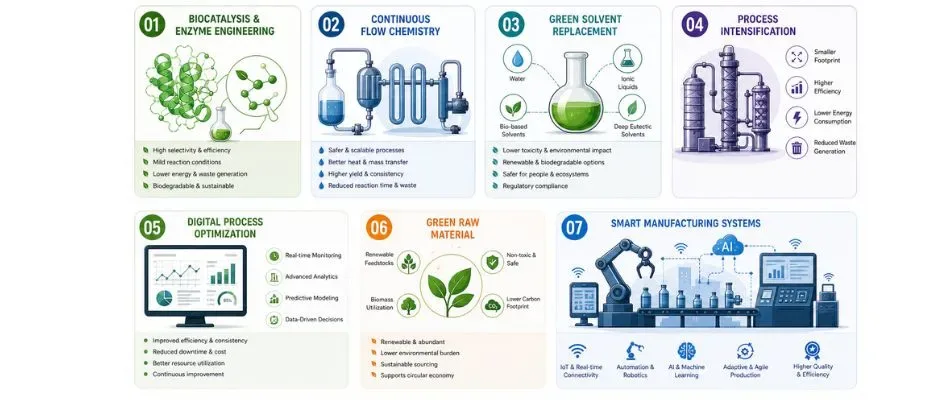
Process Intensification
Manufacturers can boost output by making processes more compact and efficient. This way, they use fewer resources. It reduces equipment size, energy use, and waste generation in API production.
Digital Process Optimization
Advanced analytics, AI, and real-time monitoring help optimize reaction conditions and resource usage. This leads to better yields, reduced waste, and more consistent manufacturing outcomes.
Green Raw Material
Using renewable or sustainable raw materials reduces reliance on fossil fuels. It also ensures a lower environmental footprint across the entire supply chain.
Smart Manufacturing Systems
Automation and connected systems enable precise control over production processes. These systems improve efficiency, reduce errors, and support sustainable practices through data-driven decision-making.
Why Green APIs Are Becoming a Strategic Priority
Long-Term Cost Efficiency
Sustainable manufacturing methods often reduce energy, water, and raw material consumption over time. Initial investments may be higher. Companies gain from lower operating costs and better process efficiency over time.
Supply Chain Resilience
Green API production focuses on local sourcing and renewable inputs. It also uses efficient processes. This approach makes supply chains less vulnerable to disruptions. This adaptability helps companies maintain stability in an unpredictable global market.
ESG-Driven Investment
Investors are increasingly prioritizing companies that meet Environmental, Social, and Governance (ESG) standards. Using green API practices makes a company more attractive to stakeholders. It also creates chances for sustainable funding.
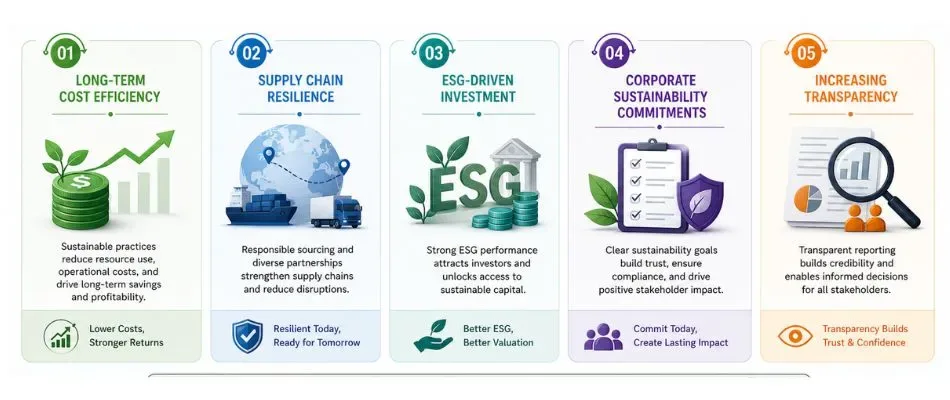
Corporate Sustainability Commitments
Pharmaceutical companies are setting ambitious sustainability goals to reduce their environmental footprint. Green API manufacturing is vital for hitting these targets. It also aligns operations with global climate goals.
Increasing Transparency
Regulators, partners, and consumers now expect clear visibility into how APIs are produced. Sustainable practices encourage better reporting, traceability, and accountability across the manufacturing lifecycle.
Green API Metrics That Pharma Companies Are Tracking
Pharmaceutical companies are now using green API metrics to measure sustainability. These metrics show how they perform in both environmental and operational areas.
These factors are:
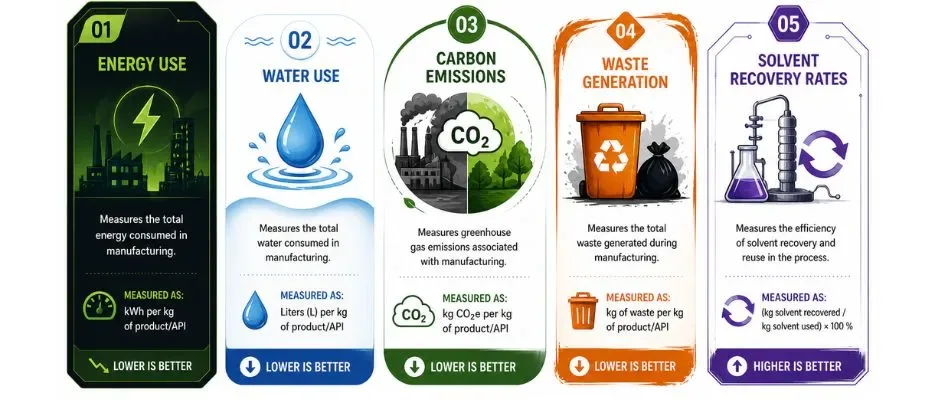
Metrics like process mass intensity (PMI) and E-factor show how well raw materials turn into final products.
By watching these indicators, companies can find inefficiencies. They can improve process design and track their progress on sustainability goals.
Process Mass Intensity (PMI)
This metric shows the total weight of materials used, such as water and solvents, to create a specific product amount. It shows how well resources turn into medicine and how much gets wasted.
E-Factor (Waste per API kg)
The Environmental Factor compares the waste generated to the weight of the final Active Pharmaceutical Ingredient (API). A lower E-factor means a “greener” process. It produces fewer by-products and less pollution.
Carbon Intensity ($CO_2$/kg API)
This tracks the total greenhouse gas emissions from making one kilogram of the drug. It includes the direct energy used in the lab or factory. It also considers the indirect emissions linked to raw materials.
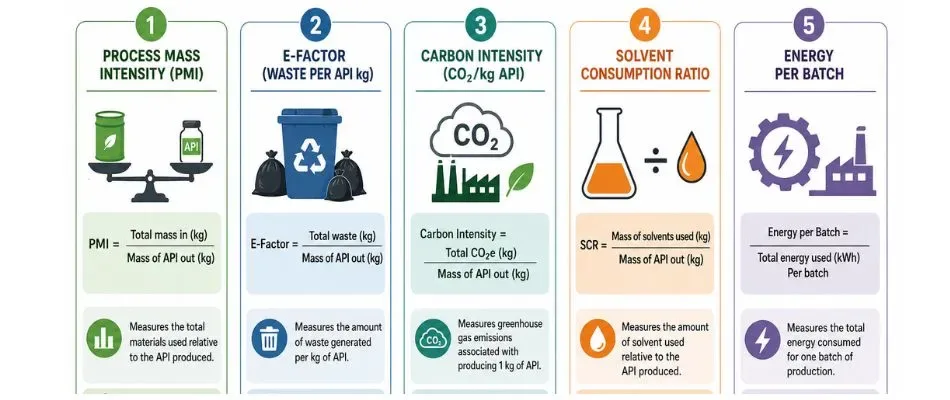
Solvent Consumption Ratio
Solvents are a major part of pharmaceutical waste. This ratio shows how much liquid chemical is needed for a reaction. Optimizing this figure is key. It helps lower both toxicity and the cost of chemical production.
Energy per Batch
This measures the electrical and thermal power needed for one manufacturing cycle. Monitoring energy use per batch helps companies spot high-demand steps. For example, you can streamline extreme cooling or heating to improve efficiency.
Role of CDMOs & API Manufacturers in Green Transition
Driving Sustainable Process Innovation
CDMOs and API manufacturers are changing how they produce. They aim to cut waste, save energy, and lower harmful emissions. They invest in green chemistry and advanced technologies. This helps create cleaner and more efficient manufacturing processes.
Providing Transparency Through Data
They use digital tools and reporting systems to track environmental performance live. This data-driven method boosts accountability. It lets clients track sustainability metrics throughout the production lifecycle.
Supporting Green Drug Development
Using eco-friendly practices from the start helps manufacturers create greener drugs. This benefits pharmaceutical companies. This includes optimizing formulations and selecting greener synthesis routes.
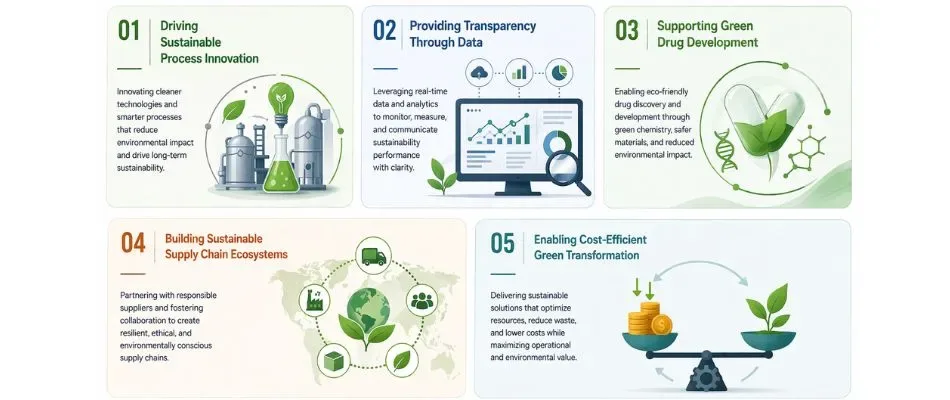
Building Sustainable Supply Chain Ecosystems
CDMOs collaborate with suppliers and partners who follow responsible sourcing and production practices. This builds a sustainable and traceable supply chain. It goes from raw materials to the final API delivery.
Enabling Cost-Efficient Green Transformation
Manufacturers boost sustainability by optimizing processes and using scalable green technologies. They help clients transition to greener operations without significantly increasing production costs.
Challenges in Adopting Green API Manufacturing
Capital Expenditure
Switching to green technologies usually needs a big upfront investment. This includes new equipment, infrastructure, and upgrades to processes. Smaller manufacturers may find it hard to justify these costs if quick financial returns aren’t clear.
Complexity in Process Redesign
Shifting from traditional to sustainable methods involves rethinking entire production workflows. This can be hard, especially when product quality, yield, and consistency matter most.
Regulatory Approval
Any changes in API manufacturing processes must comply with strict regulatory standards. Getting approvals for new or greener processes can take time. This might delay implementation.
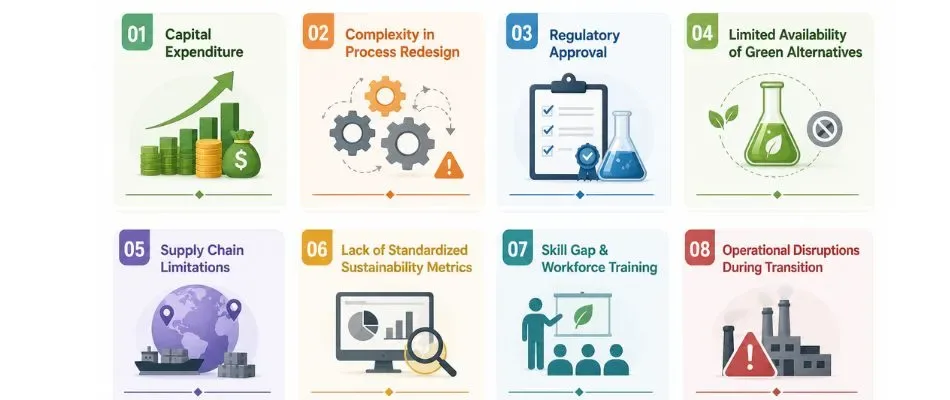
Limited Availability of Green Alternatives
Not all chemicals, solvents, or raw materials have eco-friendly substitutes readily available. This limits the ability of manufacturers to fully transition to sustainable inputs.
Supply Chain Limitations
Dependence on global suppliers who may not follow sustainable practices can hinder green transformation. Ensuring consistency and traceability across the supply chain remains a major challenge.
Lack of Standardized Sustainability Metrics
There is no universal framework for measuring sustainability in API manufacturing. This makes it difficult to compare performance, set benchmarks, and track progress effectively.
Skill Gap & Workforce Training
Implementing green technologies requires specialized knowledge and expertise. Many organizations face a shortage of trained professionals who can manage and optimize sustainable processes.
Operational Disruptions During Transition
Adopting new systems and processes can temporarily disrupt production schedules. Companies must carefully manage this transition to avoid delays, increased costs, or supply shortages.
Competitive Advantage for API Manufacturers
Cost Optimization
Sustainable processes reduce energy use, raw material waste, and operational inefficiencies over time. This leads to lower production costs and improved margins, especially at scale.
Faster Regulatory Approvals
Green manufacturing practices often align better with evolving regulatory expectations. Companies adopting cleaner processes may experience smoother compliance and quicker approvals in global markets.
Stronger Supply Chain Resilience
By using sustainable sourcing and efficient production methods, manufacturers reduce dependency on volatile resources. This creates a more stable and adaptable supply chain.
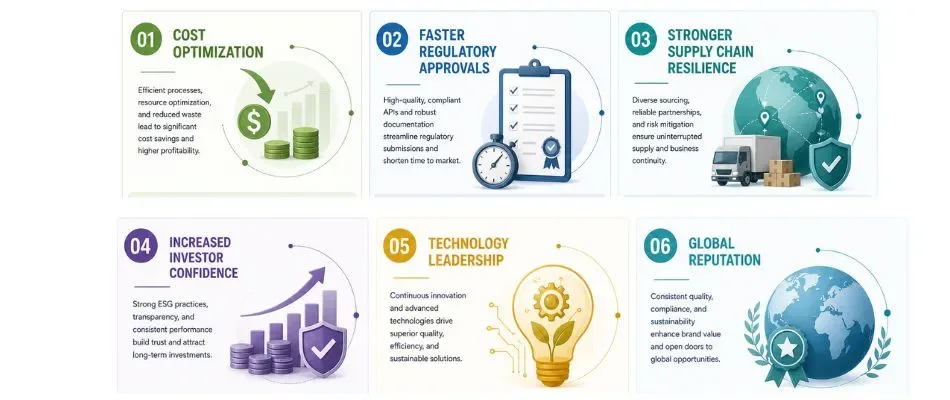
Increased Investor Confidence
Companies focused on sustainability are more attractive to investors prioritizing ESG performance. This can improve access to funding and strengthen long-term financial stability.
Technology Leadership
Early adoption of green technologies positions manufacturers as industry leaders. It enables innovation, process efficiency, and a competitive edge in a rapidly evolving pharmaceutical landscape.
Global Reputation
Commitment to sustainability enhances brand image and credibility worldwide. It builds trust with regulators, partners, and customers who value responsible manufacturing practices.
Future Trends: The Next Phase of Green API Manufacturing
AI-Driven Green Process Optimization
Artificial intelligence is being increasingly used to analyze complex manufacturing data and identify more efficient, low-waste production pathways. It enables predictive adjustments that improve yield while minimizing environmental impact.
Shift Toward Biocatalysis
The industry is steadily moving toward enzyme-based reactions that are more selective and environmentally friendly. This shift reduces reliance on toxic chemicals and supports cleaner, more sustainable synthesis methods.
Net-Zero and Carbon-Neutral API Facilities
Pharma companies are investing in facilities designed to achieve net-zero emissions through renewable energy, carbon capture, and efficient resource utilization. These facilities represent the future benchmark for sustainable manufacturing.
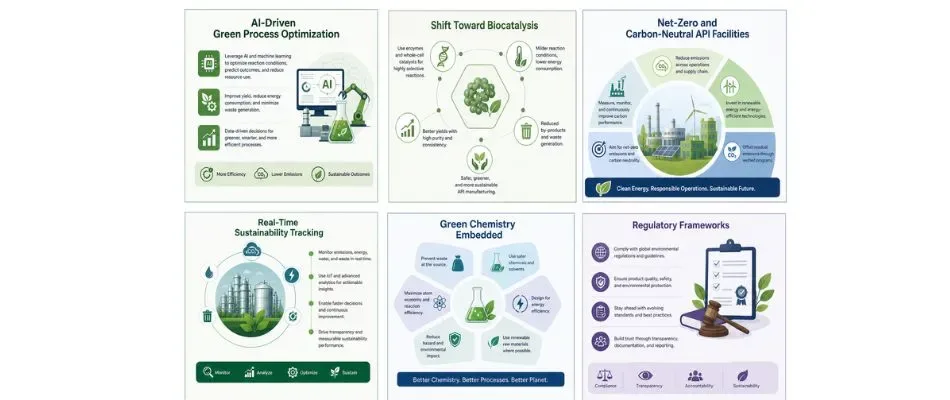
Real-Time Sustainability Tracking
Advanced monitoring systems now allow manufacturers to track emissions, waste, and energy use in real time. This transparency helps in making immediate improvements and ensures continuous compliance with sustainability goals.
Green Chemistry Embedded
Sustainability is being integrated at the molecular design stage itself. Green chemistry principles are no longer optional but embedded into R&D to create safer, less resource-intensive APIs from the start.
Regulatory Frameworks
Global regulatory bodies are increasingly introducing guidelines and incentives for sustainable manufacturing. Future frameworks are expected to push stricter compliance while rewarding companies that adopt environmentally responsible practices early.
How API Manufacturers Can Transition to Green APIs
Measure Current Environmental Impact
The first step is to assess existing processes using metrics like energy use, emissions, water consumption, and waste generation. This baseline helps identify inefficiencies and areas with the highest environmental impact.
Apply Green Chemistry Principles
Manufacturers should redesign processes to minimize hazardous substances and maximize efficiency. This includes improving reaction selectivity and reducing by-products right from the development stage.
Use Sustainable Solvents
Replacing toxic solvents with eco-friendly or bio-based alternatives can significantly lower environmental risks. Safer solvents also improve workplace safety and reduce disposal challenges.
Adopt Catalysis Techniques
Using catalysts, especially biocatalysts, enhances reaction efficiency and reduces the need for excess reagents. This leads to lower energy consumption and less waste generation.
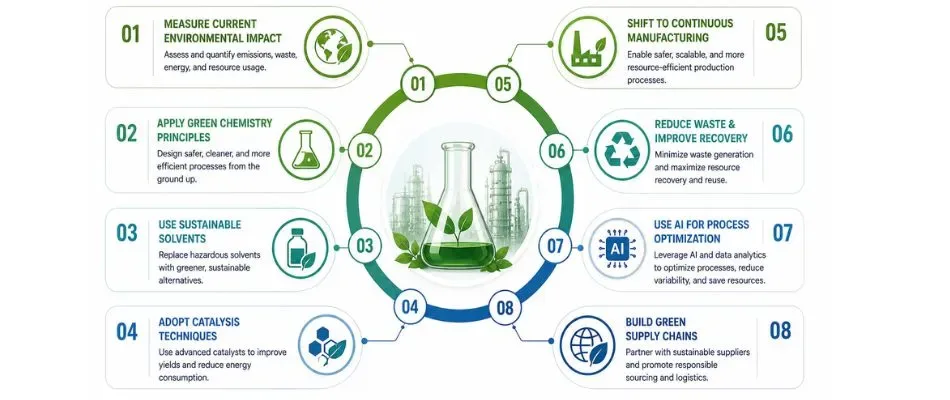
Shift to Continuous Manufacturing
Moving from batch to continuous processes improves control, reduces resource usage, and enhances overall efficiency. It also supports consistent quality with a minimal environmental footprint.
Reduce Waste & Improve Recovery
Implementing waste minimization strategies and recovering solvents or materials for reuse can greatly reduce environmental impact. Efficient recycling systems also cut down operational costs.
Use AI for Process Optimization
Artificial intelligence can analyze large datasets to optimize reaction conditions and resource use. This leads to better yields, reduced waste, and more sustainable operations.
Build Green Supply Chains
Collaborating with suppliers who follow sustainable practices ensures that the entire value chain aligns with green goals. It also improves traceability and reduces the overall carbon footprint.
Strategic Recommendations for API Manufacturers
Invest in Green Chemistry
API manufacturers should prioritize research and development focused on eco-friendly synthesis methods. Investing early in green chemistry enables safer processes, reduces hazardous waste, and builds long-term sustainability capabilities.
Build a Green Solvent Strategy
Developing a structured approach to replace harmful solvents with safer, biodegradable alternatives is essential. This strategy should include solvent selection guidelines, recovery systems, and continuous evaluation of environmental impact.
Real-Time Monitoring
Implementing advanced monitoring tools allows manufacturers to track emissions, energy use, and waste generation continuously. Real-time insights help in making quick adjustments and improving overall process efficiency.
Infrastructure
Upgrading facilities to support sustainable manufacturing is crucial for long-term success. This includes energy-efficient equipment, renewable energy integration, and systems designed for minimal environmental impact.
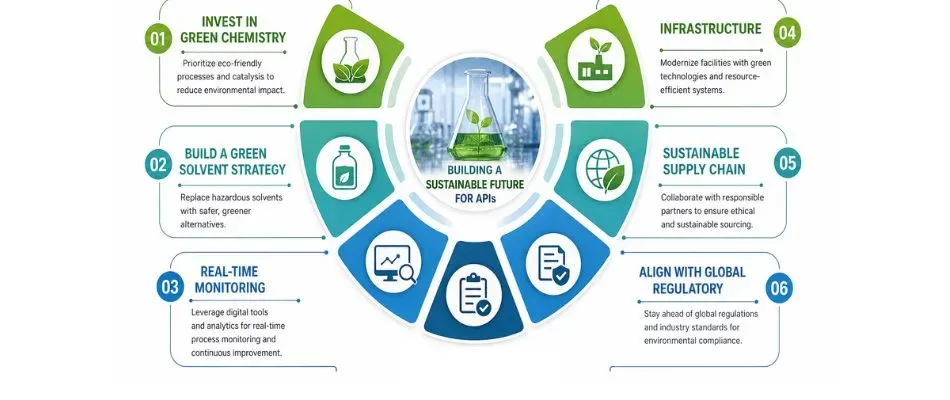
Sustainable Supply Chain
Collaborating with environmentally responsible suppliers ensures that sustainability extends beyond internal operations. A green supply chain improves traceability, reduces risks, and strengthens overall environmental performance.
Align with Global Regulatory
Manufacturers must stay aligned with evolving global sustainability regulations and guidelines. Proactive compliance not only avoids delays but also positions companies as responsible and forward-thinking players in the market.
Proprietary Green API Framework
Developing an in-house sustainability framework helps standardize green practices across operations. It allows companies to measure performance, set benchmarks, and continuously improve their environmental footprint.
Conclusion
Green API manufacturing is rapidly emerging as a defining priority for the pharmaceutical industry, driven by environmental responsibility, regulatory expectations, and long-term business value.
As companies move beyond traditional practices, the focus is shifting toward cleaner processes, sustainable sourcing, and data-driven optimization.
While challenges such as cost, complexity, and regulatory hurdles remain, the benefits, ranging from operational efficiency to stronger global credibility, far outweigh the barriers.
Ultimately, organizations that proactively embrace green APIs will not only reduce their environmental footprint but also secure a competitive edge in an increasingly sustainability-focused market.