
Introduction
A Drug Master File (DMF) is a confidential technical document that shares detailed API manufacturing information with regulators to support ANDA, NDA, IND, or export filings.
It helps API Manufacturers protect their knowledge and meet compliance needs.
Across the globe, agencies such as the US FDA, EMA, and others use their own DMF systems.
This blog examines the trends in DMF submissions and approvals in different areas.
We base our analysis on trustworthy regulatory data.
Basics of DMF: Regulatory Purpose & Types
What is a DMF?
A Drug Master File (DMF) is a private document. It provides regulators with detailed information about API manufacturing.
It supports regulatory submissions linked to API-related applications, including ANDA, NDA, IND, and export filings.
A DMF is not approved or rejected on its own. It is reviewed only when referenced within a related regulatory application that includes the API.
Types of DMFs
Drug Master Files are grouped into types based on the kind of information submitted to regulators.
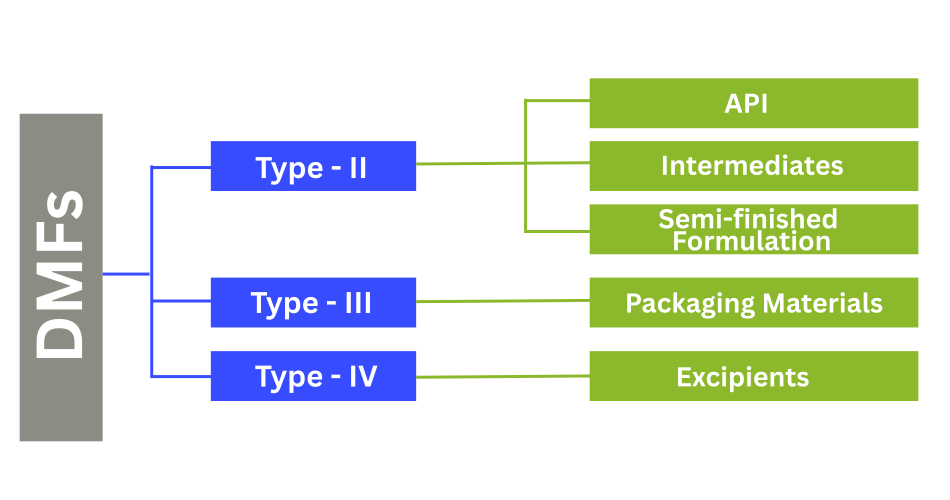
Overall, DMF types help regulators review data clearly and securely.
Some regions use different terms, like CEP in the EU.
The US FDA DMF classification is a common global standard for API manufacturers and suppliers.
Methodology: How DMF Data is Collected
DMF data is gathered using structured regulatory and industry sources to understand regional filing patterns.
The focus remains on Type II DMFs for APIs, covering trends from 2018 to 2025.
Multiple verified sources are used to ensure accurate regional comparison and consistent tracking of DMF activity worldwide.
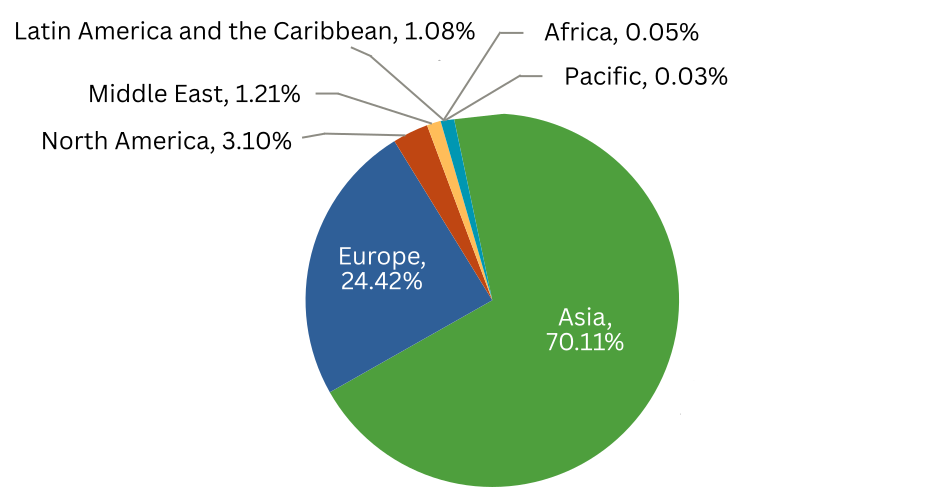
Regional figures include Asia at 70.11%, Europe at 24.42%, North America at 3.10%, the Middle East at 1.21%, Latin America and the Caribbean at 1.08%, Africa at 0.05%, and the Pacific at 0.03%.
These figures support a clear view of global DMF distribution across regions.
Global DMF Submission Trends: Historical Perspective
Global DMF submissions have steadily increased over time.
This shows a rise in API manufacturing and a stronger focus on regulations worldwide.
Long-Term Growth Since 2000
Over the past two decades, API DMF filings have increased consistently, with Asia emerging as the dominant region.
Yearly Growth Patterns (2018–2022)
FDA DMF activity remained steady initially, then surged in 2022. This indicates significant growth and variations across countries.
Overall Rise:
In 2022, FDA DMF submissions increased by 12.1% compared to the previous year, indicating a rise in global filing activity.
Total DMFs:
DMF types surpassed 1,024 filings in 2022, a significant increase from the 913 submissions recorded in 2021.
Type II APIs:
Type II API DMF submissions surged, with 715 filed in 2022, exceeding the 667 filed in the previous year.
Country Shift:
India experienced a significant 10.6% decline in Type II filings, whereas China achieved substantial 45% growth in 2022.
Region-Wise DMF Submission Data
This section shows FDA DMF filing trends by region for 2022. It highlights submission volumes and review completion patterns around the world.
North America (Primarily US FDA)
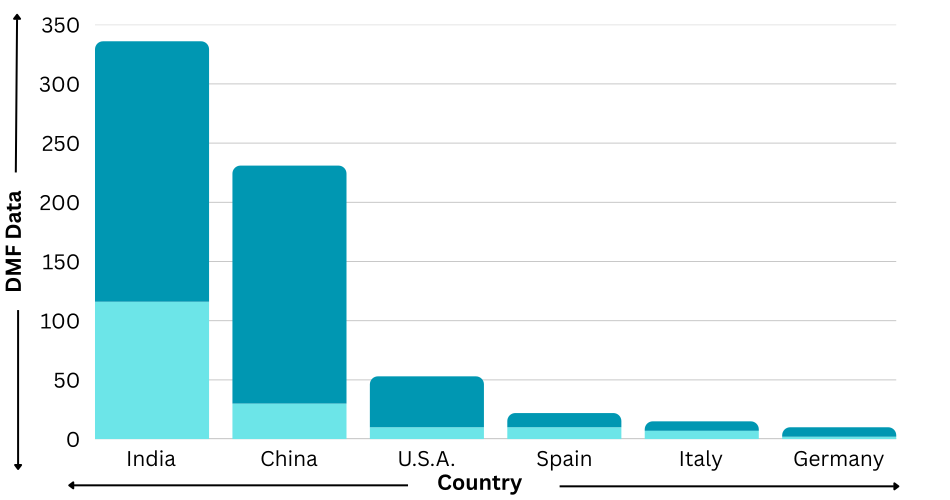
In 2022, the United States saw 53 DMF submissions to the FDA.
This number came from both US and international API manufacturers.
The total US share is smaller than that of Asia, but filings are still growing.
This rise is due to increased demand for generic APIs and a stronger focus on regulations.
Asia (India & China Lead)
Asia leads global FDA DMF activity, with India and China driving strong, consistent filing momentum.
India
India remains a major force in global DMF submissions, supported by strong API exports, wide regulatory approvals, and improving compliance outcomes.
Quarterly filings are up, indicating that global buyers and regulators are confident.
China
China is still a major force in FDA DMF submissions, with growth that has been steady over the years.
In Q3 2025 alone, it saw 153 new Type II DMFs, which shows that the trend is holding up.
The country now has a larger share of active DMFs.
This rise shows its growing API manufacturing capacity and a stronger presence in global pharmaceutical supply chains.
Taiwan and Other Asian Countries
Taiwan and some other Asian countries are smaller but growing contributors to DMF submissions.
For example, Taiwan filed three DMFs in Q3 2025, up from one the previous year.
Regional DMF systems differ, as Taiwan reviews submissions but does not issue public DMF numbers, reflecting unique local regulations.
Europe
Europe’s share of API DMFs has dropped over time, from 42% in 2000 to around 10% by 2023.
Even with the decline, European filings are still significant.
CEP certifications and mutual recognition in the EU support manufacturers in meeting quality standards.
They also help in gaining market access across member countries.
Other Regions (Latin America, MENA, etc.)
Other Regions show emerging participation in FDA DMF filings, but volumes remain low.
Their submissions are much lower than Asia’s leaders, India (336) and China (231), and also below North America’s USA (53).
This shows early-stage growth and limited review completion.
Company-Level Trends in DMF Submissions
DMF activity at the company level is steadily increasing.
Strong API manufacturers are leading this growth by responding to rising global demand for generic pharmaceutical ingredients.
Leading API Manufacturers
Several companies stood out in Q3 2025, driven by focused API development and consistent FDA filing activity.
Suzhou Ryway Biotech (China)
They filed 12 DMFs in Q3 2025, leading all companies and marking a strong rise in global API presence.
Hetero Group (India)
They submitted 9 DMFs in Q3 2025, showing stable performance and continued strength in generic APIs.
Biophore India Pharmaceuticals (India)
They filed 6 DMFs in Q3 2025, reflecting growing momentum and expanding API capabilities.
Corporate Strategy Impacts
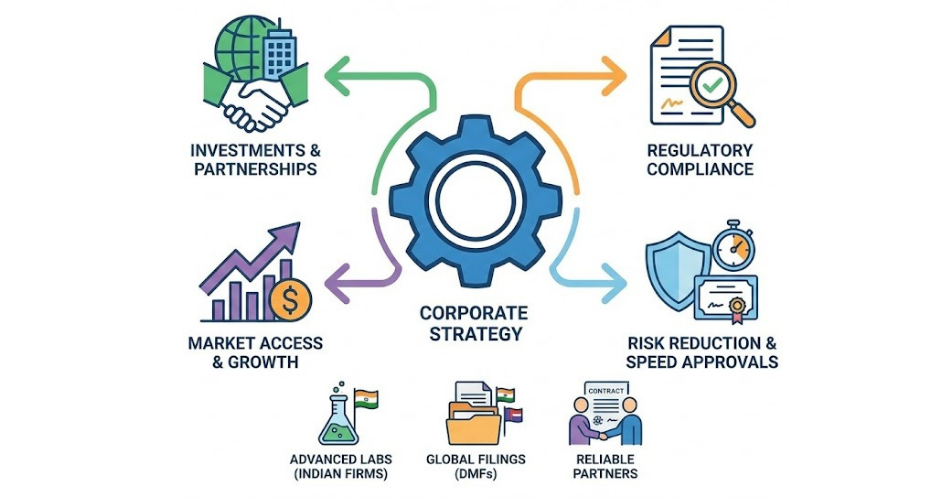
Companies now see regulatory compliance as a way to drive growth.
It affects their investments, partnerships, and choices about market access in the global pharmaceutical value chain.
Companies adjust their investments and positioning to meet global regulations and market expectations.
DMF Review and Approval Processing
The FDA does not approve Drug Master Files (DMFs).
Instead, it reviews their technical details when a drug application refers to them.
Reviews may take time after submission. For example, in Q3 2025, 323 Type II DMFs were filed, but only 40 were completed for review by quarter end.
This shows a clear processing lag. New systems, such as GDUFA III, are helping by improving the use of structured data and speeding up review timelines.
Regulatory Systems Beyond the US FDA
Drug regulations differ across regions, and many countries use systems that are not based on the US FDA model.

Europe (EMA & CEP)
Europe does not rely on US-style DMFs for many APIs. Instead, it uses the Certificate of Suitability, or CEP.
A CEP confirms that an API meets European Pharmacopoeia standards and can be accepted by many countries, making approvals simpler and more uniform.
Asia Pacific Variations
In the Asia Pacific region, regulatory systems vary by country.
ASEAN nations use shared formats such as ACTD and ACTR to support regional alignment.
India often follows a US-style DMF approach but adds local rules to meet national regulatory needs.
Other National DMF Systems
Some countries use simpler or less formal DMF systems.
Singapore and several Middle Eastern regulators focus on national filings with fewer global links.
These systems aim for basic quality control rather than wide international recognition.
Key Trends & Drivers Behind DMF Growth
Global drug supply chains are changing, leading to higher DMF filings and a stronger focus on API sourcing.
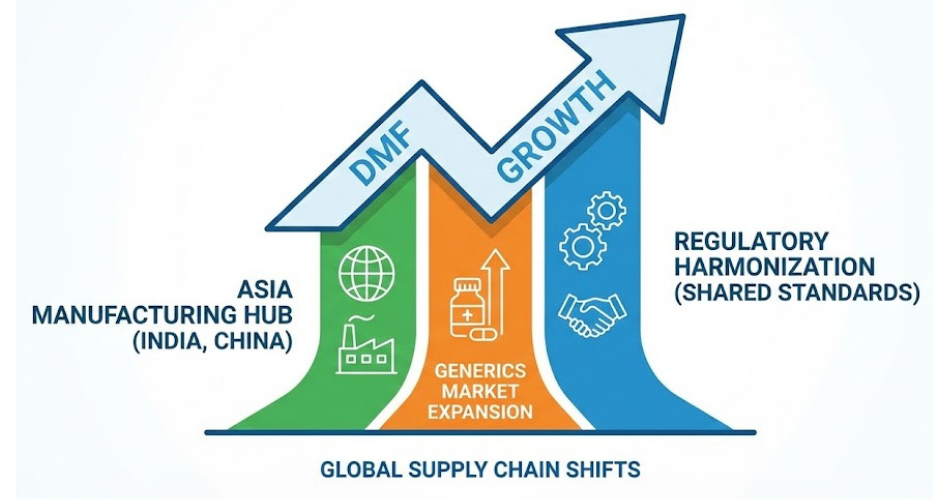
Shift to Asia for API Manufacturing
India and China lead in API production. They have lower costs, strong technical skills, and better alignment with global regulations.
Many companies prefer these regions for faster scale-up and supply security.
As a result, Asia accounted for nearly 90% of all DMF submissions in Q3 2024, showing a clear shift towards Asian manufacturing hubs.
Generics Market Expansion
Growing demand for affordable generic pharmaceutical ingredients is driving higher API production worldwide.
As more generic drugs hit global markets, companies are filing more API DMFs.
This helps to ensure quality, supply reliability, and smooth regulatory reviews.
Regulatory Harmonization
Global regulators are working to align rules across regions.
Programs such as PIC/S and ACTD help countries trust each other’s reviews.
This shared approach cuts down on repeat filings. It also helps APIs get approved more easily across different markets.
Challenges with DMF Submissions
Despite their importance, DMF submissions face several issues that can slow reviews and affect global API commercialization timelines.
Poor Quality
Many DMFs contain missing data, errors, or unclear details. Poor structure and weak documentation often lead to questions from regulators and repeated corrections.
Review Delays
High numbers of DMF filings can overwhelm regulators. Limited review capacity creates backlogs. So, there are long wait times for technical reviews to finish.
Regional Differences
Each region follows its own rules for DMFs. Differences in format, updates, and confidentiality make it hard for companies to manage one file across many markets.
Update Management
Keeping DMFs current is challenging. Late updates, unclear reports, or missing annual reports can create compliance risks.
These risks can delay regulatory approval timelines linked to API-dependent applications.
Future Outlook & Forecast
The future of DMF activity seems promising. Growing API demand and enhanced digital processes are allowing more manufacturers to access global markets.
Growth Drivers
Continued growth in DMF submissions is expected as API demand rises after the pandemic.
Countries like India and China are filing more Type II DMFs to supply generics and meet international standards.
This trend gets a boost from patent expirations, which bring new chances for generic drugs.
Digital Impact
Enhanced digital platforms and harmonization under GDUFA III are improving submission efficiency.
Structured data and early DMF assessment help speed up reviews and first-cycle approvals.
Global alignment with guidelines helps manufacturers access multiple markets more easily.
Conclusion
Global DMF trends show Asia leading submissions, while Europe and North America maintain smaller but steady participation.
India and China have both seen strong growth. India has many active DMFs, and China is experiencing rapid increases each year.
For API manufacturers, effective regulatory planning is essential.
Filing strategies must include regional rules, digital submission platforms, and harmonization efforts.
Focusing on Asia helps companies grow and access markets.
Strategic compliance also speeds up approvals and strengthens their position in the competitive global API landscape.