
Success in today’s pharmaceutical sector comes from demand, innovation, and quality. Meeting customer demand encourages innovation and keeps ideas evolving.
This growth fosters trust, leading to strong and lasting relationships.
When these three factors work together, companies can adapt quickly to market changes.
This helps them stand out from competitors. By 2025, the global healthcare landscape, especially in the API sector, will be complex and dynamic.
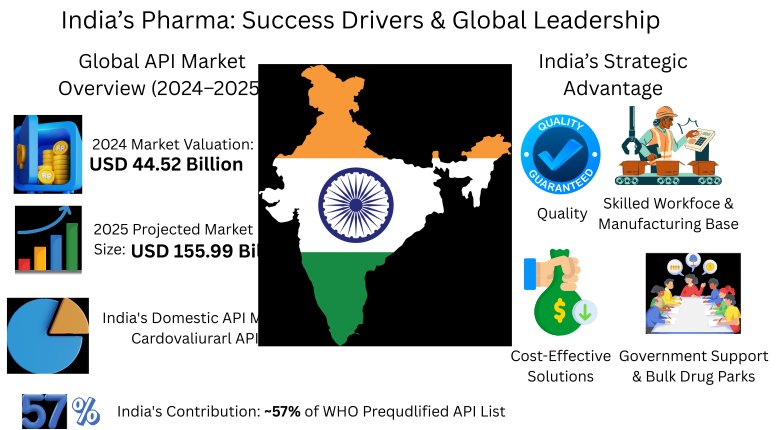
Its projected size is expected to range from USD 155.96 billion to USD 160.39 billion, exhibiting an annual growth rate of 3.30% to 3.62%.
The market valuation is reported to be USD 44.52 billion in 2024.
India aims to harness a key trend by becoming a leader in global pharmaceutical manufacturing.
Cardiovascular APIs represent a significant portion of the domestic API market, holding 23.71%.
With the help of a skilled workforce, a strong manufacturing base, and cost-effective solutions, the market is significantly supported.
The government supports major schemes like PLI and has also set up bulk drug parks to enhance infrastructure.
India’s contribution accounts for nearly 57% of the WHO prequalified API list.
For manufacturers, leadership lies in addressing the volume and value gap in global supply chains.
The Global Cardiovascular API Market in 2025
Market Sizing and Growth Projections: A Disaggregated View
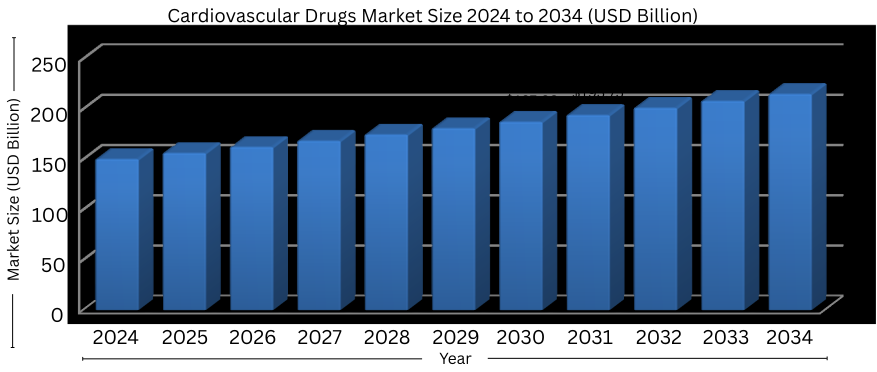
The global market for cardiovascular APIs is a sustainable and growing segment.
Projections for 2025 place the market size between USD 155.96 billion and USD 160.39 billion.
The market is forecasted to demonstrate steady growth, reaching nearly USD 187.06 billion by 2030 and USD 214.72 billion by 2034.
This growth is driven by demographic shifts, such as the ageing global population.
A detailed analysis shows that this sector within the API market is gaining prominence.
The global cardiovascular small molecule API segment is a critical component of the pharmaceutical supply chain.
It is valued at USD 44.52 billion in 2024, with a projected compound annual growth rate (CAGR) of 7.10%, expected to reach USD 77.07 billion by 2032.
Investment in the development of new cardiovascular APIs over the past two decades has not kept pace with rising global demand.
Despite the increasing burden of cardiovascular diseases, the market’s growth is influenced by the shift toward affordable healthcare solutions.
As the demand for APIs increases, this trend reflects broader movements in the global healthcare ecosystem toward cost-effective treatment options.
Dominant Drug Classes and Emerging Therapies
The cardiovascular API market includes several major drug classes. Established APIs hold a significant share of the market.
Anticoagulant APIs accounted for the largest share in 2024, with 45.14%, followed by antihypertensive APIs at 28.94%.
Other major classes include antihyperlipidemic and antiplatelet APIs.
Both established APIs and newer combination approaches address the growing demand for cardiovascular treatments.
Some widely used APIs in cholesterol management include Atorvastatin Calcium Trihydrate API and Fenofibrate API.
Atorvastatin functions as an HMG-CoA reductase inhibitor and is often used alongside other lipid-regulating APIs such as Fenofibrate, which activates the PPAR receptor to support lipid metabolism.
Emerging therapies that combine multiple APIs are shaping the market.
For example, combinations involving APIs like Calcium Dobesilate Monohydrate API and Rosuvastatin Calcium API, known for their role in supporting heart health, are being developed to assist in treatment approaches.
This trend toward combined API therapies, which integrate several small-molecule APIs into unified treatment strategies, aims to support patient adherence and better manage complex cardiovascular conditions.
India’s Position as a Global Manufacturing Hub
Market Share and Scale: The Volume-Value Paradox
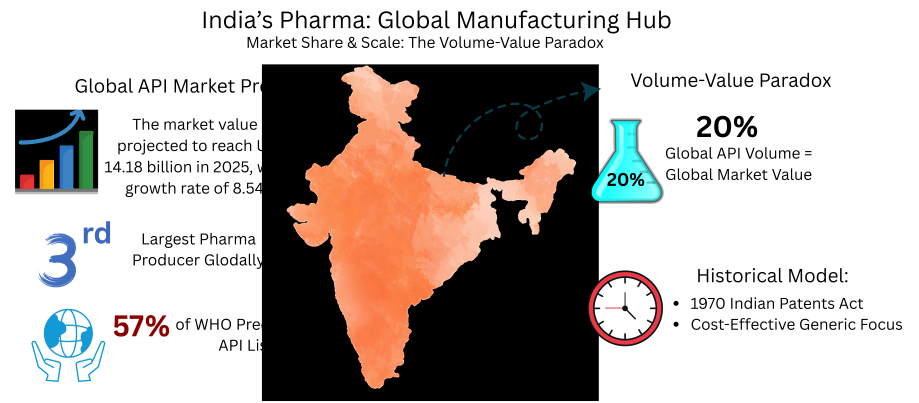
India is the 3rd largest producer in the pharmaceutical world. It supplies an impressive 57% of the WHO’s prequalified API list. This success comes with a notable strategic challenge.
India contributes nearly 20% of the global API volume, which accounts for 8% of the global market value.
This volume gap is not a natural limit but a result of India’s historical business model.
It was built on a large scale and focused on cost-effective production of generic drugs following the 1970 Indian Patents Act.
The “China Plus One” Strategy and Import Reliance
The global pharmaceutical industry and supply chain have exposed vulnerabilities.
India is a major exporter of APIs but still relies on China for an estimated 70-80% of raw materials.
Multinational companies are adopting the “China Plus One” strategy to de-risk their supply chains. India is emerging as a key alternative to China.
The Indian government is addressing challenges with initiatives like the Production Linked Incentive (PLI) scheme and the promotion of bulk drug parks.
These initiatives are part of the broader self-reliant India vision, offering financial incentives and strong infrastructure for producing key bulk drugs and APIs.
Bulk drug production has started in Gujarat and Himachal Pradesh, reducing manufacturing costs and supporting self-reliance.
Manufacturing Ecosystem and Leading Players
The Indian pharmaceutical industry is well-established. There are over 2,000 APIs in production, and Indian manufacturers are present in more than 200 countries.
The industry is highly concentrated, with the top players holding about 50% of the market share.
The cardiovascular API market is led by major players across various segments.
The Imperative of Quality and Regulatory Compliance
Global Regulatory Landscape and Documentation
The global pharmaceutical industry follows strict rules to ensure the safety, security, and effectiveness of drugs.
APIs are manufactured according to standards set by the FDA, EMA, and WHO, including guidelines on good manufacturing practices (GMP).
Regulatory bodies oversee the entire manufacturing process, ensuring consistent quality.
Manufacturers entering the U.S. market must meet FDA standards and follow approved manufacturing processes to prevent contamination and maintain quality.
Clarification: Pharmaceutical APIs should not be confused with software application programming interfaces (also abbreviated as API).
These are separate domains governed by different rules.
Challenges in Regulatory Adherence
India closely follows global standards but faces ongoing regulatory challenges.
Companies in the sector encounter inspections and new compliance requirements as global standards evolve.
These challenges highlight the importance of strong internal controls and continuous monitoring to maintain compliance and quality.
The Future of Indian API Manufacturing: Innovation and Sustainability
Technological Transformation: From Batch to Continuous Manufacturing
The Indian API sector is entering a new phase, with innovation and sustainability driving long-term growth.
Manufacturers are improving efficiency and product quality by shifting from batch processing to continuous manufacturing.
This approach also reduces production costs and environmental impact.
Green Chemistry: A Strategic Advantage for Global Leadership
Green chemistry is becoming an important focus for API manufacturing in India.
By adopting eco-friendly solvents, manufacturers reduce hazardous waste, save energy, and lower environmental impact.
This gives Indian manufacturers a competitive edge, as international buyers increasingly prioritize suppliers who follow sustainable practices.
Strategic Challenges and Recommendations
Overcoming Persistent Challenges
Besides the strong growth prospects, the Indian API manufacturing industry faces several hurdles.
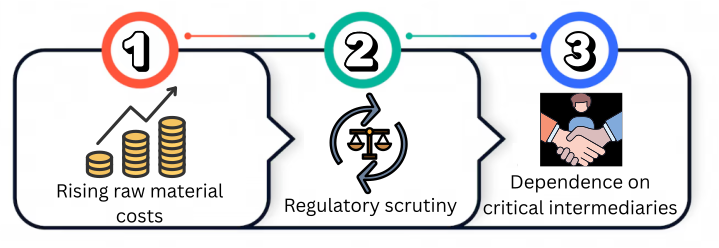
These include:
Addressing these challenges requires a balanced strategy. It should mix innovation, policy support, and operational efficiency.
Indian manufacturers can use advanced technologies. They can also improve quality to boost their global presence.
To address ongoing challenges, companies need to:
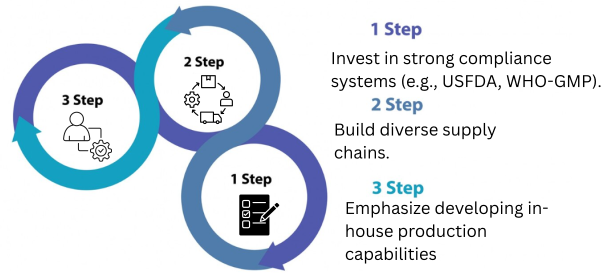
Strong R&D capabilities will help create cost-effective, sustainable options. Digital tools can also streamline the process.
Recommendations for Global Stakeholders
Global stakeholders should support Indian API manufacturers.
They can do this by:
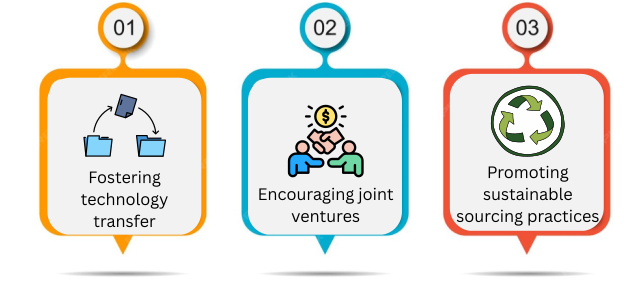
Boosting India’s manufacturing capacity relies on stronger collaboration in R&D, compliance training, and supply chain resilience.
Conclusion: India’s Path to Global Leadership in Cardiovascular APIs
Research shows that by 2025, the global cardiovascular API market will reach a significant milestone.
India is well-positioned to meet this demand with its government initiatives, cost-effectiveness, and manufacturing scale.
India is strengthening its role in the pharma industry and continues to establish itself as a reliable partner globally.