
Introduction
Multi-sourcing helps lower risk in the API supply chain by reducing dependence on one region or supplier. The global API network is very concentrated.
It can quickly face shocks from delays, new rules, or shortages.
In 2025, more than 80% of generic API Manufacturers in major markets came from India and China together.
Using many qualified suppliers in different regions helps companies increase supply security. This helps protect production timelines.
It keeps drug launches and patient access steady, even during global disruptions.
Current API Supply Chain Concentration & Vulnerabilities
Most API supply comes from just a few regions. This concentration poses risks. If there are disruptions, it can affect production, trade, or transport in important supplier countries.
Geographic Concentration India & China
Global API supply is highly concentrated in a few regions. Many important medicines rely on a small number of sources. If there are disruptions, prices can spike, and shortages may arise globally.
The API shows a continued reliance on China. This highlights ongoing supply risks, even with efforts to diversify gradually.
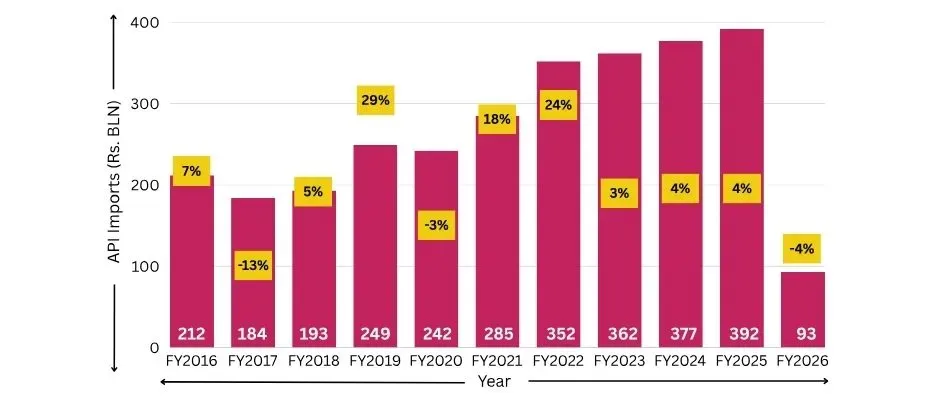
Impact on Global Markets
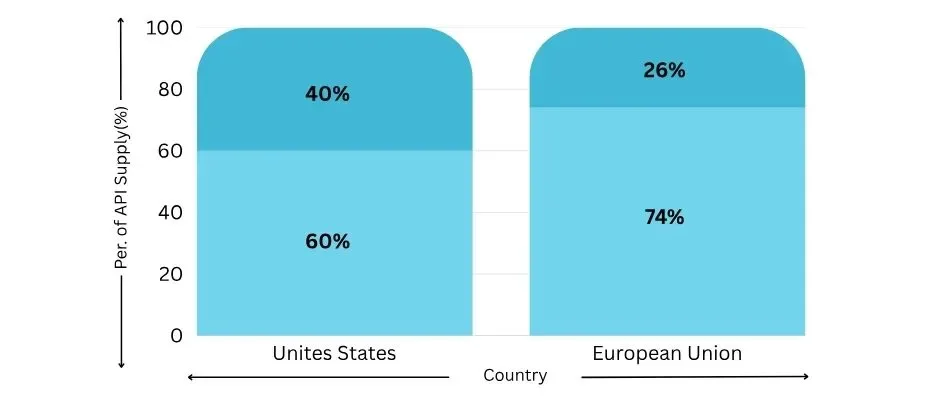
Many regulated markets depend on imported APIs. Relying heavily on overseas production raises supply risks. It also makes drug markets vulnerable to disruptions, shortages, and price changes.
What Is Multi-Sourcing in API Supply Chains?
Multi-sourcing means working with several approved API suppliers in different regions instead of one source.
This method lowers risk, boosts supply stability, and ensures production continues if a supplier has delays, shutdowns, or transport problems.
Dual-sourcing and multi-sourcing are supply chain strategies. They help secure APIs from multiple suppliers. Two core models:
Dual-sourcing
Dual-sourcing uses two independent suppliers for the same API. It provides backup supply and helps manage risk when one partner cannot deliver on time or at the required volumes.
Multi-sourcing
Multi-sourcing uses three or more independent suppliers across regions. It gives companies more flexibility, lets them produce medication at a steady pace, and shields them from jolts in market prices, product shortages, or local disruptions.
How Multi-Sourcing Reduces Supply Chain Risk
Multi-sourcing means getting supplies from various regions and suppliers. This approach helps prevent shortages. This way, if disruptions occur, medicine production can stay steady.
Geographic Diversification Reduces Disruptions
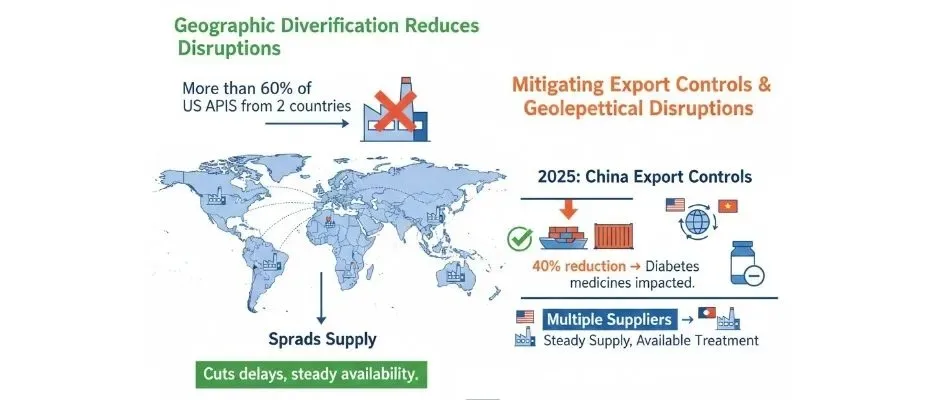
More than 60% of APIs in U.S. markets come from just two countries. This shows a high concentration risk. Sourcing from Asia, Europe, North America, and new hubs spreads supply.
This wider network cuts delays and reduces dependence on one area. It also keeps API availability steady, even in global chaos.
Mitigating Export Controls & Geopolitical Disruptions
Export controls or tariffs can slow down API shipments and halt drug production. Multi-sourcing spreads supply across different areas. This way, work can continue even if one source is blocked.
In 2025, China’s export controls reduced some intermediates by 40%. This impacted diabetes medicines. Using several suppliers helps ensure a steady supply and keeps treatment available.
Supply Stability & Lead-Time Improvements
Multi-sourced networks tend to provide quicker and more reliable delivery times. This is because supply comes from many routes.
When companies diversify supply points, they reduce delays and sudden changes in lead time. Using diverse sources gives you a better idea of production levels and helps with planning your inventory.
Research shows that using multiple sources makes delivery more reliable. It also helps prevent delays. It also reduces risk and helps keep API manufacturing steady, even during disruptions.
Market Shifts toward Supplier Diversification
Many drug companies now source APIs from different regions and partners. This helps lower risk and keeps production stable.
Response to COVID-19 & Trade Shocks
The pandemic exposed risks of relying on one supplier. After 2020, many API makers added more partners. India’s PLI scheme boosted local API investment.
This helped increase domestic production and reduce supply concentration. These steps boosted supply security. They also helped companies create broader and more balanced sourcing networks.
Shifts in Global API Sourcing Strategy
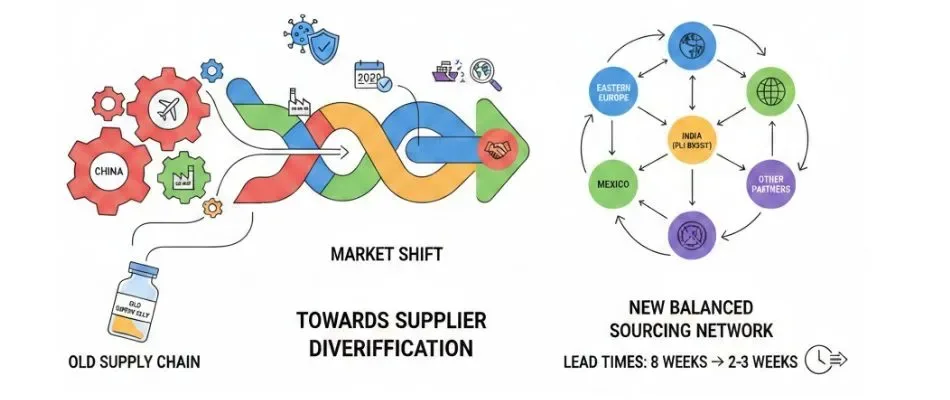
Companies are no longer dependent only on India and China. Many are testing new supply bases in nearby regions to avoid long shipping delays and sudden shortages.
Near shoring to Eastern Europe and Mexico is rising for Western markets. These locations provide faster transport and cut lead times from over eight weeks to about two or three weeks. This improves supply speed and planning.
Quantitative Impacts of Multi-Sourcing on Risk
Supply chain studies show that using several API suppliers cuts risk. This is true when companies operate in different regions. While not all industry metrics are public, supply chain research highlights clear benefit trends:
Reduction in Region-Specific Risk
Having more than one supplier country cuts the risk. It helps avoid sudden regional problems. When companies source from different countries, they can better manage delays, cost hikes, or supply problems.
This helps them deal with policy changes or local disruptions. By reducing sole reliance on one supplier country (India or China), companies mitigate:
Resilience to Global Events & Disasters
Using multiple suppliers helps companies keep supplies moving during major disruptions. If a region faces a natural disaster, trade ban, or factory shutdown, other supply points can still deliver.
This backup support keeps production steady. It reduces shortages and guards patients and businesses against sudden breaks in the global medicine supply chain.
Economic Benefits beyond Risk
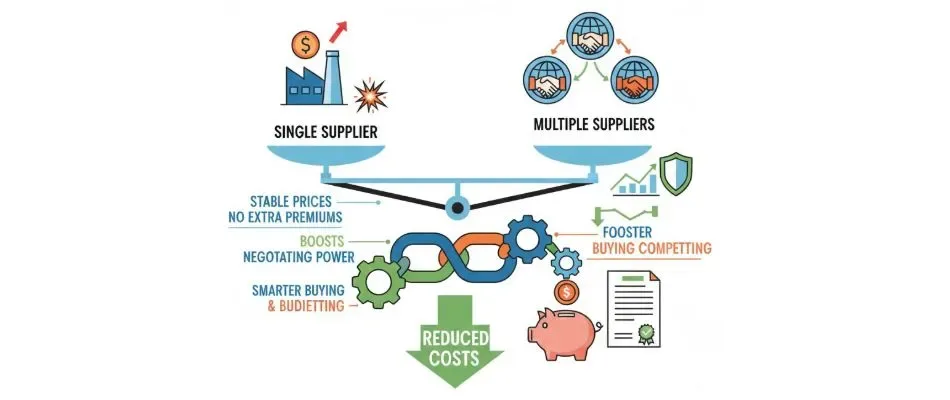
Multi-sourcing does more than reduce supply risk. It also helps control costs and keep prices stable. When companies use multiple suppliers, they can steer clear of sudden price jumps and high premiums.
A wider supplier base boosts bargaining power. This helps in getting better long-term contracts and a steady API supply. Multi-sourcing helps stabilise API pricing and reduces:
Operational & Quality Assurance Benefits
Multi-sourcing improves daily operations and quality control. It keeps production running and supports compliance. It also strengthens long-term supplier performance.
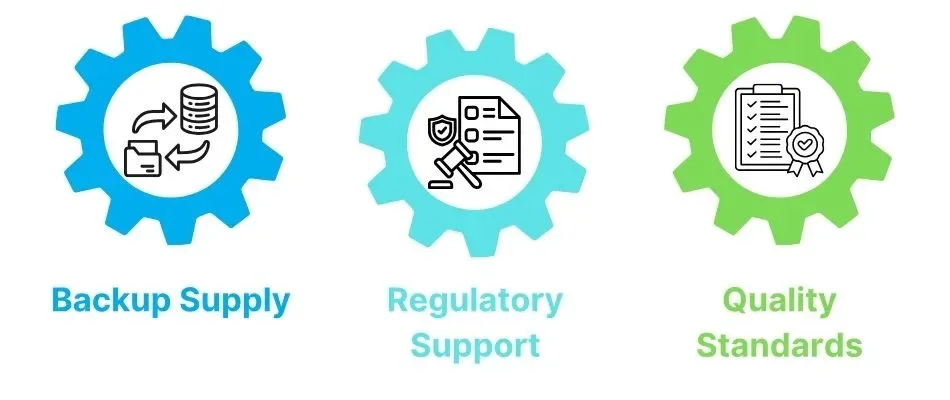
Backup Supply
Production keeps running more easily when you have more than one qualified supplier. If one partner has delays, audits, or shutdowns, another approved supplier can still deliver. This ensures drug manufacturing doesn’t stop.
Regulatory Support
Multiple approved suppliers help companies follow GMP rules. They also support compliance with other regulations.
If one site fails inspection or gets a warning, supply can shift to another compliant partner quickly and safely.
Quality Standards
Working with different suppliers encourages competition. This results in better quality. Suppliers have high standards.
They use stable processes and keep clear documentation. This helps them secure long-term contracts and meet strict pharma rules.
Policy & External Drivers of Multi-Sourcing
Policy changes and global risks are pushing companies to use many suppliers. Governments now support supply chains that are safer, stronger, and more local.
Government Initiatives Driving Diversification
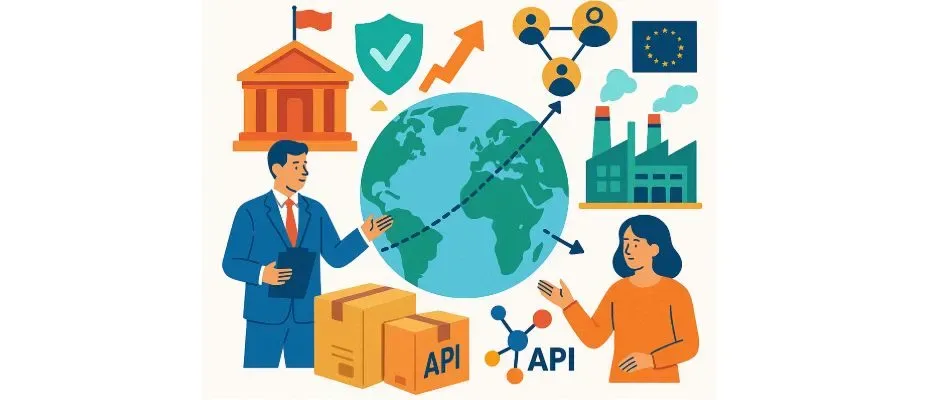
India’s Production Linked Incentive (PLI) scheme helps local API production. It also lowers the risk of imports. It has driven large investments, new plants, and jobs across sectors.
The program offers many new APIs and materials made in India. This helps companies avoid depending on a single foreign supplier.
Global Diversification for Strategic Security
Many countries now back multi-sourcing. This helps protect their supply chains. The U.S. and EU provide tax benefits, grants, and factory support.
This helps lessen dependence on a single foreign region. Companies are creating supply networks in trusted countries.
This helps lower risk and keep medicine and technology supplies steady.
Resilient API Supply Chains
API supply chains are becoming stronger and more flexible. Companies now use many suppliers across regions to avoid shortages.
Global crises and stricter rules urge the industry to create safer, multi-source supply systems. Here are the key drivers of resilient API supply chains.
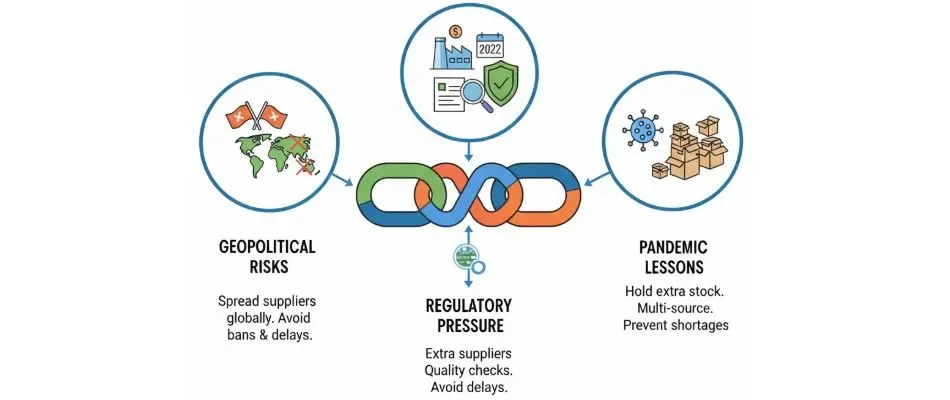
Geopolitical Risks
Global tensions are rising, and trade limits make sourcing from one country risky. Companies spread suppliers across different regions. This helps them avoid sudden export bans, transport delays, and political disruptions.
Regulatory Pressure
Stricter global rules need clear tracking, quality checks, and approved sites. Companies are now bringing in extra suppliers.
This helps them pass inspections, avoid delays, and keep their medicines in stock. They want to stay clear of any regulatory issues.
Pandemic Lessons
COVID-19 showed the danger of a one-source supply. Companies now hold extra stock and use multiple suppliers from different countries. This helps them avoid shortages in the future.
Conclusion
Strong API supply chains now rely on multi-sourcing and regional balance. Companies and governments are shifting from relying on one country.
This change comes after global disruptions and tougher regulations. Diversified sourcing helps people access medicine better.
It cuts down on sudden shortages and keeps production steady. Creating trusted supplier networks in various regions helps the industry.
This way, it can better handle risks and changes in demand.