
Introduction
APIs are going through major updates because of new technologies.
This leads to faster development times, higher safety levels, and higher productivity.
Currently, an average API development still takes from 1.5 to 3 years. To reduce waiting times and boost quality, some tools are essential.
These are continuous manufacturing, flow chemistry, AI solutions, and digital monitoring tools.
These changes decrease pollution, raise safety, and speed up decision-making.
They set a strong base for stable and flexible API production.
Chemical Engineering Innovations
Chemical engineering is transforming the API manufacturing process.
Companies can work more quickly and reduce waste with new tools.
These modern methods also help maintain high-quality output.
Continuous Manufacturing (CM)
Continuous Manufacturing is a popular trend. It is a production method that operates faster, cleaner, and generates significantly less process waste.
The CM market was worth USD 335.6 million in 2023. It is forecasted to increase by 10.42% annually from 2024 to 2030.
There has been a yearly increase in the use of equipment such as reactors, mixers, and crystallizers from 2020 to 2030.
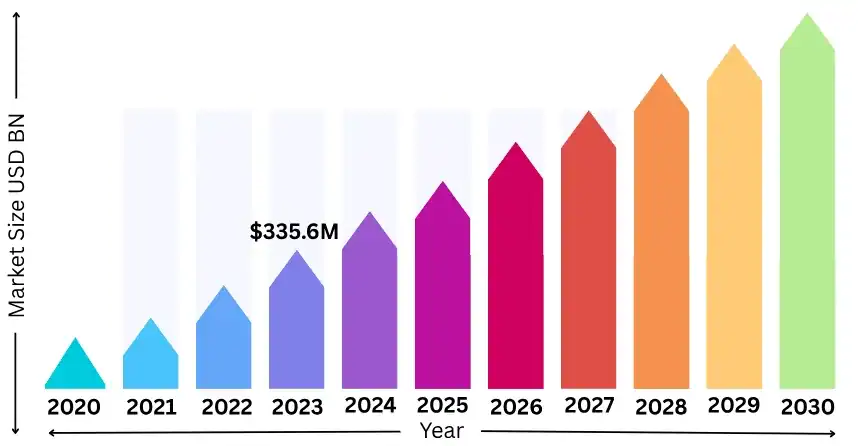
Besides that, there is an increase in demand for filtration systems and heat exchangers as well.
Starting in 2024, the overall stack height climbs sharply.
This sharp rise in stack height reflects widespread industry adoption and increasing demand for scalable API production.
Rising use and strong regulatory support are making CM a vital technology for future production.
The increasing demand for APIs also boosts their importance.
Micro- and Continuous Flow Chemistry
By using micro- and continuous flow chemistry, reactions are allowed to happen in very small channels.
The surface area-to-volume ratio rises by 1000 times. This design boosts heat transfer and enhances safety.
It is estimated that energy use is cut by as much as 97%.
These technologies have an impact on chemical reactions in such a way that they become cleaner, the waste is less, and the processes are more eco-friendly.
They are great in speed and performance; thus, they can be easily scaled up and used for API development.
Digital Transformation: AI and Real-Time Quality
Digital tools are transforming API creation. They help companies speed up production, enhance quality, and lower errors.
This change makes output processes safer, advanced, and more reliable.
Artificial Intelligence (AI) and Machine Learning (ML)
AI and ML help manufacturers handle complex processes. These tools spot problems early using real-time data.
This helps improve safety and stability. AI-driven automation can boost production by 50% and slash defects by 80%.
This keeps production on track and reduces wasted resources.
It also gives companies more control and better outcomes every step of the way.
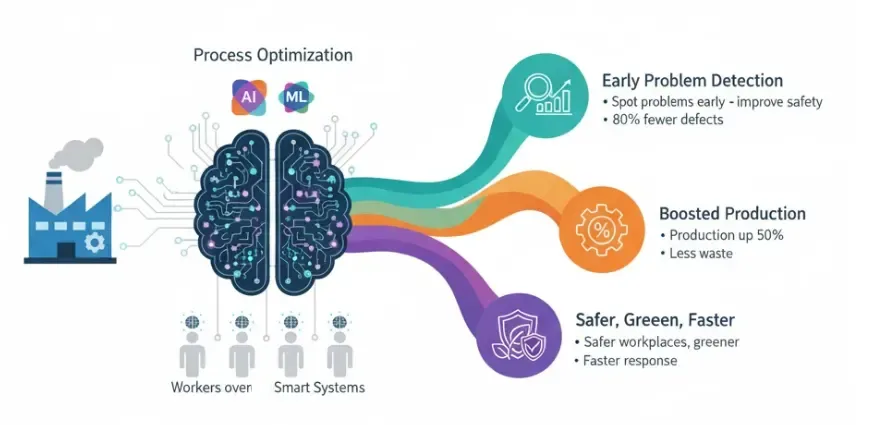
AI makes planning easier and simplifies things on the production line.
As factories use more digital tools, workers are moving away from manual tasks to watch over smart systems.
The outcomes include safer workplaces, greener processes, and faster responses to quality changes.
This technology helps the industry create a stable and strong future.
Process Analytical Technology (PAT)
Process Analytical Technology (PAT) is a tool that enables producers to monitor product quality during the production process.
They can act quickly and make changes if needed with the information they have. PAT tracks key stages in the production process.
This helps improve consistency, reduce waste, and enhance compliance.
PAT has an almost 30% effect on development speed.
This enables new processes to be rolled out more quickly, safely, and with less effort.
AI-Driven R&D and Retrosynthesis
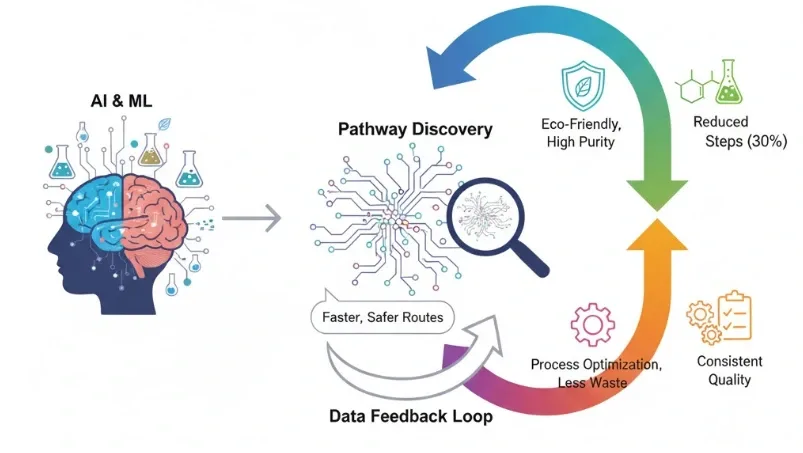
Artificial intelligence is changing how research teams find new chemical pathways.
These teams now use smart tools to analyze data and test ideas quickly.
These tools help researchers better understand reactions.
They also help choose safer, more environmentally friendly options.
Computational models help find the best synthetic routes.
They can reduce the number of steps by up to 30%.
The consequence is that development becomes faster and less costly.
By AI, developers can have better control over the early phases of the project.
It can spot errors, suggest improved reaction conditions, and help teams find easier ways to scale.
This boosts process stability, cuts down on waste, and ensures quality stays high in various trials.
AI updates with data from each experiment, making workflows easier.
So, future production will have clearer decisions and more consistent results.
Predictive Modeling and Infrastructure
Predictive tools help companies plan better and react faster.
They take in data in real-time to detect risks, optimize system health, and call for better decisions.
As a result, operations become safer, less expensive, and easier to manage with less effort.
Digital Twin Technology (DT)
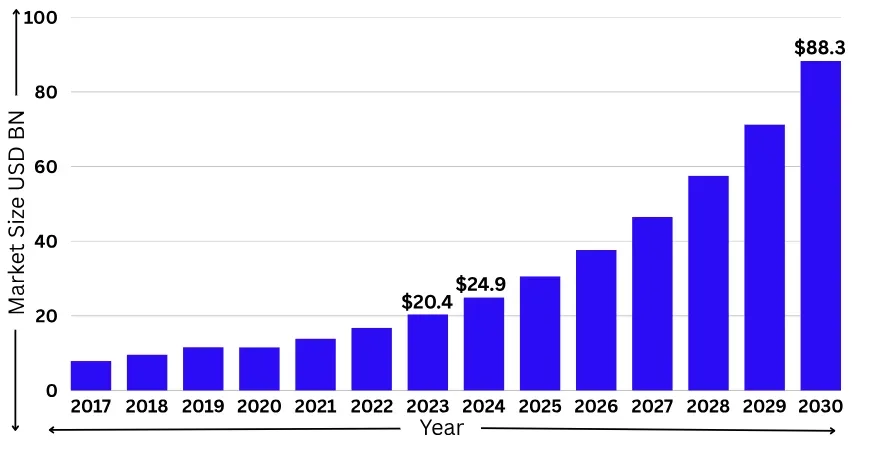
The digital twin market is booming. It is forecasted to increase its value from approximately 25 billion USD in 2024 to almost 155.8 billion USD by 2030.
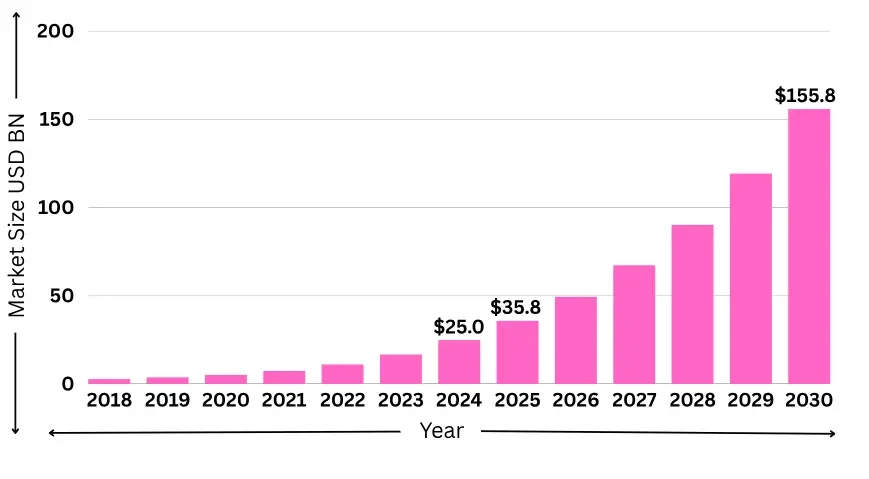
For example, North America leads in market share, but Asia Pacific is growing the quickest.
These digital replicas let teams test their ideas and predict system outcomes.
Also, they improve the system without interrupting performance.
Digital twins are now central to smart, fast, and efficient infrastructure planning.
Industrial Internet of Things (IIoT) and Sensors
The Industrial Internet of Things is moving quickly. Its revenue is anticipated to be approximately USD 483 billion by 2024.
Then it is expected to continue increasing and reach 1.69 trillion dollars by 2030, with a compound annual growth rate of 23.3%.
IIoT employs interconnected sensors to collect live data.
This enables the industrial sectors to be more efficient and safe.
One key benefit is predictive maintenance.
With IIoT, unplanned equipment downtime can decrease by 30–50%. This allows for repairs before machines actually fail.
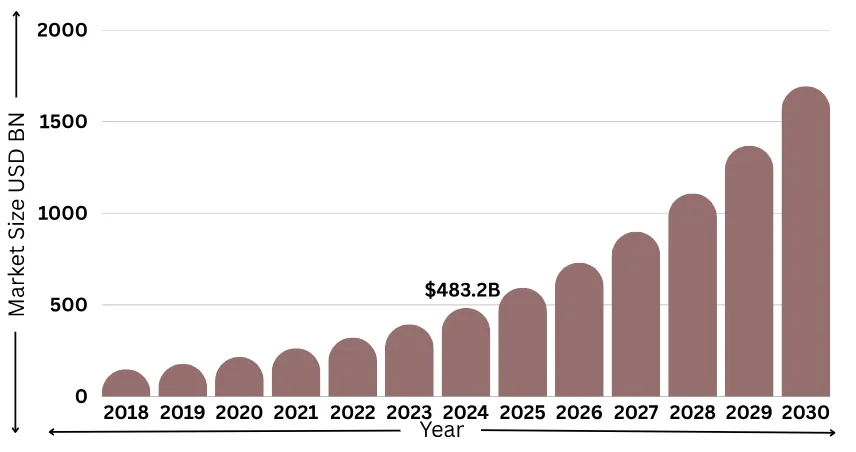
The rising market comes from the need for better speed, lower costs, and smarter decision-making.
IIoT solutions represent the biggest portion. Sensors are important for tracking energy use, monitoring machines, and raising product quality.
More wireless systems, edge computing, and 5G help industries respond quickly.
These tools help factories be more flexible and reliable.
These technologies also prepare industries for future growth in manufacturing, logistics, and smart industrial systems.
Advanced Crystallization and Isolation Techniques
Crystallization is getting a lot smarter as industries shift to connected and automated systems.
New sensors and fast decision-making tools help companies get real-time insights.
This makes it simpler to control crystal formation.
Continuous crystallization can lower variability in crystal size between batches by as much as 60%.
This leads to a more stable process. As more factories use IIoT and edge technology, these methods become faster, cleaner, and more reliable.
Isolation techniques are getting a boost thanks to digital tools.
Local data gathering and processing units reduce wasted time.
This boosts the production of high-quality products. Industries want to boost efficiency and adopt
ability.
Modern crystallization and isolation methods are key to this change.
They enhance unit efficiency and reduce error rates.
Emerging Technologies and Supply Chain Agility
New technologies are making supply chains more adaptable.
These advancements allow companies to act quickly and avoid delays.
Biocatalysis and Enzyme Engineering
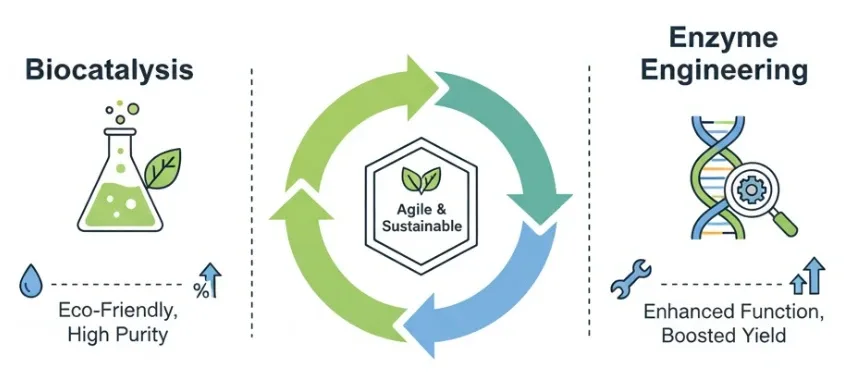
Biocatalysis uses natural enzymes to speed up reactions. It works in mild conditions, cuts waste, and supports eco-friendly production.
A key benefit is its strong control over product quality.
It often hits close to perfect stereo selectivity (above 99% ee), leading to a significant boost in purity.
These perks let companies form swifter and more flexible supply chains.
Enzyme engineering upgrades enzyme functions by altering their structures.
The changes make them stronger, more stable, and more precise in specific chemical reactions.
This results in increased yields, fewer waste, and easier manufacturing processes.
Industries can use these improved enzymes to speed up processes, make them easier to scale, and make them more eco-friendly.
This helps improve agility in global supply chains.
3D Printing (Additive Manufacturing) for Reaction Components
3D printing lets you quickly make custom reaction parts with high precision.
The whole process of prototyping gets faster, there is less waste, and the design flexibility of labs and production sites gets higher.
Additive manufacturing is gaining popularity worldwide, showing its broad use.
It reduces lead time for specialized reactor components from weeks to a few days.
Key Data
Modular and Decentralized Manufacturing
Modular and decentralized manufacturing breaks production into smaller, self-contained units.
These units can be established in various locations.
This approach lets companies react faster to changes in demand.
It allows them to make products right for their customers.
It also speeds up deployment, which could cut construction time by 50%.
This makes production faster and more adaptable.
These systems also improve supply chain strength by reducing reliance on one large site.
Companies can adjust, add, or rearrange units as they need.
This flexibility enables them to change production from one region to another.
They save on transport costs, keep an eye on production from a distance, and avoid product shortages.
It’s great for industries that require quick or local production.
Conclusion
Development is getting a boost from innovative tools that make processes leaner and more reliable.
Continuous manufacturing, flow chemistry, and AI analytics are some of the technologies that are becoming more popular.
They stand for the future of smart, efficient, and effective technology.
In addition to improving quality, they also reduce waste.
To a large extent, the use of digital twins and sophisticated sensors has made it possible.
Biocatalysis, 3D printing, and modular systems boost speed and offer more flexibility.
The blend of CM/Flow hardware and AI/DT/PAT software creates a smarter and greener global API supply chain.
It comes with the ability to react quickly and stay stable over time.