
India at the Heart of Global API Supply
India is the center stage of the global pharmaceutical supply chain and meets the worldwide healthcare needs.
In 2023, the country made up almost 20% of global generic drug exports.
This does reflect the strong manufacturing capabilities and cost-effective production model.
In FY 2023–24, India’s API exports reached about US $25.3 billion.
This highlights its role as a trusted supplier in the global market.
India is now focusing on expanding its reach into new areas.
These include Africa, Latin America, ASEAN, CIS, and MENA.
This expansion strengthens India’s role as an global API hub.
It also helps close critical gaps in medicine access in developing economies.
Global API Market Outlook (2025–2030)
The global API market is valued at USD 255 billion in 2024 and is projected to reach USD 359.45 billion by 2030 (with a CAGR of 5.8%).
This study is fuelled by the increasing prevalence of chronic diseases worldwide.
Rising demand for affordable generics is driving API as the future of healthcare innovation.
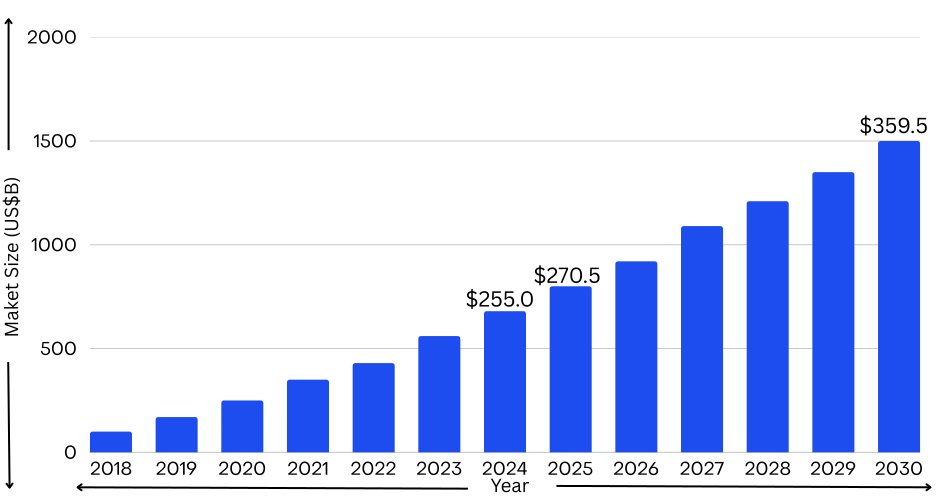
The chart shows the Active Pharmaceutical Ingredients (API) market size by region from 2018 to 2030 as it grew.
In 2024, the market size was USD 255.0 billion; in 2025, USD 270.5 billion; and in 2030, USD 359.5 billion.
Key regions include North America, Europe, Asia Pacific, and Latin America & MEA.
India’s Current Export Landscape
India’s export API market is increasing in 200+ countries and is becoming the most trusted.
Supplier worldwide. Its main therapeutic agents are CNS treatments, oncology drugs, anti-diabetics, anti-infectives, and cardiovascular medications.
This reflects the strong demand across various healthcare areas. India has a strong manufacturing base.
It has 752 USFDA-approved plants. There are 2,050 WHO-GMP certified units.
Additionally, 286 sites are EDQM-approved.
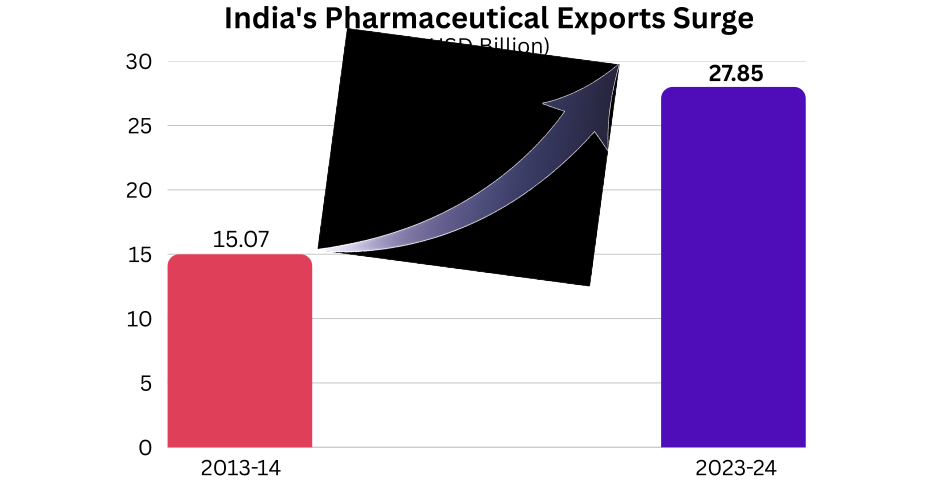
The graph shows India’s pharmaceutical exports surge (in USD billion).
For 2013–14, the total was USD 15.07 billion.
In 2023–24, it was USD 27.85 billion, and this represents an 85% increase in exports over the decade.
Emerging Markets: Regional Demand
Africa
Africa has one of the fastest-growing pharmaceutical markets.
It’s expected to hit USD 70 billion by 2030 (IBEF/ISPE). India plays a key role in meeting rising demand.
It supplies about 45% of Africa’s generic pharmaceutical needs.
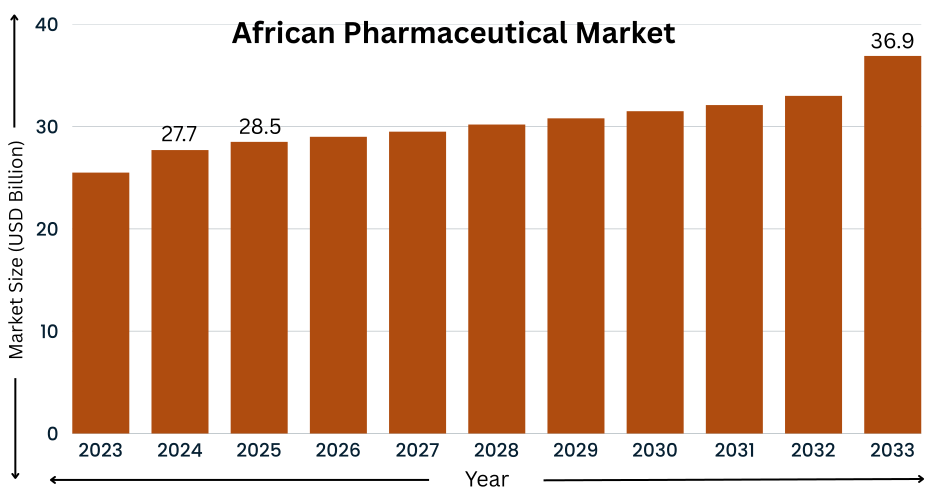
The chart displays the African Pharmaceutical Market Size by Molecule Type from 2020 to 2030.
It’s measured in USD billion. It indicates that the 2022 market size is nearly USD 26.1 billion.
The market segment is for Conventional Drugs along with Biologics & Biosimilars.
As per Grand View Research, the CAGR (2024–2030) is 3.4%.
Latin America
The Latin American pharmaceutical market is going strong and is expected to reach USD 95 billion by 2025.
This expansion is mostly driven by higher healthcare spending, better access to medicines, and growing demand for generic drugs.
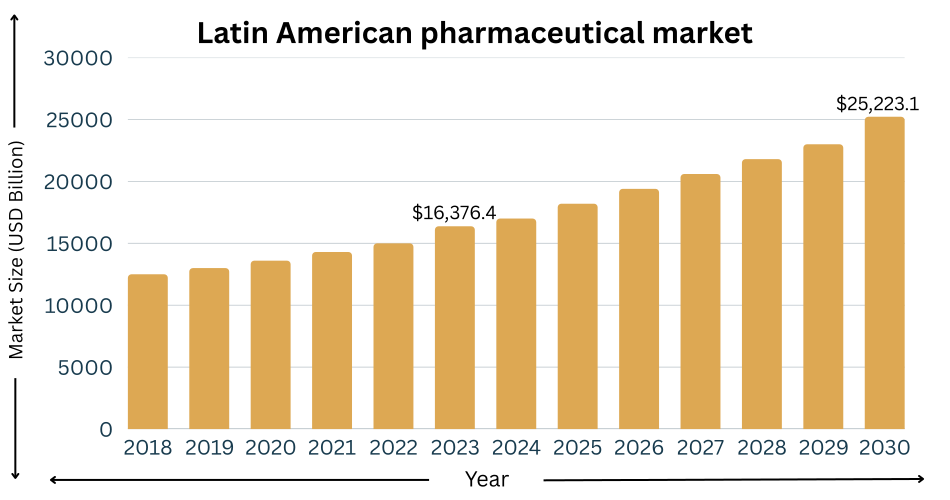
This graph shows how the Latin American pharmaceutical market is growing from 2018 to 2030.
In 2023, the market is at USD 16,376.4 million. By 2030, it will reach USD 25,223.1 million.
Southeast Asia (ASEAN)
The ASEAN Pharmaceutical Market Size (2009–2028, USD Billion) shows tremendous growth, from USD 12B in 2009 to USD 43.9B in 2023.
It is projected to continue rising, reaching USD 65.6B by 2028.
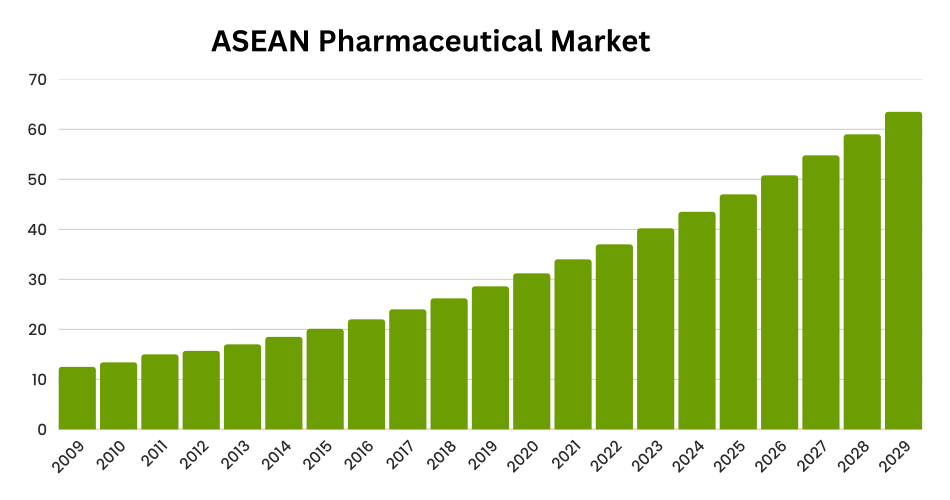
The growth rate is around 11% CAGR.
CIS and Eastern Europe
The pharmaceutical market in the CIS and Eastern Europe is growing fast.
By 2025, imports are expected to hit USD 50 billion.
This growth shows the rising healthcare needs and a greater reliance on imports.
It also highlights the demand for affordable generics.
This creates strong opportunities for Indian API and formulation suppliers.
The European API market size is USD 42.6 billion.
The majority of the shares are of prescription drugs. Moreover, the smaller share is of OTC.
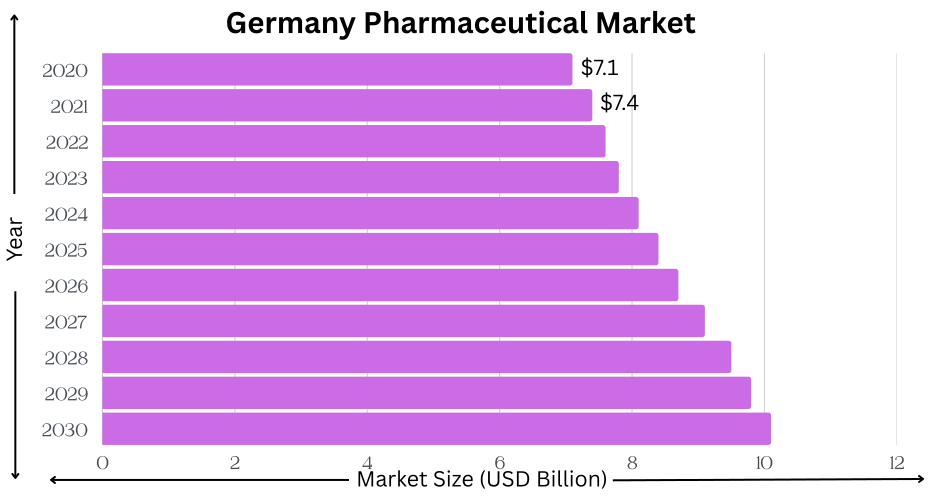
The German API market in 2020: USD 7.1 billion.
In 2021, the market for Biotech & Synthetic APIs was USD 7.4 billion.
By 2030, it is expected to grow even more.
MENA (Middle East & North Africa)
The MENA (Middle East & North Africa) pharmaceutical market is expected to reach USD 60 billion by 2025.
The growth is all because of the rising healthcare investments and with increasing prevalence of chronic diseases.
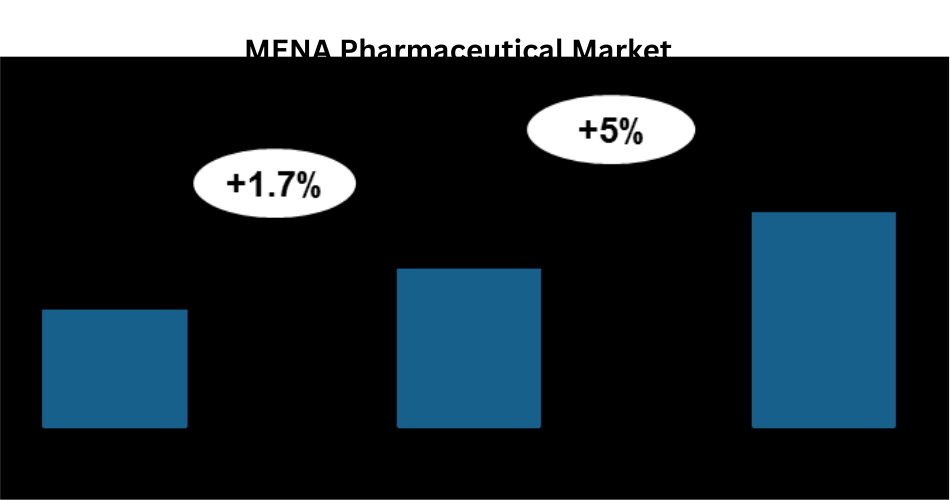
In 2018, the market was USD 2.9B, in 2023, USD 3.2B (+1.7% growth), in 2030 (Forecast): USD 5B (+5% growth).
Therapeutic API Segments Powering Growth
The growth of the pharmaceutical market is driven by the demand across key therapeutic API segments.
In anti-diabetics, the widely used drugs like Metformin and Sitagliptin are in higher demand.
The cardiovascular segment is powered by APIs such as Atorvastatin and Amlodipine.
In oncology, key APIs are Imatinib and Capecitabine. They help fight cancer.
In the CNS segment, drugs like Fluoxetine and Olanzapine play a key role.
They help manage mental health disorders.
Anti-infectives like amoxicillin and azithromycin help fight infectious diseases.
This is especially important in developing regions.
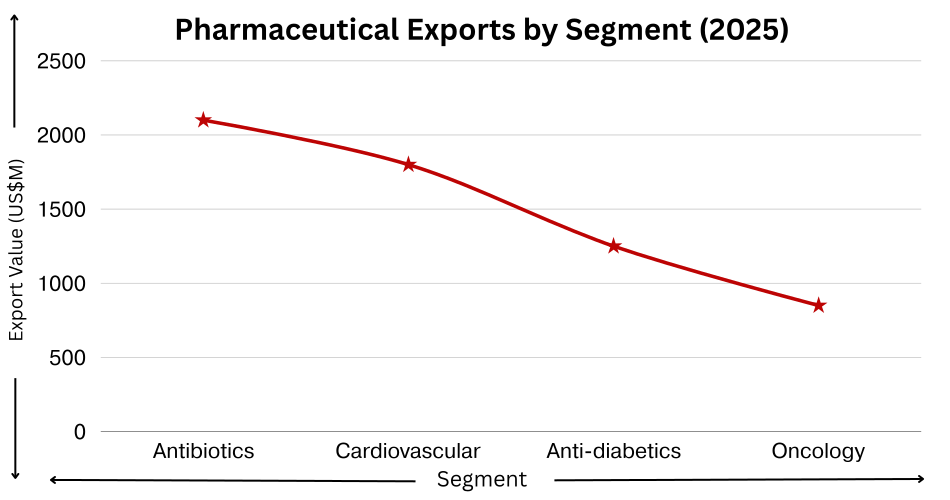
The antibiotics’ export value is $2.1B in 2025, with a CAGR of 8%.
Key APIs include Amoxicillin and Ciprofloxacin.
There is strong demand in Africa, Southeast Asia, and the CIS.
The export value for cardiovascular products is $1.8B.
It has a CAGR of 9%.
Key APIs include Atorvastatin and Metoprolol.
Major markets are in Latin America and Southeast Asia.
The export value for anti-diabetics is $1.25B.
It has a CAGR of 10%.
Key APIs include Metformin and Insulin.
Demand mainly comes from Latin America, SE Asia, and Africa.
For oncology, the export value is $850M, CAGR 12% with key APIs Imatinib, Paclitaxel; focus regions CIS, Latin America.
Government Support & Industry Ecosystem
The Indian government is making a strong effort in the pharma industry with PLI schemes for APIs.
It offers incentives of about US$2 billion. This will boost domestic production and cut down on imports.
The bulk drug Parks initiative in Andhra Pradesh, Gujarat, and Himachal Pradesh has solid infrastructure.
It features eco-friendly manufacturing and a supportive, sustainable ecosystem.
Opportunities for Exporting Indian APIs
India offers a great chance for global exports.
Its products are high-quality, affordable, and have strong manufacturing capabilities.
A solid regulatory framework that meets international standards, such as EMA and USFDA, boosts compliance and enhances global acceptance.
There is a strategic partnership with local distributors, government agencies, and healthcare companies.
Challenges and Risks in Emerging Markets
Regulatory diversity means varying rules and approval processes in different regions. This makes compliance expensive.
Local players and China often compete on price. This creates low-cost options that pressure margins.
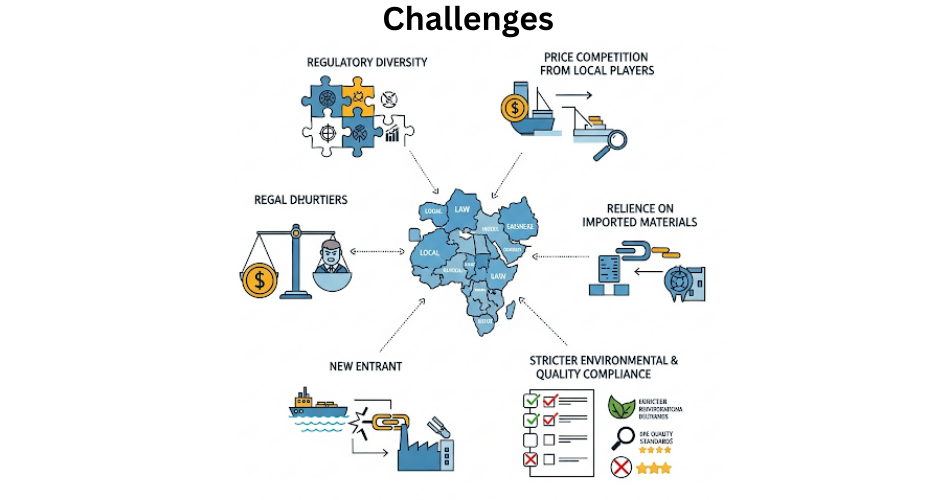
Heavy reliance on imported key materials can disrupt the supply chain.
This can lead to overall production shortages.
Environmental and quality compliance are stricter now. This raises operational costs.
It also needs ongoing investment in sustainable practices for improvement.
Future Focus: Beyond 2025
India has a growing chance in high-potency APIs.
It also focuses on oncology APIs that meet specific therapeutic needs.
Since green chemistry adoption is rising, it promotes sustainable and eco-friendly API production.
Similarly, biosimilar APIs like biologicals are emerging as a key growth segment.
Industry Projections and Vision
Indian pharma exports could hit US$350 billion by 2047, according to IBEF.
API exports may reach US$80–90 billion. This shows strong global demand.
Conclusion
The Indian pharma sector has great manufacturing skills.
It also meets strong regulatory standards and enjoys global trust.
The government continues to support innovation. India is set to increase its API exports.
This includes high-potency, oncology, and biosimilar APIs.
By adopting sustainable practices and new technologies, it can boost its competitiveness.
This will ensure long-term growth and help it lead the global API market beyond 2025.