
Introduction
India is known as the pharmacy of the world. It makes and exports a large share of the global market.
The industry was worth around USD 50 billion in 2023–24. It can grow up to USD 130 billion by 2030.
A key driver of growth in India’s pharmaceutical industry is the Active Pharmaceutical Ingredient (API) sector.
APIs are the essential active components that make pharmaceutical formulations effective.
India is a global leader in API production, India supplies a significant share of the APIs used in global pharmaceutical formulations.
The country’s strong capabilities in API manufacturing play a crucial role in making affordable medicines available worldwide.
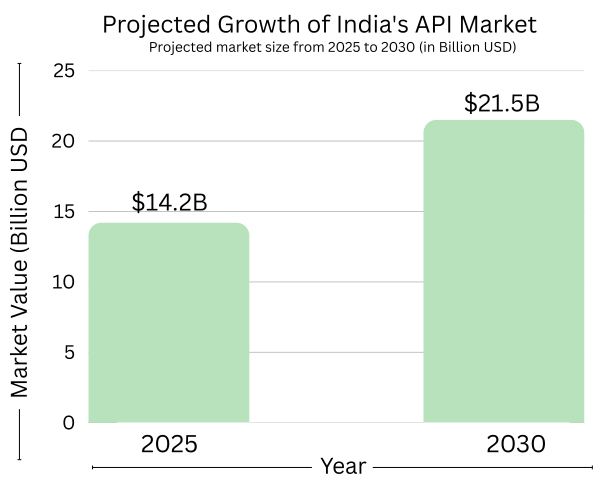
The Indian API market was worth USD 13.54 billion in 2024.
In 2030, it is expected to be USD 22.02 billion with a growth rate of more than 8 per cent per annum.
There are even studies that suggest it could be worth USD 30.9 billion.
But traditional API production has problems. It uses harmful solvents, creates waste, and produces greenhouse gases.
Pharma’s carbon footprint is 55% higher than the automotive sector when measured per unit revenue This has become a cause of concern for India as well as foreign purchasers.
The solution lies in green chemistry and process innovation. These methods decrease waste, save energy, reduce pollution, and boost profitability.
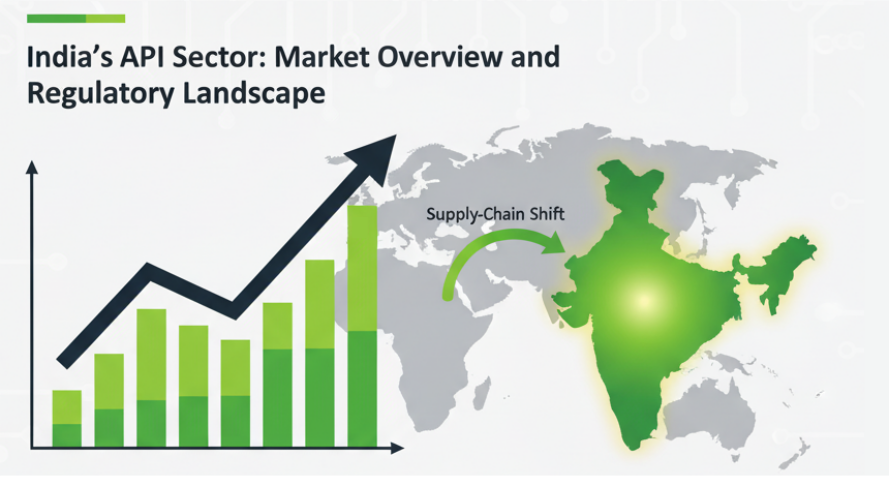
India’s API Sector: Market Overview and Regulatory Landscape
India’s API sector is growing strongly. The PLI scheme provides incentives and funds to firms that build new facilities.New bulk drug parks also provide land, infrastructure, and cost advantages.
Buyers are moving away from China. India is emerging as a very strong alternative.Global pharma leaders are asking for greater numbers of Indian CDMOs to supply APIs. India’s cost advantage and cheap, skilled labour draw it.
India is also changing its rules. SEBI BRSR guidelines (2023) compel companies to report on sustainability.
The CPCB has mandated zero-liquid-discharge and effluent recovery.These steps reduce pollution but increase company costs.
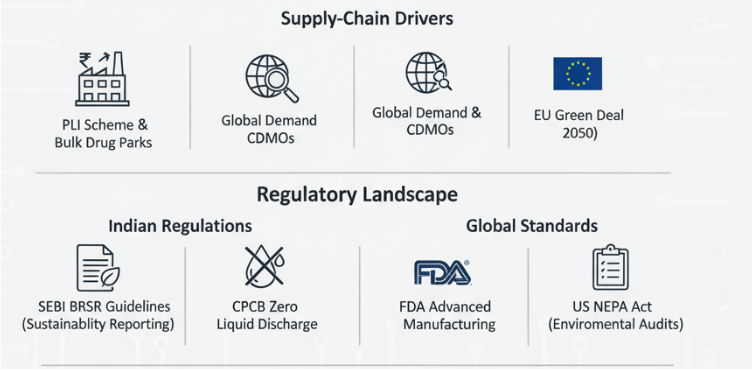
Compared to other nations, India is behind. There are tight regulations in the European Union under the Green Deal.
The EU has plans for net-zero emissions by 2050.New EU regulations also encompass Scope 3 supply chain audits.
The United States demands environmental audits in new drug approvals under the NEPA Act.The FDA promotes advanced manufacturing, such as continuous flow production. India is growing rapidly.
But in order to export, companies must meet both Indian and global standards.
What is Green Chemistry? Principles & Relevance to Pharmaceuticals
Green chemistry is the design of chemical processes to avoid causing harm. It means less toxic inputs, less waste, and safer products.
In pharma, green chemistry can mean the use of water or bio-based solvents instead of harmful chemicals.
It can mean the use of fewer by-product-producing catalysts. Another term is atom economy.This means more of the material that starts the synthesis ends up in the product.
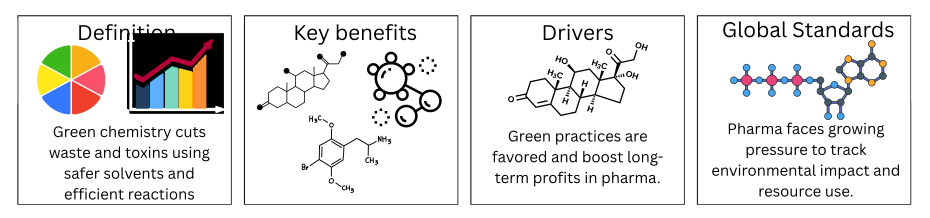
The benefits are strong. Companies save on raw materials and the treatment of waste.They save on energy. They have more yield.
Green chemistry also meets global demand for sustainability.Regulators, investors, and buyers now want cleaner supply chains.
The US and EU are seeking out suppliers who engage in green practices.Investors are considering sustainable businesses as safer bets in the long term.
Thus, green chemistry is good for the world, too.It boosts confidence, saves money, and wins orders.
Process Innovations Driving Sustainable API Production
Several new methods are helping to make API production green. One is continuous manufacturing.Unlike batch production, continuous reactors run all the time.
They allow real-time checks, use less energy, and lower costs. Studies show they cut costs by 40–50 %.
They also reduce waste and improve quality.Another is solvent recovery. New systems can recover more than 90 % of solvents.
Closed-loop designs let solvents be reused many times. This lowers both costs and emissions.Many companies now replace toxic solvents with safer ones like ethanol.
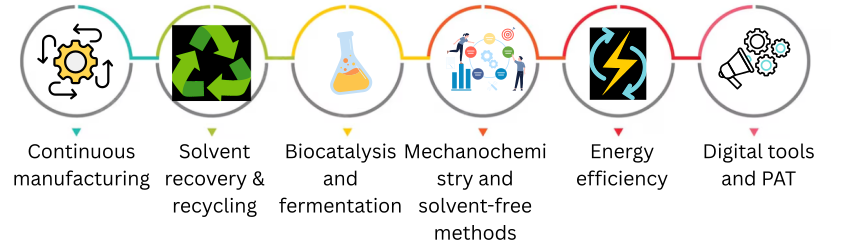
Biocatalysis is also important. Enzymes and microbes are used instead of harsh chemicals.These reactions often take place in water, at mild temperatures, with fewer side products.
Fermentation with renewable feedstocks is another path.
Mechanochemistry is another tool. Reactions can be driven by grinding or milling.This means no solvents are needed at all. It cuts disposal costs and reduces risks.
Finally, digital tools are changing production. AI and digital twins can predict the best reaction paths.Digital reactors allow real-time adjustments. This makes scale-up faster and cheaper.
Environmental & Economic Benefits of Green API Manufacturing
Green processes yield both economic and environmental advantages.On the environmental front, emissions plummet. Green and continuous processes have the potential to reduce carbon emissions by 30– 90 %.
Waste decreases since yields can exceed 90 %. Cleaner solvents lower air and water pollution.
On the cost side, costs go down. Ongoing methods reduce variable costs by 40–50 %.Energy usage falls by 30 % or more with new designs. Solvent costs can fall by 70-90 % in certain cases.
There are also reduced recalls and batch failures, reducing extra costs.
Return on investment is also great. Companies that invest in green tech repay rapidly.They build better margins and cleaner images in the long run.
Case Studies: Green Chemistry in Indian Pharma
Examples show how Indian firms are adopting green chemistry.STEERLife in Pune has developed a solvent-free melt-fusion process.
It removes harmful solvents, making API production faster and safer.This is now being used in complex therapeutic categories.The UK–India Living Lab in Pune is another case.
It is a joint project between CSIR–NCL in India and CPI in the UK.Partners include firms like Aarti and Glenmark. The lab is testing continuous and solvent-free processes.
Early results show up to 80 % emission cuts.Large companies are also acting. Sun Pharma and Lupin have installed solvent recovery systems and zero-liquid-discharge plants.
Piramal and Jubilant are doing R&D in enzymatic and bio-based synthesis.IPCA Laboratories has set up biomass boilers and waste-heat recovery systems to cut carbon.
These examples show India’s pharma industry is already moving in the right direction.
Buyer and Supply-Chain Considerations
Pharma buyers benefit from green APIs in many ways. Green suppliers mean lower costs of ownership.
Buyers benefit by way of saving since raw material loss and energy usage decrease.
There are fewer risks as well, meaning fewer regulatory hassles.
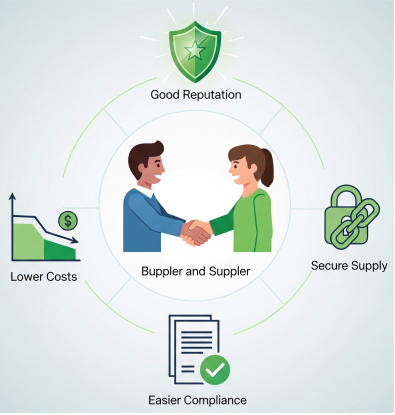
Green processes make compliance easier, especially for US and EU shoppers.Scope 3 emission reporting is now compulsory. Green-produced APIs reduce those risks.
Supply is also more secure. Continuous production allows for an immediate response to fluctuations in demand.This avoids making buyers experience shortages.
Reputation is also involved. Buyers prefer suppliers with good sustainability histories.Green suppliers are good long-term partners.
Buyers benefit from green APIs in many ways. Green suppliers mean lower costs of ownership.
Buyers save because raw material waste and energy use are lower. Fewer hazards also mean fewer regulatory risks.
Green processes make compliance easier, especially for US and EU buyers.
Scope 3 emissions reporting is now required. APIs made with cleaner methods reduce those risks. Supply is also more secure. Continuous production allows a fast response to demand changes.
This helps buyers avoid shortages. Reputation also matters. Buyers prefer suppliers with strong sustainability records. Green suppliers are trusted partners for the long term.
Challenges to Adoption in India
The transition to green chemistry is not easy. New systems are expensive.
Continuous reactors, solvent recovery units, and digital equipment demand heavy investment.
Most small and medium businesses cannot afford them.
There is also a lack of trained personnel. Not many workers are adept at continuous manufacturing or enzymatic processes.
Infrastructure in certain regions is still underdeveloped.
Lastly, India’s regulation is becoming better but at a pace slower than the EU or US.
Most companies hold back until regulations tighten up before they invest.
The Road Ahead: Strategic Recommendations
India needs to act in order to remain competitive. It needs to invest more in research and collaboration.
Universities and companies can partner in developing new green processes.
Second, the workers must be trained. Green chemistry and continuous manufacturing courses need to be part of pharma training.
Third, innovation centres need to be opened. These centres can pilot and scale new ideas before rolling them out nationwide.
Last but not least, public-private partnerships must be formed. The industry and government can share the cost of mega projects like bulk drug parks.
Conclusion
India supplies a large share of the global API demand. But traditional methods are harmful and costly in the long run.
Green chemistry and process innovation offer a new path. They cut emissions, reduce waste, and save money.
They also make India’s supply more attractive to buyers in the US and EU. India has both the scale and the skill to lead.
With stronger rules and more investment, it can become not only the pharmacy of the world but also the leader in sustainable pharma.
Frequently Asked Questions
Q1. Why is continuous manufacturing important for pharma?
Ans:- It runs non-stop, reduces waste, lowers costs, and improves quality compared to batch processing.
Q2. Are Indian APIs exported to Europe and the US?
Ans:- Yes, many Indian APIs are exported to Europe and the US. But they must meet the strict guidelines of the FDA and EU regulators.
Q3. How do Indian regulations compare to EU and US standards?
Ans:- India is making progress, but EU and US rules are stricter. Exporters must follow international standards to stay competitive.
Q4. Why are India’s green APIs of interest to global shoppers?
Ans:- International buyers want cheaper prices and environmentally friendly supply chains. Indian green APIs allow them to have their own green goals.
Q5. What are the practical benefits of green API processes for buyers?
Ans:- They reduce costs, cut risks, make compliance easier, and improve reputation in global markets.
Q6. What is India’s biggest challenge to green chemistry?
Ans:- The biggest challenge is cost. New technology, reactors, and training need huge investment. Small firms do not always have the funds to carry out such changes.
Q7. Can you give an example of green manufacturing in India?
Ans:- Yes. The UK–India Living Lab in Pune is testing continuous and solvent-free methods, while STEERLife has created a solvent-free melt-fusion process.